Discover 9 of the Biggest Extinct Animals in History
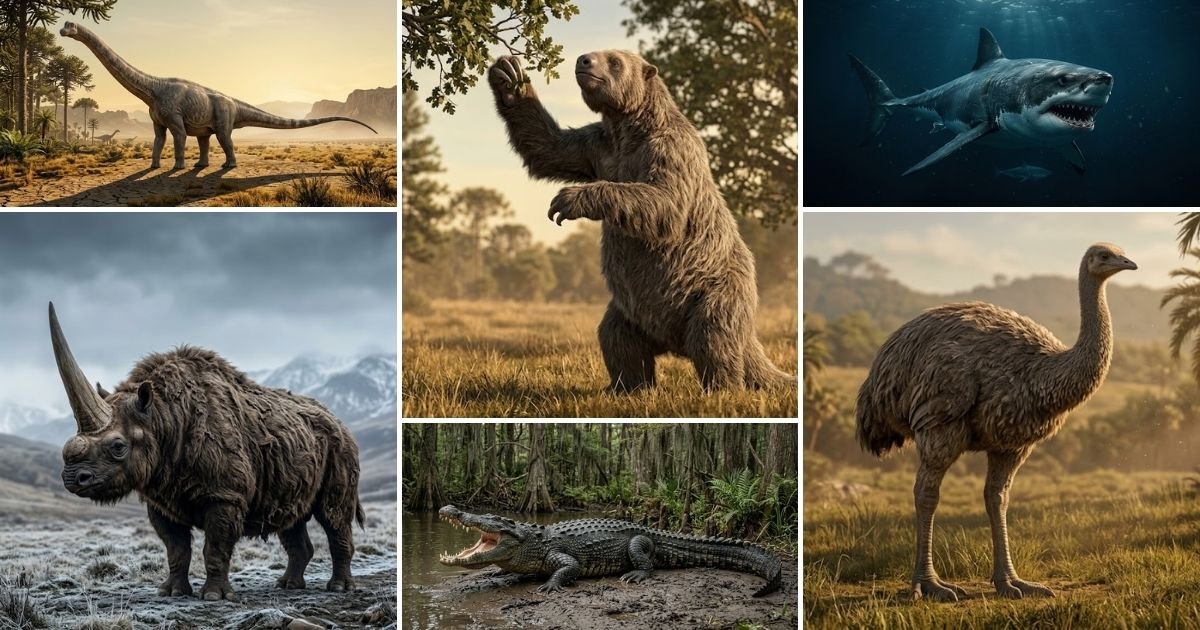
Imagine walking alongside creatures so vast that they would cast shadows over entire neighborhoods. Earth was once home to such giants! While dinosaurs often steal the spotlight, other enormous mammals, reptiles, and marine animals also made their mark.
The term “biggest” encompasses different factors, from body mass to sheer length, giving us a nuanced appreciation for these extinct titans. This blog post will uncover nine biggest extinct animals, including the monstrous Titanoboa and the formidable Deinosuchus, showcasing their unique adaptations and habitats.
What Were The Biggest Extinct Animals?
Defining the “biggest extinct animals” involves considering various metrics such as body length, height, weight, and wingspan. For instance, while the term “largest extinct animal” often evokes images of colossal dinosaurs, marine giants like the blue whale also come to mind, showcasing the complexities of comparing terrestrial and aquatic creatures.
In each category land, ocean, and freshwater measurements can vary greatly; the weight of a huge sauropod like Argentinosaurus can be estimated at over 100 tons, while enormous prehistoric sharks, like Megalodon, were measured by their massive jaws and formidable tooth size.
When scrutinizing which creature deserves the title of the “biggest extinct animal,” it becomes evident that the diversity of sizes complicates definitive comparisons. Depending on whether you’re measuring the height of a titanosaur or the wingspan of a pterosaur such as Quetzalcoatlus, estimates can diverge widely.
This variability highlights an intriguing aspect of paleontology: the realization that one single species might not universally lay claim to being the largest animal ever to exist on Earth. With ongoing research and discoveries, each category of extinct animals reveals its own giants, challenging our perceptions and igniting curiosity about the natural world that existed millions of years ago.
List Of Biggest Extinct Animals
Here is the biggest extinct animals that once roamed, swam, and ruled Earth millions of years ago. From gigantic dinosaurs to enormous prehistoric predators, these extinct giants were truly remarkable.
Megalodon
| Attribute | Details |
| Scientific name | Otodus megalodon |
| Estimated size | 15–20 meters (50–65 feet) in length |
| Weight | 50–70 tons (approximately 100,000–140,000 lbs) |
| Habitat | Warm coastal and open oceans worldwide; existed roughly 23 to 3.6 million years ago (Miocene to Pliocene epochs) |
Megalodon, the largest extinct animal, roamed the oceans approximately 23 to 3.6 million years ago, long after dinosaurs disappeared. This giant prehistoric predator wasn’t just a massive shark; it inhabited diverse marine environments, from warm coastal waters to deep oceanic zones, thriving in rich ecosystems.
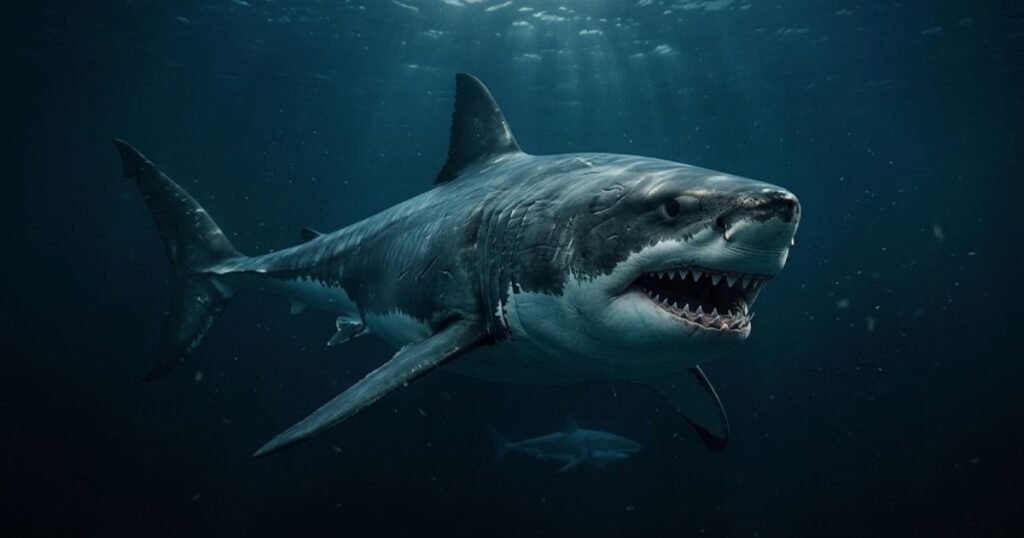
Its diet consisted of an array of creatures, with a particular predilection for large marine mammals like whales, highlighting its role as an apex predator in its time. With teeth that could measure over 7 inches and a bite force estimated at nearly 18 tons, Megalodon was capable of inflicting devastating injuries on its prey.
Comparing Megalodon to the modern great white shark, we see not only a significant difference in size Megalodon could reach lengths of up to 60 feet but also in dietary habits and adaptations. While great whites are efficient hunters, Megalodon was a behemoth that dominated its surroundings, making it one of the biggest extinct animals in the ocean.
Fossil evidence, including teeth and vertebrae, reveals not just its physical prowess but also potential extinction theories linked to climate changes, declining prey availability, and competition with smaller sharks.
Despite the fascination with these extinct alive creepy sea animals, it’s essential to note that Megalodon’s reign ended well after the age of dinosaurs, illustrating the ever-evolving narrative of oceanic life.
Patagotitan
| Attribute | Details |
|---|---|
| Scientific name | Patagotitan mayorum |
| Estimated size | 31–37 meters (102–122 feet) in length |
| Weight | Estimated 57–76 tons |
| Height | Approximately 6–8 meters (20–26 feet) at the shoulder |
| Habitat | Forests and floodplains of present-day Patagonia, Argentina |
The Patagotitan, towering over its contemporaries, represents a fascinating glimpse into the age of the titans. As one of the largest dinosaurs ever discovered, this colossal sauropod stretched up to 122 feet in length, reminiscent of the span of a Blue Whale yet cloaked in scales.
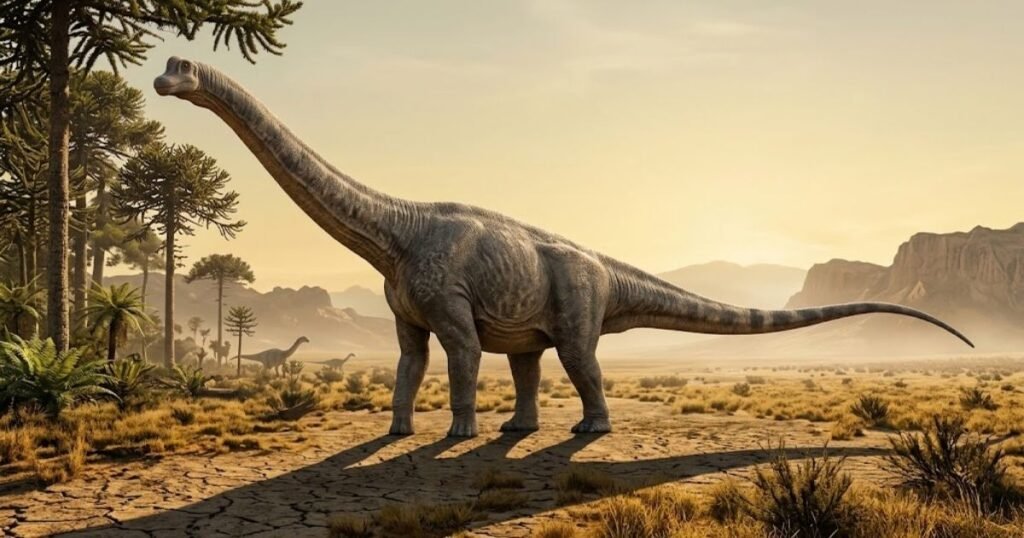
Researchers believe that its sheer size offered significant advantages; it likely grazed on vast expanses of vegetation, reaching tree canopies others could only dream of accessing. This dominance in the ecosystem not only delineated its role as a colossal herbivore but also shaped the landscapes of prehistoric Patagonia.
What makes Patagotitan particularly intriguing is its potential social behavior. Some paleontologists theorize that these gigantic creatures may have traveled in herds for protection and efficiency in foraging.
This could suggest a level of social complexity not typically associated with gargantuan animals, prompting reconsideration of how we perceive survival strategies in the Mesozoic era.
Ground Sloth
| Attribute | Details |
| Scientific name | Varies by species — e.g., Megatherium americanum (giant ground sloth), Eremotherium, Mylodon |
| Estimated size | Up to 6 meters (20 feet) in length (standing height when reared up) |
| Weight | Up to 4,000 kg (about 4 tons) for the largest species like Megatherium |
| Habitat | Forests, grasslands, and open plains across the Americas (North, Central, and South America) |
The giant ground sloth, specifically known as Megatherium, stands as one of the most captivating examples of animals that used to be giants. These enormous creatures roamed South America during the Pleistocene epoch and could weigh up to 2,500 kilograms, making them some of the largest extinct animals on the planet.
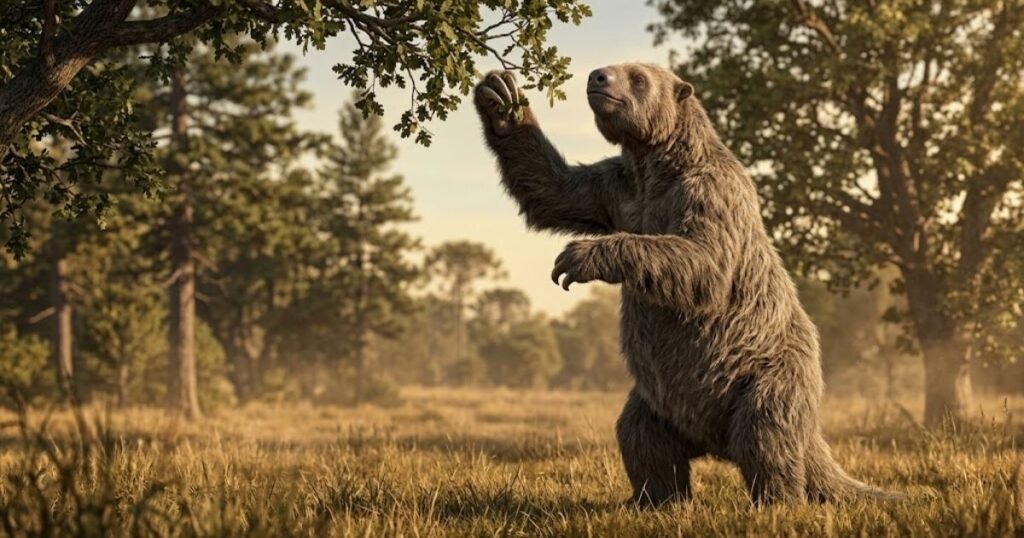
Unlike their much smaller modern relatives, giant ground sloths featured robust limbs and large claws, perfectly adapted for their herbivorous diet, which primarily consisted of leaves, fruits, and possibly even bark from trees. Their vast habitats ranged from open grasslands to dense forests, allowing them to thrive in diverse environments.
The behavior of Megatherium reflects a fascinating adaptation to their surroundings, showing signs of both solitary and social living. Unlike today’s slow-moving sloths, these giant prehistoric behemoths may have been more mobile and opportunistic in foraging.
Their interactions with humans remain enigmatic, but as human populations expanded, these colossal creatures faced increasing pressures that ultimately contributed to their extinction. This interplay reveals a time when yes, indeed were animals bigger in the past, showcasing a world where ground sloths exemplified the grandeur of nature’s evolutionary experiments.
Titanosaur Dreadnoughtus
| Attribute | Details |
|---|---|
| Scientific name | Dreadnoughtus schrani |
| Estimated size | 26 meters (85 feet) in length (some newer estimates suggest 22–26 m) |
| Weight | Estimated 60–65 tons (newer bone-density studies suggest closer to 30–40 tons) |
| Height | Approximately 9 meters (30 feet) at the shoulder/back |
| Habitat | Lush forests and floodplains of present-day Patagonia, Argentina |
Dreadnoughtus, a colossal member of the titanosaurs, represents as a largest extinct animal to roam the Earth. This giant prehistoric creature has been estimated to reach lengths of up to 85 feet (26 meters) and weigh around 65 tons, making it one of the biggest dinosaurs on record.
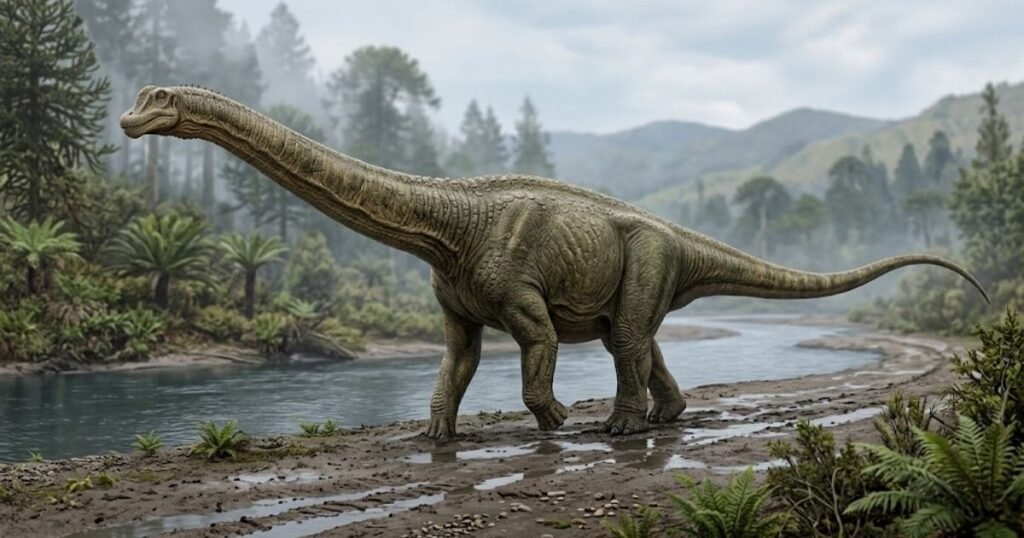
Its height, towering at nearly 30 feet, would have placed it eye-to-eye with modern skyscrapers. Living during the Late Cretaceous period, approximately 77 million years ago, Dreadnoughtus inhabited lush landscapes rich in foliage, feasting primarily on vegetation.
The remarkable size of sauropods like Dreadnoughtus sparks curiosity about why these animals that used to be giants evolved to become so enormous. Researchers suggest factors such as their herbivorous diet, which allowed them to thrive on abundant plant life, and a unique physiological structure that enabled efficient nutrient processing.
Dreadnoughtus Vs African Elephant
Compared to modern African elephants, another of nature’s enormous creations, Dreadnoughtus dwarfs its relative with sheer mass and length, making it a significant point of discussion in the realm of giant animals.
| Feature | Dreadnoughtus | African Elephant |
|---|---|---|
| Estimated Length | 85 feet (26 m) | 13 feet (4 m) |
| Estimated Mass | 65 tons | 6 tons |
| Average Height | 30 feet (9 m) | 10–13 feet (3–4 m) |
| Time Period | Late Cretaceous (77 million years ago) | Present |
| Habitat | Lush forests | Savannas and forests |
| Diet | Herbivore (leaves and ferns) | Herbivore (grass and bark) |
With this comparison, the phenomenal dimensions of Dreadnoughtus become more relatable, offering a tangible sense of scale that highlights its status among the largest extinct animals. Its legacy, towering over the landscape of prehistoric life, serves as a reminder of Earth’s capacity for the colossal.
Deinosuchus
| Attribute | Details |
| Scientific name | Deinosuchus (species include D. riograndensis, D. schwimmeri, D. hatcheri) |
| Estimated size | 10–12 meters (33–39 feet) in length |
| Weight | Estimated 5,000–8,500 kg (5.5–9.4 tons) |
| Habitat | Coastal swamps, estuaries, and river systems of North America |
Deinosuchus, known as one of the biggest extinct animals, roamed the Earth during the Late Cretaceous period, towering over many of its contemporaries. As a member of the crocodilian family, this fearsome predator could reach lengths of up to 33 feet and weigh in excess of 8 tons.
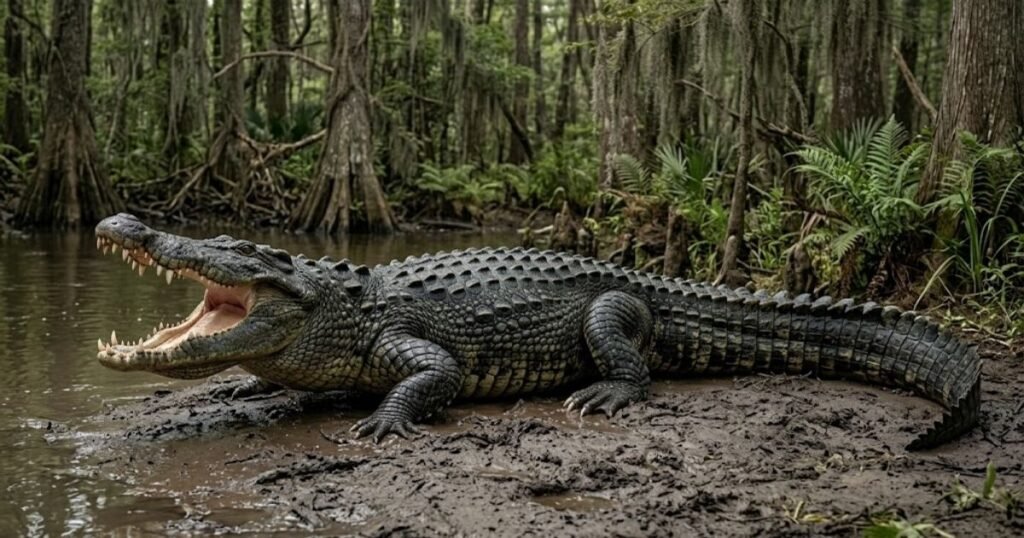
Imagine a creature that blended the sleek traits of modern crocodiles with sheer size and power its bite force was estimated to be among the most powerful ever recorded, rivaling even that of today’s largest crocodiles.
Primarily inhabiting coastal regions, rivers, and freshwater lakes, Deinosuchus was a master of ambush, preying not just on fish but also on dinosaurs that ventured too close to the water’s edge. This ability to hunt some of the largest land animals of its time makes it one of the scary animals before dinosaurs, showcasing how life on Earth once consisted of astonishing giants.
With its massive jaws capable of crushing bone and an anatomy built for stealth, Deinosuchus was truly a formidable presence, earning its place among the animals that used to be giants in the history of our planet.
Titanoboa
| Attribute | Details |
| Scientific name | Titanoboa cerrejonensis |
| Estimated size | 12–15 meters (40–49 feet) in length |
| Weight | Approximately 1,135 kg (2,500 lbs) |
| Habitat | Tropical rainforests and river systems of what is now northern South America (Colombia) |
The Titanoboa, recognized as the largest giant extinct snake, roamed Earth approximately 60 million years ago during the Paleocene epoch. Estimated to stretch an astonishing 40 to 50 feet in length and weighing over 1,100 pounds, this colossal reptile primarily inhabited the humid, swampy forests of what is now Colombia.
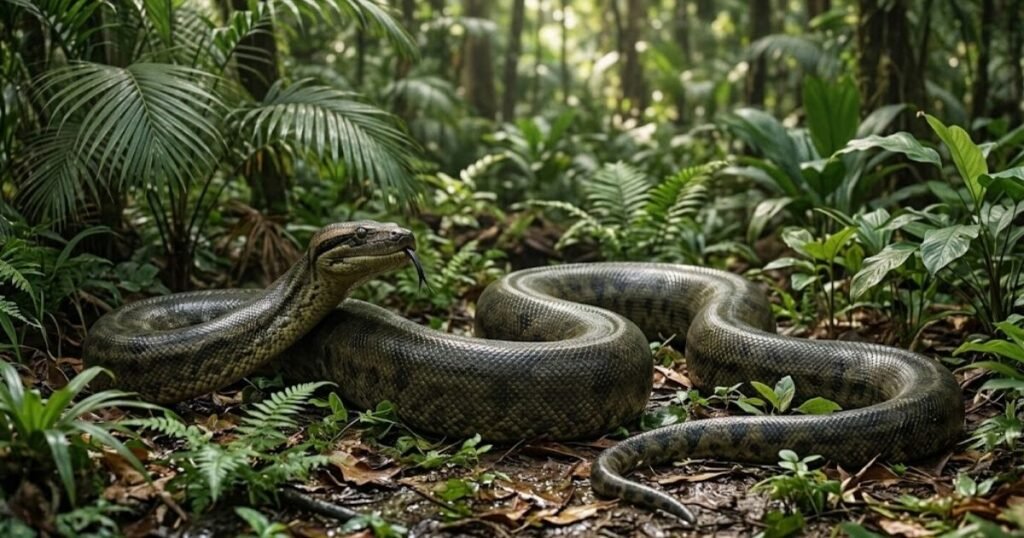
As a carnivore, it feasted on large prey, including ancient crocodilians and even large fish, showcasing hunting techniques that involved powerful constriction, similar to modern boas and anacondas. This giant prehistoric serpent represents one of the biggest extinct animal, painting a vivid picture of a time when reptiles dominated land and water.
Fossils of the Titanoboa were discovered in coal mines, providing critical insights into its remarkable size and lifestyle. Titanoboa’s fame lies not only in its size but also in its role as a scientific marvel, shedding light on evolutionary adaptations and ancient ecosystems.
Titanoboa Vs Modern Snakes
| Feature | Titanoboa | Green Anaconda | Reticulated Python |
|---|---|---|---|
| Estimated Length | 40–50 feet (12–15 m) | Up to 30 feet (9 m) | Up to 20 feet (6 m) |
| Estimated Weight | 1,100 pounds (500 kg) | Up to 550 pounds (250 kg) | Up to 350 pounds (159 kg) |
| Habitat | Swamps and forests | Wetlands and rivers | Forests and grasslands |
| Diet | Large prey, including crocodiles | Fish, birds, and mammals | Birds and small mammals |
In comparison, while the green anaconda and reticulated python are formidable, neither can match the Titanoboa’s impressive dimensions or weight. This fascinating juxtaposition not only highlights Titanoboa’s position as a titan among snakes but also illustrates how the environment and evolutionary pressures shaped the size of these creatures over millions of years.
Basilosaurus
| Attribute | Details |
| Scientific name | Basilosaurus (species include B. cetoides, B. isis) |
| Estimated size | 15–20 meters (50–65 feet) in length |
| Weight | Approximately 5,000–6,500 kg (5.5–7.2 tons) |
| Habitat | Shallow tropical to subtropical seas worldwide (notably around present-day Egypt and the southeastern United States) |
Basilosaurus, often mistakenly referred to as a dinosaur due to its intimidating stature, was actually an ancient whale that epitomized the remarkable evolution of marine life. Its name, meaning “king lizard,” is misleading since this enormous creature, reaching lengths of up to 60 feet, was a marine mammal not a reptile.
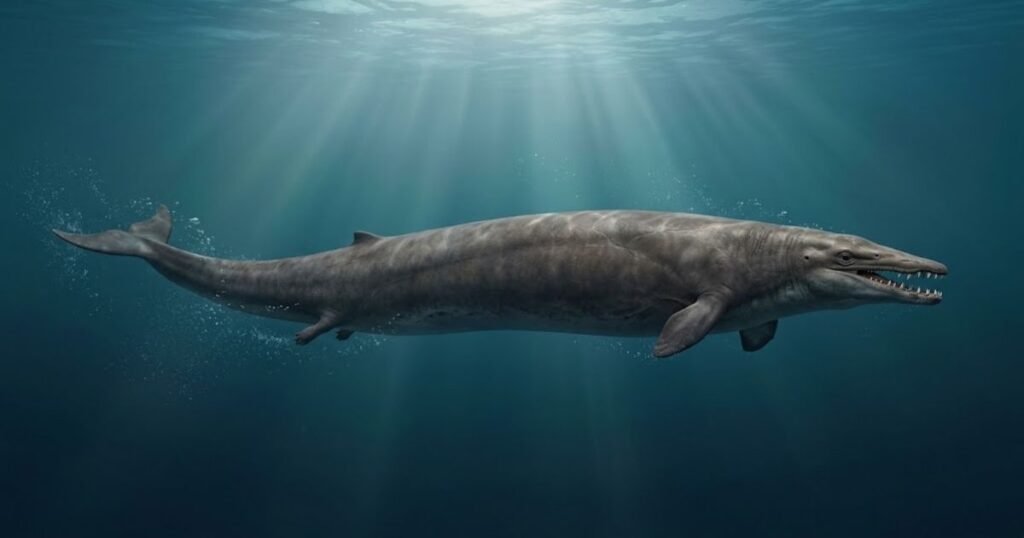
Unlike the land-dwelling giants of the Mesozoic era, Basilosaurus swam through the warm waters of the late Eocene epoch, showcasing how prehistoric whales evolved to reach staggering sizes, becoming some of the largest extinct animals on the planet.
This formidable predator thrived on a diet of fish and other marine organisms, employing a unique hunting behavior that combined speed and agility, akin to today’s apex predators of the sea. Fossil evidence indicates that Basilosaurus roamed diverse habitats, from shallow coastal regions to open oceans, further cementing its role as one of the creepy sea animals that ruled its aquatic domain.
Its evolutionary significance lies in its transitional features, providing critical insights into the lineage of modern whales, proving that the ocean held its own giants, separate yet equally fascinating to the dinosaurs that dominated the land.
Elephant Birds
| Attribute | Details |
| Scientific name | Aepyornis (largest species: Aepyornis maximus); related genus Vorombe (Vorombe titan) |
| Estimated size | Up to 3 meters (10 feet) tall |
| Weight | Up to 500–650 kg (1,100–1,400 lbs) |
| Habitat | Forests and grasslands of Madagascar |
Elephant birds, the monumental giants of Madagascar, roamed the Earth until just a few hundred years ago. Towering in height, they were the largest species of birds known to have existed, standing up to 3 meters (nearly 10 feet) tall and weighing an estimated 450 kilograms.
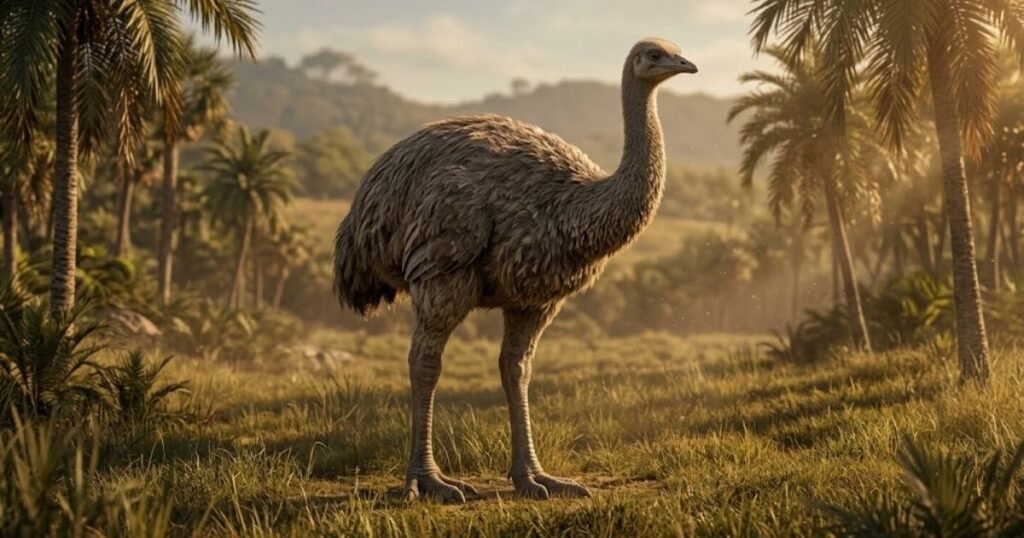
These colossal birds thrived in Madagascar’s rich and diverse ecosystems, which provided a unique habitat, teeming with flora that catered to their massive size and dietary needs. Their adaptations led to flightlessness, much like the modern ostrich, as they evolved in a predator-poor environment.
Unlike their avian cousins, elephant birds laid eggs that were the size of basketballs, showcasing their impressive reproductive strategies. Their diet was primarily herbivorous, consisting of fruits, seeds, and leaves, making them key players in their ecosystem.
Elephant Birds Vs Modern Birds
| Attribute | Elephant Bird | Ostrich | Emu | Cassowary |
|---|---|---|---|---|
| Height | Up to 3 meters (10 ft) | Up to 2.8 meters (9.2 ft) | Up to 1.9 meters (6.2 ft) | Up to 1.8 meters (5.9 ft) |
| Estimated Weight | 450 kg (990 lbs) | 150 kg (330 lbs) | 56 kg (123 lbs) | 70 kg (154 lbs) |
| Egg Size | Up to 30 cm (1 ft) | About 15 cm (6 in) | About 14 cm (5.5 in) | About 15 cm (6 in) |
Siberian Unicorn
| Attribute | Details |
| Scientific name | Elasmotherium sibiricum |
| Estimated size | Around 4.5 meters (15 feet) in length, roughly 2 meters (6.6 feet) tall at the shoulder |
| Weight | Approximately 3,500–4,500 kg (3.9–5 tons) |
| Habitat | Steppe and grassland regions of Eurasia (from Russia to Central Asia and China) |
Elasmotherium, popularly known as the Siberian unicorn, was not a unicorn in the mythical sense but a colossal rhinoceros that roamed the Earth during the Ice Age. Weighing up to 4,000 kilograms and stretching up to 4 meters in length, this giant creature sported an impressive, elongated horn that could measure nearly 2 meters.
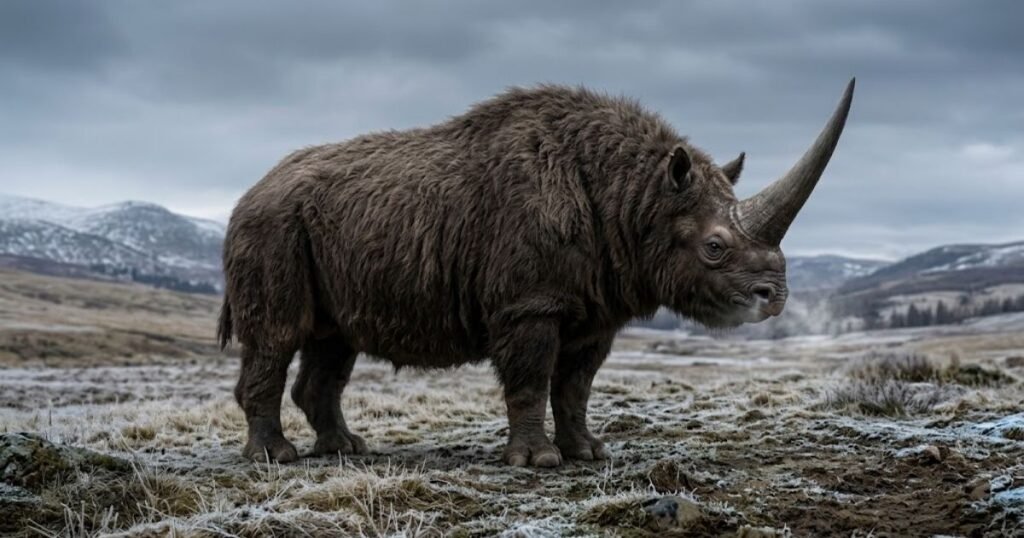
Unlike modern rhinos, which generally have two horns, the Elasmotherium had a prominent single horn that likely served both as a display feature in mating rituals and as a tool for foraging through the icy terrain.
Thriving in the cold grasslands of Eurasia, its habitat was marked by a mix of tundra and steppe, rich with herbaceous vegetation. This herbivore predominantly fed on tough, fibrous plants, using its formidable horn to break through the ice.
The Elasmotherium’s extinction around 39,000 years ago, possibly due to climate change and human hunting, serves as a poignant reminder of the gigantic fauna that once inhabited our planet. As we learn more about these great beasts, Elasmotherium becomes an emblem of how much the Earth has changed and why the remnants of these “giants” still fascinate us today.
Why Did These Giant Animals Go Extinct?
Many giant animals went extinct due to major environmental changes, climate shifts, habitat loss, and changing food sources. Natural disasters, competition, disease, and human hunting also contributed to the disappearance of some prehistoric giants.
Climate Change: Climate change has been a silent yet formidable force behind the extinction of many of the biggest extinct animals. As Earth’s climate fluctuated, these giants faced extreme weather patterns that altered their living conditions. For instance, during the last Ice Age, rising temperatures and shifting climates could have led to a loss of habitats that were once teeming with life.
Environmental Changes: Environmental changes, from volcanic eruptions to glacial movements, reshaped landscapes and disrupted ecosystems. For the giant animals that thrived in lush forests and vast plains, these transformations often spelled doom. As ancient flora and fauna perished, the delicate balance of these habitats was thrown into turmoil.
Habitat Loss: Habitat loss remains a disturbing reality for many species, both past and present. For the largest animals, such as the woolly mammoth and the giant ground sloth, expanding human populations encroached upon their territories. As forests were cleared for agriculture and urban development, these giants found their hunting grounds shrinking.
Changes in Food Supply: Shifts in food supply drastically affected the survival of animals that used to be giants. Many of these species had specialized diets, relying on specific plants and prey that became unavailable due to environmental changes or habitat encroachment. For instance, the giant herbivores lost their primary food sources as dense vegetation gave way to barren land. The ripple effects of these changes led to nutritional stress, ultimately weakening their populations and hastening their extinction.
Competition: Competition for resources played a significant role in the extinction narratives of these once-mighty beasts. As smaller, more adaptable species emerged, they often outcompeted the giants for dwindling food supplies. This struggle for survival pressured the larger animals, creating an evolutionary trap where their size became a liability instead of an asset.
Human Pressure: Human pressure has been a significant catalyst in the extinction of many large species. As hunter-gatherer societies expanded, the hunting of large animals became a subsistence strategy that decimated populations. The arrival of agriculture and more advanced tools allowed for even more intensive hunting practices, leading to unsustainable exploitation.
Conclusion
The stories of the biggest extinct animals remind us of the vast diversity of life that has graced our planet. Each creature’s demise highlights the delicate balance of ecosystems and underscores the consequences of our actions on nature.
As we reflect on the woolly mammoths, the giant ground sloths, and other extraordinary beings that once inhabited Earth, we are prompted to consider our responsibilities in preserving the rich tapestry of life that remains. The extinction of these magnificent animals serves not only as a historical lesson but as a call to action for contemporary conservation efforts.
FAQs
Did Animals Used To Be Bigger?
Yes, many prehistoric animals were indeed much larger than their modern relatives. For example, the woolly mammoth and titanic dinosaurs like Argentinosaurus highlight how different environmental factors and evolutionary pressures have shaped size over time.
Were There Scary Animals Before Dinosaurs?
Yes, there were indeed scary animals before dinosaurs, such as the massive predatory fish like Dunkleosteus and gigantic insects like the dragonfly-like Meganeura. These prehistoric creatures roamed the Earth during the Devonian and Carboniferous periods, showcasing a diverse range of terrifying life forms long before the Age of Dinosaurs.
What Is The Scariest Extinct Animal?
The scariest extinct animal is often considered to be the Megalodon, a giant shark that could grow over 60 feet long. With its massive teeth and predatory nature, it instilled fear in the oceans millions of years ago, showcasing the power of nature’s most formidable predators.
Were Animals Bigger In The Past?
Yes, many animals were indeed larger in the past, particularly during the Mesozoic and Cenozoic eras. Dinosaurs, giant mammals like woolly mammoths, and massive marine reptiles showcase this trend of increased size due to factors like abundant resources and different environmental conditions.
Why Were The Dinosaurs So Big?
Dinosaurs grew large due to a combination of evolutionary advantages, such as efficient respiratory systems and a diet of abundant vegetation. Their size helped deter predators and optimize survival in their diverse habitats.
What Is The Largest Animal Ever Existed On Earth Extinct?
The largest animal to have ever existed on Earth is the blue whale, which is still alive today. If considering extinct creatures, the Argentinosaurus, a colossal dinosaur, holds the record for the heaviest, estimated to weigh up to 100 tons.
What Are The Biggest Extinct Animals In The Ocean?
Some of the biggest extinct animals in the ocean include the megalodon, a colossal shark that reached lengths of up to 60 feet, and the Argentinosaurus, a giant marine reptile estimated to be over 70 feet long.