How Strong Are Kangaroos? Complete Guide To Kangaroo Strength
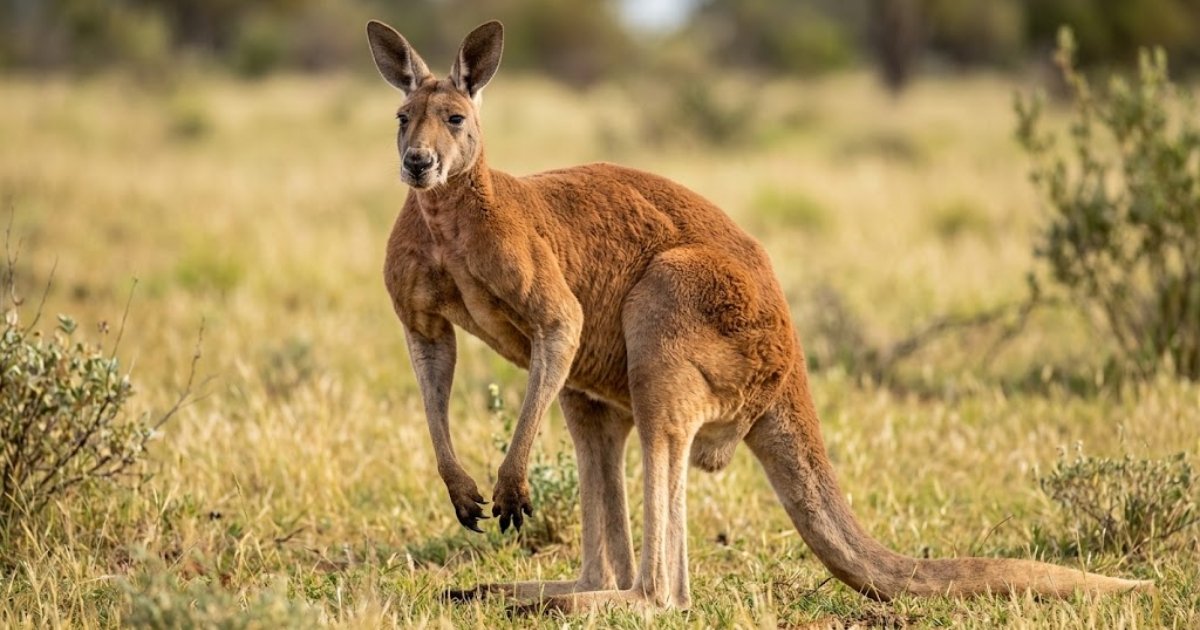
Kangaroos are not just adorable symbols of Australia; they are remarkable athletes of the animal kingdom. Known for their incredibly muscular bodies, powerful hind legs, and strong tails, these marsupials exhibit strength that often surprises even the most seasoned animal enthusiasts.
Understanding “how strong are kangaroos” requires more than just recognizing muscle size; it’s about the unique combination of their leg structures, tendons, and body mechanics. In this comprehensive guide, readers will explore the impressive force behind a kangaroo’s kick, their speed, and how these features stack up against human strength.
Quick Answer: How Strong Are Kangaroos?
Kangaroos are remarkably strong animals, primarily due to their powerful hind legs and robust tails. These attributes allow them to deliver forceful kicks that can exert over 800 pounds of pressure an impressive feat for any creature.
Their unique anatomy enables them to leap vast distances and heights, showcasing their remarkable athleticism. Male kangaroos, in particular, develop particularly muscular upper bodies, enhancing their strength and agility further. This muscular build not only aids in physical confrontations but also plays a vital role in their social dynamics and mating rituals.
Their strength isn’t just limited to physical capabilities; their tendons also store energy efficiently, which powers their extraordinary hopping. The kangaroo’s strength is intricately tied to its evolutionary adaptations, making it one of nature’s most fascinating examples of power combined with agility.
Kangaroo Key Features At A Glance
| Feature | Details |
|---|---|
| Kangaroo Species | Eastern Grey, Red, Western Grey, Antilopine |
| Average Size | 4–6 feet (1.2–1.8 meters) |
| Maximum Size | Up to 8 feet (2.4 meters) (Red Kangaroo) |
| Powerful Hind Legs | Muscular legs designed for long-distance travel |
| Tail Function | Acts as a counterbalance while jumping, aiding in stability |
| Jumping Ability | Can cover up to 30 feet (9 meters) in a single leap |
| Speed | Up to 35 mph (56 km/h) in short bursts |
| Fighting Behavior | Use of boxing-like techniques to establish dominance |
| Kick/Punch Capability | Powerful hind kicks that can injure predators |
Kangaroos are not just iconic symbols of Australia; their incredible strength and unique adaptations make them fascinating creatures. With powerful hind legs, they can leap great distances and showcase an impressive speed that aids both in escaping threats and traversing their native landscapes.
Their muscular legs are built to endure long journeys, making them efficient travelers across open terrains. Their tail plays a significant role, providing balance during jumps and while moving at high speeds.
This unique anatomical feature also aids in fighting behavior, where kangaroos use both their strong kicks and boxing-like punches to assert dominance among peers. Thus, the strength of a kangaroo is not only physical but is intricately linked to its survival, enabling it to thrive in the wild.
What Makes Kangaroos So Physically Powerful?
Kangaroos are remarkable examples of evolution, exhibiting an overall body design that is uniquely suited for their dynamic lifestyle. Their powerful hind limbs an extension of their muscular structure serve as the primary engine for energy-efficient hopping.
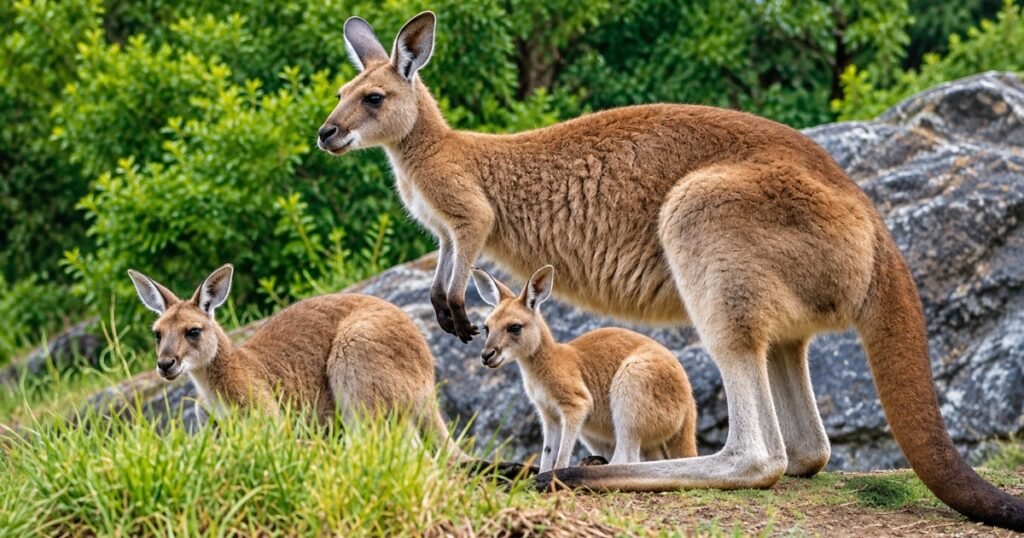
Each leap is not just a simple act of jumping; it’s a symphony of biomechanics where large muscle groups work harmoniously. The vast musculature in their legs, particularly the quadriceps and calf muscles, generates immense force, allowing them to cover vast distances with minimal energy consumption.
The tendons play a crucial role, acting as elastic springs that store and release energy with each hop. This elasticity ensures that kangaroos can maintain momentum while exerting less energy, making them one of the most efficient travelers in the animal kingdom.
Their strong tails are not just for balance but also serve as a stabilizing counterweight during movement, contributing significantly to their overall agility. It’s essential to understand that kangaroo power is not attributed to a single muscle but to a collaborative network of muscles, tendons, and structural elements that together create an astounding form of locomotion, making them both powerful and efficient.
You may also read: Top 25 Animals That Gallop (With Pictures)Muscle And Tendon Working As One System
Kangaroos possess a fascinating synergy between their powerful muscles and specialized tendons that enables them to perform remarkable feats of movement. Each hop begins with the contraction of their strong hind leg muscles, generating a substantial force that propels them forward.
The real magic lies in their tendons, especially the large Achilles tendon, which can store elastic energy during the landing phase. This energy is then released during the next leap, providing a significant boost that makes hopping not just powerful, but incredibly efficient.
The efficiency of their hopping is further enhanced by the unique design of their legs, which allows them to conserve energy during repeated jumps. Instead of expending energy with each hop, kangaroos utilize the elasticity of their tendons to nearly “bounce” from one jump to the next.
This remarkable adaptation means that they can cover vast distances with minimal energy expenditure, making them perfectly suited for the demanding Australian landscape. The incredible muscle-tendon interaction is why kangaroo legs appear so powerful, as they not only seem to propel these marsupials effortlessly but also emphasize their evolutionary mastery of energy conservation in motion.
Why Male Kangaroos Look So Muscular
Male kangaroos showcase striking muscularity, particularly evident in their larger chest, robust shoulders, and powerful forelimbs. This impressive physique isn’t merely for show; it plays a crucial role in the world of male-to-male competition. During battles for dominance and territory, these muscular attributes give them the upper hand, enabling them to assert authority through sheer strength.
The iconic boxing and wrestling behavior seen among male kangaroos is not just a spectacle; it’s a natural display of their physical prowess. These confrontations serve as a way to establish hierarchy without escalating into dangerous confrontations, emphasizing the strategic use of strength.
Compared to their female counterparts, males possess distinct physical advantages that underscore their role in mating and survival. This muscular design is central to the strong kangaroo image, encapsulating the essence of not just brute force, but also agility and adaptability in the wild.
How Strong Are Kangaroos Legs?
Kangaroo legs are a marvel of nature, showcasing formidable strength that is crucial for their survival. The hind-leg muscles boast incredible power, allowing these marsupials to leap distances exceeding three times their body length. This powerful jumping mechanism not only aids in escaping predators but also enables them to cover vast terrains swiftly, maximizing their foraging efficiency.

Their kicking ability is equally impressive; a single strike can deter potential threats with surprising force. When landing after a leap, kangaroos demonstrate remarkable balance, employing their strong tails for stabilization. Unlike many animals, the legs of a kangaroo play a far more significant role in their power than their arms, which are relatively underdeveloped.
This emphasis on leg strength directly correlates with their jumping performance and overall locomotion, showcasing an evolutionary design that enhances their capability to thrive in the wild.
How Strong Is A Kangaroo Kick?
A kangaroo’s kick is not just powerful; it’s a formidable defense mechanism that can deliver an impressive force of up to 1,000 pounds. This incredible power derives primarily from their strong hind legs, which are not only muscular but also uniquely adapted for propulsion.
When a kangaroo prepares to kick, it typically engages its hind legs, drawing them back before unleashing an explosive thrust. This movement is supported by their robust tails, which act as a pivot point, maintaining balance during the kick and allowing for complex maneuvers that enhance their agility.
Kangaroos primarily utilize their kicking in two scenarios: defense against predators and intra-species disputes, often referred to as fighting. In defensive situations, the kangaroo may deliver a quick, powerful kick to deter a threat.
During fights, they incorporate a series of kicks, which are often coupled with body movements and tail support to stay upright. This dynamic use of strength and balance showcases their evolutionary adaptations, making them both fascinating and formidable creatures in the animal kingdom.
How Powerful Is A Kangaroo Punch?
Kangaroos, with their powerful legs and muscular forelimbs, demonstrate unique strength dynamics that go beyond mere punching. While their hindquarters provide impressive propulsion for movement, their forelimbs play a crucial role in grappling and boxing behavior, especially among males.
These strong arms are not just for show; they help stabilize their bodies while delivering swift punches, but also assist in holding and pushing opponents during confrontations, showcasing their versatility in combat.
Interestingly, the “punch” alone doesn’t encompass the full spectrum of a kangaroo’s strength. Male kangaroos engage in a mix of punching, grappling, and pushing to establish dominance and impress mates. The combination of these actions illustrates a strategic approach to confrontations, making their fights not just about raw power but also about agility and control.
Understanding this complexity sheds light on the kangaroo’s overall strength, highlighting that their combat style is a blend of tactical maneuvers and physical prowess, rather than a singular flashy punch.
How Strong Are Kangaroos Arms?
Kangaroos are often celebrated for their powerful hind legs, but their arms deserve attention too, particularly when exploring how strong are kangaroos arms. Equipped with well-developed shoulder and forearm muscles, kangaroos utilize their arms for crucial activities like grabbing and grappling.
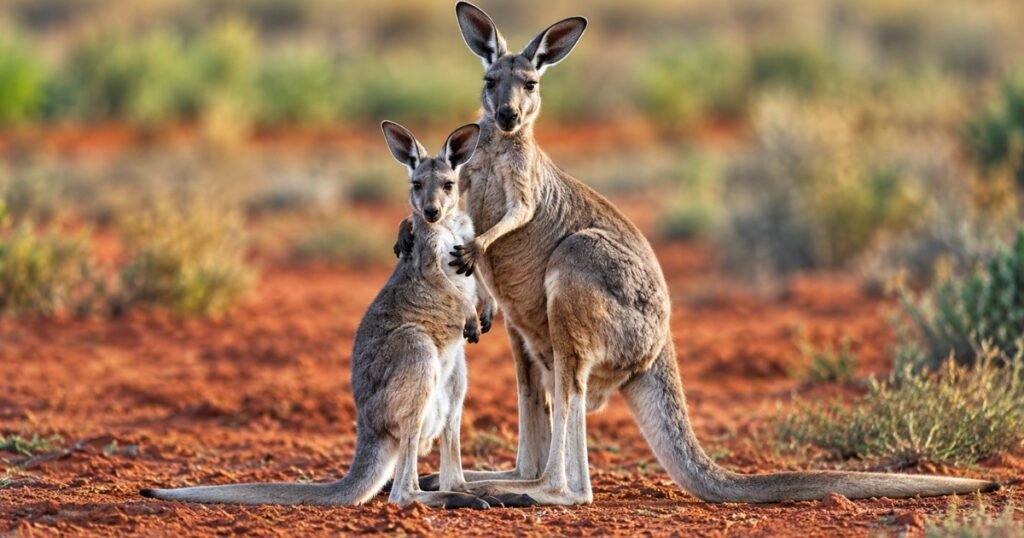
These adaptations allow them to efficiently hold onto mates during courtship or fend off rivals, showcasing a surprising level of strength that enhances their survival in the wild. In the realm of competition, male kangaroos engage in a unique form of boxing, where they use their arms to deliver powerful swipes and balances during skirmishes.
This behavior emphasizes the arms’ role in both conflict and social interactions, distinguishing them from the formidable hind legs primarily used for propulsion and jumping. While the exact strength of their punches isn’t quantified, the agility and versatility of their arms greatly complement their overall athleticism, highlighting a fascinating balance between their forelimb and hind limb functions in their daily lives.
How Strong Is A Kangaroo’s Tail?
A kangaroo’s tail is a marvel of nature, serving as a multifaceted tool rather than just a support structure for balance. While most might perceive it as mere assistance in maintaining stability, the tail plays a dynamic role during hopping, acting as a counterbalance that helps the kangaroo navigate the rugged Australian landscape with grace and precision.
Each powerful leap incorporates the tail not only for support but as an integral part of the movement, enhancing the animal’s propulsion and agility. During slower movements, the tail takes on the role of a “third leg,” providing additional stability while foraging or maneuvering through dense vegetation.
In thrilling displays of strength and agility, the tail becomes a pivotal player in fights, wielded like a weapon to deliver forceful strikes. It’s crucial to dispel the myth that a kangaroo’s tail is merely decorative; this remarkable organ is essential to their survival and success. In acknowledging its true purpose, we glimpse into the incredible adaptability of kangaroos, showcasing how this powerful appendage shapes their interactions with the environment.
How Fast Are Kangaroos?
Kangaroos, the iconic marsupials of Australia, boast an impressive maximum speed of up to 44 miles per hour (70 km/h) in short bursts, especially during escape from predators. Their normal travel speed is a more leisurely 10-15 miles per hour (16-24 km/h), showcasing their endurance over long distances.
This disparity highlights the kangaroo’s evolutionary design, which prioritizes efficient energy use during everyday movement while reserving bursts of speed for life-saving hops. Unlike traditional running, kangaroo locomotion is a specialized form of hopping, where powerful hind legs drive forward with substantial force.
This unique gait connects to the strength of their leg muscles; the larger the species, like the red kangaroo, the more formidable their leg power, allowing for greater propulsion and speed. Smaller species may not reach the same speeds, but they compensate with agility in navigating dense underbrush and hopping through varying terrains.
It’s crucial to distinguish speed from strength while kangaroos can sprint impressively, their muscle power also allows for extraordinary distances, exemplifying a remarkable balance of speed and stamina.
How High And How Far Can A Kangaroo Jump?
Kangaroos are celebrated for their impressive jumping abilities, with the average red kangaroo able to reach heights of up to 3 meters (about 10 feet) in a single leap. However, their most remarkable skill lies in their ability to cover distances; they can hop up to 9 meters (approximately 30 feet) in one bound.
This extraordinary range is facilitated by their powerful hind legs, which are not only muscular but are also enhanced by elastic tendons. These tendons act like springs, storing energy during each landing and releasing it to propel the kangaroo forward with minimal effort.
What truly sets kangaroos apart is their efficiency in long-distance travel. They can maintain a speed of around 20 to 25 km/h (about 12 to 15 mph) over considerable distances, utilizing a unique energy-saving mechanism that reduces fatigue.
During prolonged activity, they alternate between powerful jumps and gliding phases, allowing them to conserve energy while traversing vast Australian landscapes. This remarkable adaptation underscores their evolutionary prowess, making them not just agile jumpers, but also masters of endurance in their natural habitat.
How Strong Are Kangaroos Compared To Humans?
When evaluating how strong are kangaroos compared to humans, it’s crucial to focus on the specific strength profiles rather than delivering an absolute comparison. Human upper-body strength is primarily designed for manipulation and lifting, while kangaroos exhibit remarkable hind-leg power.

Kangaroo legs provide explosive jumps, propelling them up to ten feet high, a feat unattainable by humans in a single bound. This divergent anatomical purpose highlights that strength can only be defined by the type of physical capability being measured.
Upper Body Strength
Examining upper body strength, kangaroos possess relatively weaker arms compared to humans. Despite their underdeveloped forelimbs, male kangaroo boxing showcases some adeptness; they engage in playful sparring with powerful swipes and generalized posturing.
While human males utilize refined techniques in grappling and lifting, kangaroos focus on gripping and pushing, employing their body weight to assert dominance in playful competitions.
Lower Body Power
In the realm of lower body power, kangaroo hind legs dwarf human legs in terms of sheer strength and functionality. These powerful limbs are built for not just jumping but also delivering strong kicks, a mechanism that serves both dominance and defense.
The unique muscle and tendon mechanics enable kangaroos to conserve energy efficiently while hopping, proving they are the kings of distance jumping. With highly specialized muscles that allow for maximum output with minimal input, kangaroos are finely tuned for endurance and power in ways human legs simply aren’t.
Endurance And Efficiency
From an endurance and efficiency standpoint, kangaroos excel with their incredible energy conservation capabilities. Their unique hopping motion allows them to travel long distances with minimal energy expenditure, an evolutionary adaptation for life in the Australian outback. In contrast, humans rely on varied locomotion, sacrificing some efficiency for versatility.
Kangaroos demonstrate that strength is not merely a measure of muscle but involves intricate adaptations that support sustained activity and survival, offering a fascinating glimpse into the diverse applications of strength across species.
Are Kangaroos Stronger Than Gorillas?
When comparing kangaroos and gorillas, it’s essential to understand that their strengths manifest differently, shaped by their unique adaptations. Gorillas boast a robust upper body, equipped with powerful arms designed for climbing and self-defense. Their muscle mass is impressive, allowing them to lift and manipulate heavy objects with ease.
In contrast, kangaroos rely on their specialized hind legs engineered for explosive power and remarkable elasticity. This gives them the ability to cover vast distances with minimal energy expenditure, showcasing a form of strength adapted for speed rather than brute force.
Moreover, the locomotion of these two animals highlights their differences; while gorillas exhibit agility and strength in their upper bodies when moving through trees or defending their territory, kangaroos utilize their powerful hind limbs for long hops, allowing them to navigate the Australian landscape efficiently.
Thus, determining a clear “winner” in strength between these two fascinating creatures hinges on the type of strength being measured be it raw upper body power in gorillas or dynamic, elastic locomotion in kangaroos. This nuanced comparison reveals not just the strengths of each but also the evolutionary paths that have shaped their capabilities.
How Kangaroos Actually Fight
Male kangaroos engage in fierce competition, often seen battling for dominance and the attention of females. These fights can resemble boxing matches, where males stand on their powerful hind legs and use their front paws to grapple with each other.
Kicking plays a crucial role in their combat style, with muscular hind legs delivering powerful blows capable of causing significant injury. Their ability to adopt a tail-supported posture allows them to maintain balance and leverage while throwing punches or kicking, showcasing both strength and agility.
During these confrontations, kangaroos often push against one another to establish dominance, a tactic that requires strategy and precise timing. While some might assume these confrontations may be aggressive toward humans, it’s important to note that kangaroos typically engage in these behaviors strictly within their species, using this fighting technique to settle disputes and avoid escalating to actual violence.
How Kangaroos Use Their Strength In Real Life
Kangaroos are marvels of locomotion, using their powerful legs to cover vast distances with efficiency. When escaping from predators, they utilize their strength for quick, agile movements, often zigzagging to evade capture.
Male competition plays a pivotal role in their social structure, driving them to showcase their physical prowess through powerful displays during mating season. When defending territory or a mate, kangaroos employ their muscular build to assert dominance, warding off challengers.
Furthermore, their remarkable climbing ability aids in feeding and foraging, allowing kangaroos to navigate diverse terrains. In social contexts, their bodily strength also fosters connections, as they engage in play fights that reinforce social bonds among groups. With adaptations for long-distance jumping, kangaroos exemplify a unique blend of strength and agility, making them one of nature’s most fascinating creatures.
Are Kangaroos Dangerous To Humans?
Kangaroos are remarkably strong animals, with their powerful hind legs capable of delivering formidable kicks, especially when they feel threatened. Although they are generally not aggressive, encounters with humans can become volatile under certain circumstances.
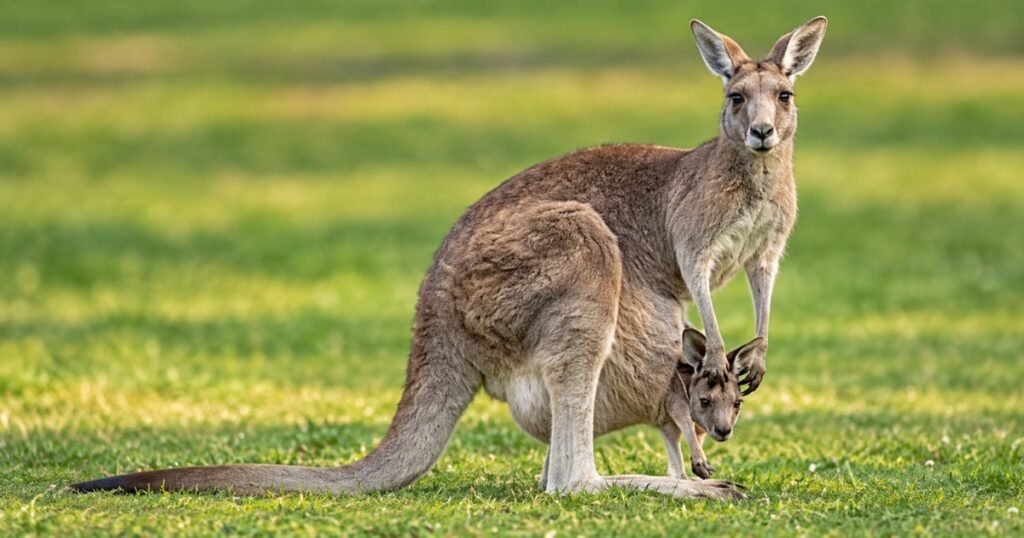
Kangaroo-human interactions often occur in rural or urban areas as these marsupials venture closer to human settlements in search of food and resources. Most incidents result from humans inadvertently invading their space or displaying aggressive behavior towards them.
Defensive behaviors in kangaroos become evident when they sense danger. This can occur if a kangaroo feels cornered, especially if it perceives a threat to itself or its young. Humans should avoid approaching, feeding, or cornering these wild animals, as such actions can lead to defensive responses, putting both parties at risk.
In situations where kangaroos face confrontation, they may resort to kicking or using their claws to defend themselves, emphasizing the importance of maintaining a respectful distance.
Safety Tips If You See A Kangaroo
- Keep a respectful distance from kangaroos and observe them from afar.
- Never corner or provoke a kangaroo, as sudden movements may trigger a defensive reaction.
- Avoid unnecessary close approaches, especially when encountering wild kangaroos.
- Do not interfere with fighting kangaroos; give them space and let them move away naturally.
- Follow local wildlife guidance to ensure safe and responsible encounters.
Kangaroo Strength: Myths Vs Facts
| Myth | Fact |
|---|---|
| Kangaroos are strong only because of their muscles | Tendons, body mechanics, and muscles all contribute to their strength. |
| Their tail is only for balance | It also plays a crucial role in supporting movement and maintaining posture. |
| Kangaroos constantly attack humans | Fighting behavior is primarily linked to defense and competition, not aggression. |
| Kangaroos only use their legs | They also leverage their forelimbs and tail for various activities. |
| A single exact kick number explains their strength | True strength depends on force, body mechanics, and situational context. |
Kangaroo strength is often oversimplified, leaning heavily on muscular prowess, but the reality is more intricate. Their remarkable power arises not just from muscles, but from the harmonious interplay of tendons and biomechanics, enabling them to leap impressive distances with ease.
Their long tail is not just a counterbalance; it’s an essential stabilizing force that enhances their agility and posture during movement. Another common misconception is the portrayal of kangaroos as aggressive creatures. In truth, they typically exhibit fighting behaviors related to competition or self-defense rather than overt attacks on humans.
While their powerful legs are often in the spotlight, their forelimbs and tail contribute significantly to their overall maneuverability and strength. Ultimately, understanding the multifaceted nature of kangaroo strength allows us to appreciate these extraordinary animals for more than just their iconic kicks.
Kangaroo Strength Comparison Table
When comparing the strengths of kangaroos and humans, the differences are striking. Kangaroos are renowned for their exceptional lower-body power; their powerful hind legs allow them to leap impressive distances, a feat that humans cannot match. Their specialized jumping ability demonstrates the evolutionary adaptations that have made them formidable in their natural habitat.
Upper-body strength varies significantly among humans, but kangaroos boast strong forelimbs that they use in unique ways, such as boxing and grappling during fights. Their powerful tail contributes to their balance and movement, essential for navigating the rugged Australian terrain. In contrast, humans rely on muscle groups across their bodies, which offer versatility but lack the concentrated power seen in kangaroos.
Here’s a comprehensive comparison table to illustrate these differences more clearly:
| Feature | Kangaroo | Human |
|---|---|---|
| Upper-Body Strength | Strong forelimbs, especially in males | Variable |
| Lower-Body Power | Highly specialized for jumping and kicking | Less specialized |
| Jumping Ability | Extremely powerful | Much lower |
| Tail Function | Balance, support, and movement | Not applicable |
| Fighting Style | Boxing, grappling, and kicking | Varies |
| Main Source of Power | Hind legs and tendons | Muscles across the body |
Conclusion
Unveiling how strong are kangaroos reveals a fascinating interplay of muscle, tendons, and evolutionary adaptations that contribute to their raw power. Beyond the visible size of their muscles, it’s the synergy between their hind legs and tails that allows these animals to demonstrate extraordinary agility and strength.
From delivering powerful kicks and punches to achieving impressive leaps, kangaroos showcase a unique biomechanical efficiency that sets them apart.
FAQs
Are Kangaroos Stronger Than Humans?
Yes, kangaroos are generally stronger than humans due to their powerful hind legs, which allow them to jump great distances and deliver strong kicks. Their muscular build enables them to outrun humans and defend themselves effectively in the wild.
How Hard Can A Kangaroo Kick?
A kangaroo can kick with incredible force, capable of delivering a blow that can reach up to 759 pounds of pressure, which is strong enough to injure or even kill a large predator.
Who Would Win, A Kangaroo Or A Gorilla?
In a hypothetical confrontation, a gorilla would likely win due to its superior strength and size compared to a kangaroo. While kangaroos are agile and can deliver powerful kicks, a gorilla’s physical prowess and intelligence would give it the advantage in a one-on-one encounter.
Who Kicks Harder, A Horse Or A Kangaroo?
A horse generally kicks harder due to its larger size and muscle mass, delivering significant force with its powerful hind legs. However, a kangaroo’s kick is incredibly strong relative to its size and can be quite dangerous, especially when defending itself.