The Complete List of 38 Animals With Webbed Feet
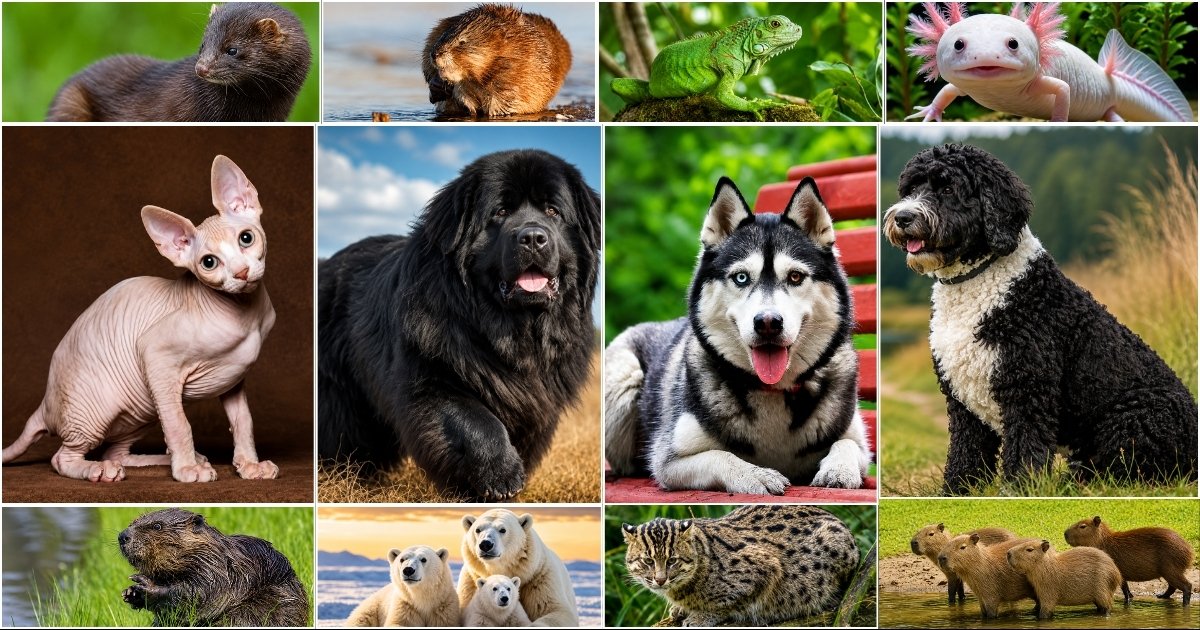
Animals with webbed feet feature a unique skin membrane that connects their toes, enhancing their ability to glide through water with ease. This fascinating adaptation isn’t limited to just one group; you’ll find it among birds, mammals, reptiles, and amphibians alike.
In this blog post, we present a complete list of 38 animals possessing this remarkable trait, offering insight into how these creatures thrive in their aquatic environments.
What Are Webbed Feet?
Webbed feet refer to a unique anatomical feature where the toes are connected by a thin membrane, known as the interdigital membrane, which enhances an animal’s ability to swim efficiently. This adaptation is particularly beneficial for webbed feet animals like ducks and otters, allowing them to paddle through water with ease.
Different species exhibit varying degrees of webbing; fully webbed feet, as seen in swans, provide maximum propulsion, while partially webbed feet, found in some birds, offer a balance between swimming and walking on land.
Not all animals that have webbed feet use them primarily for swimming. For instance, some webbed feet animal, like certain amphibians, utilize their unique toe structures to navigate muddy or soft terrains, making them agile in diverse environments.
This design allows these webbed animals to traverse wetlands and snow effectively, showcasing the versatility of webbed adaptations in the animal kingdom. The evolution of webbing is as much about survival on solid ground as it is about mastery in water, highlighting the remarkable ways animals have adapted to their ecological niches.
Insects took a different evolutionary path altogether rather than webbed feet, many developed extraordinary cognitive and problem-solving skills instead, as explored in our guide on the smartest insects in the world.
Birds With Webbed Feet
Webbed feet are a remarkable adaptation that enhance the swimming abilities of waterbirds, allowing them to glide effortlessly through their aquatic environments. Birds like ducks and swans possess fully webbed feet, where the skin is stretched between each toe, acting like a paddle that propels them forward with efficiency.
Other aquatic species, such as grebes, exhibit a slightly different structure with more elongated toes and partial webbing. This variation enables them to maneuver with agility while diving and foraging beneath the water’s surface.
Albatross
Albatrosses boast large, webbed feet that play a pivotal role in their oceanic life. These feet, while not designed for efficient walking on land, excel at stabilizing the bird during extended gliding over the sea.
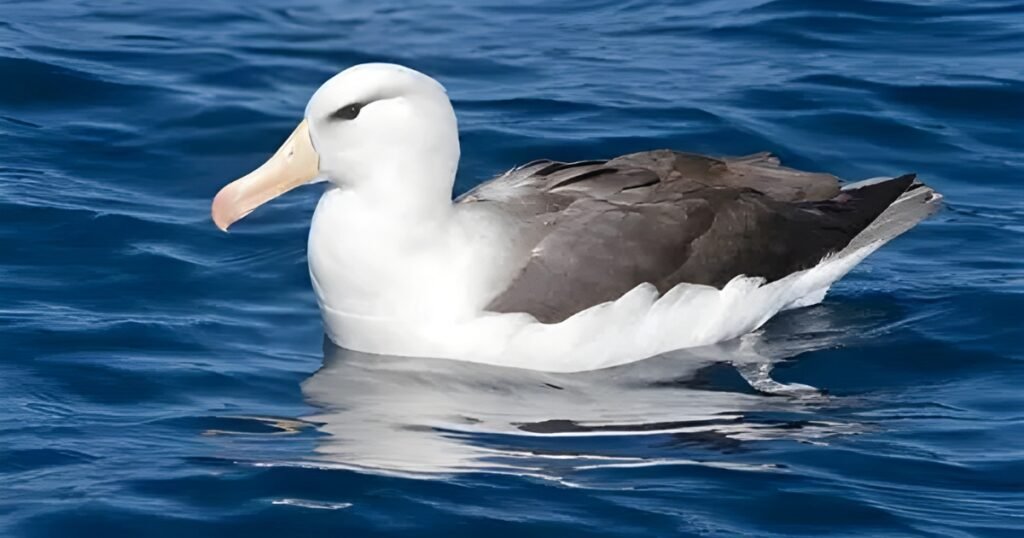
Their webbing facilitates powerful strokes when swimming, allowing them to traverse vast oceanic distances with minimal energy. Interestingly, the structure also reflects their adaptation to a marine lifestyle, where every element is fine-tuned to maximize efficiency.
On land, the albatross uses its feet more for balance than mobility, often seen waddling awkwardly when nesting. Notably, their webbed feet provide critical support during the mating rituals, where stability can enhance courtship displays.
This blend of grace in the air and clumsiness on land underscores the albatross’s extraordinary evolutionary journey shaped by its dependence on the ocean.
Antarctic Petrels
Antarctic Petrels thrive in one of the harshest environments on the planet, with their webbed feet being essential for their aquatic lifestyle. The extensive webbing between their toes allows for exceptional maneuverability in icy waters, enabling them to dive effectively in search of krill and other prey.
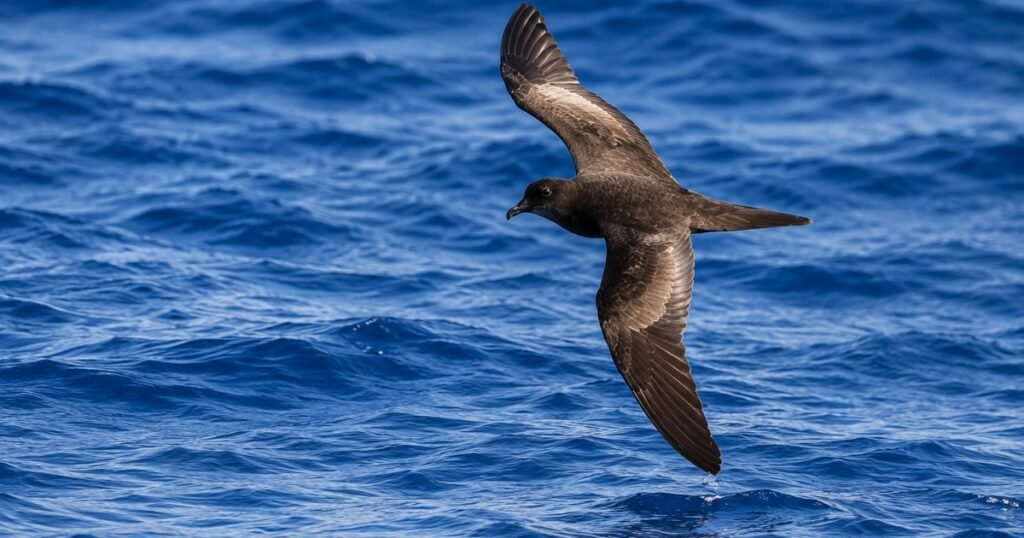
This design is not merely functional; it reflects their remarkable adaptation to the Antarctic environment where agility and precision are crucial for survival. Their feet also serve as a means of propulsion when taking off from the water’s surface, acting akin to rudders that guide them through crushing waves.
The tight webbing protects their extremities from the freezing winds and cold waters while providing crucial insulation. Such specialized adaptations are a testament to the intricate balance between their need for efficient foraging and the challenges posed by their icy habitat.
Avocets
Avocets are distinguished by their long legs and uniquely structured feet, which feature partially webbed toes. This specific design is a testament to their lifestyle in shallow wetlands, enabling them to navigate soft mud and fluctuating water levels with ease.
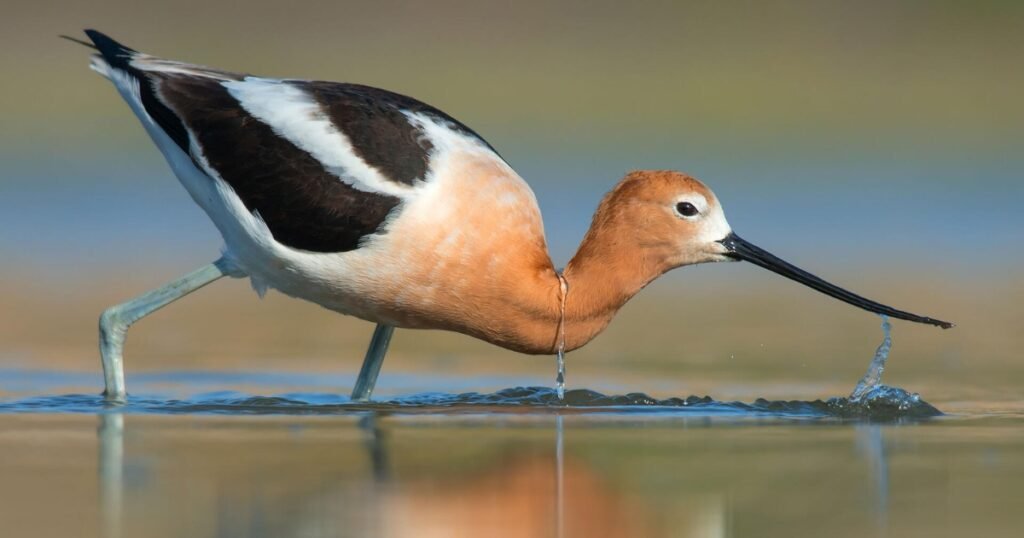
The partially webbed feet facilitate both wading and swimming, making them adept at foraging for invertebrates while preventing them from sinking into soft substrate.
These birds exhibit a fascinating feeding behavior where they sweep their curved bills through the water, relying on their webbed feet to maintain stability while foraging. The adaptation not only allows them to exploit various feeding habitats but also enhances their agility in searching for food.
In contrast to fully webbed-footed water birds, avocets strike a balance between aquatic living and terrestrial mobility, showcasing nature’s ingenuity in adapting to diverse environments.
Blue-Footed Boobies
The blue-footed booby stands out in the avian world with its mesmerizing cerulean feet, which play a crucial role beyond mere aesthetics. These distinctive appendages feature webbing that facilitates agile swimming and diving, allowing the bird to glide effortlessly through the ocean’s depths.
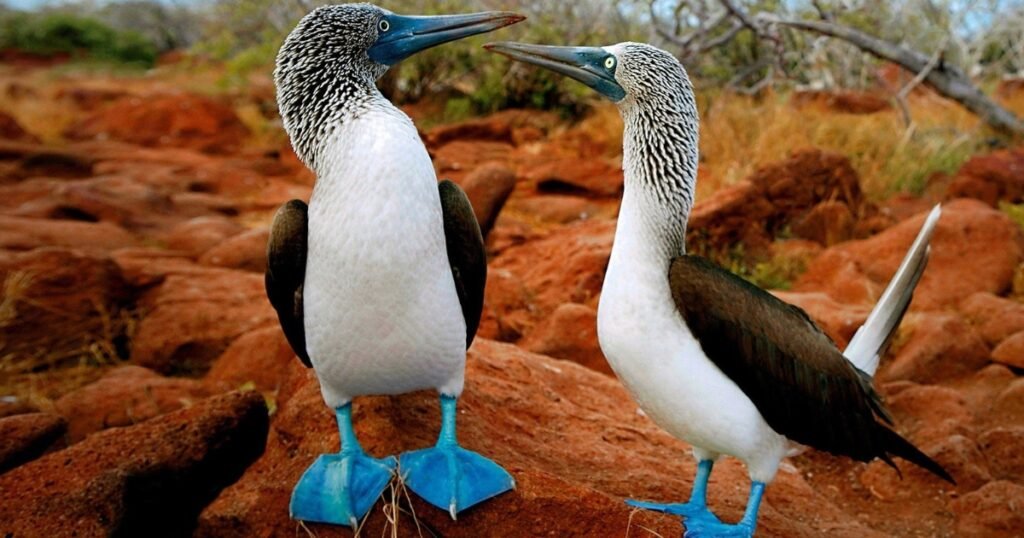
When it comes to courtship, these vibrant feet serve as an eye-catching display; males will proudly flaunt their blue hues during elaborate mating dances, enhancing their allure to potential partners.
The striking blue color arises from pigments in their diet, primarily carotenoids found in fish. This not only signals health and vitality to prospective mates but also links their feeding habits to reproductive success.
The deeper the hue, the more attractive the individual, making the birds’ feet a literal and figurative pathway to love and survival in their competitive habitats.
Cormorants
With webbed feet that resemble paddles, cormorants exemplify exquisite adaptation for their underwater lifestyle. These unique feet aid in providing powerful propulsion, making them skilled divers capable of reaching significant depths in pursuit of fish.
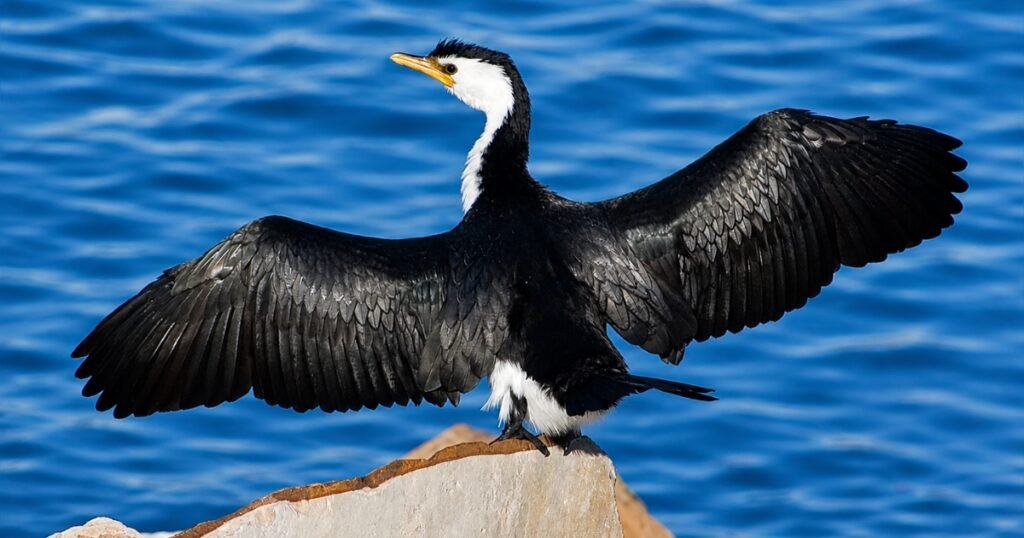
Unlike birds that primarily float on the surface, cormorants utilize their feet to achieve swift movements, leveraging their streamlined bodies to capture prey efficiently in the murky waters they frequented.
Their diving prowess is complemented by their distinctive feather structure, which lacks the waterproofing oils found in many other diving birds. As a result, cormorants often need to perch with their wings spread wide to dry after a hunt, showcasing an interesting balance between their exceptional swimming abilities and the unique challenges they face post-dive.
Crab Plovers
Inhabiting sandy and muddy shores, crab plovers display a foot structure ideally adapted for their coastal environment. Their long, slender toes, coupled with webbing, facilitate movement over soft substrates, allowing them to forage effectively for crabs and other marine invertebrates.
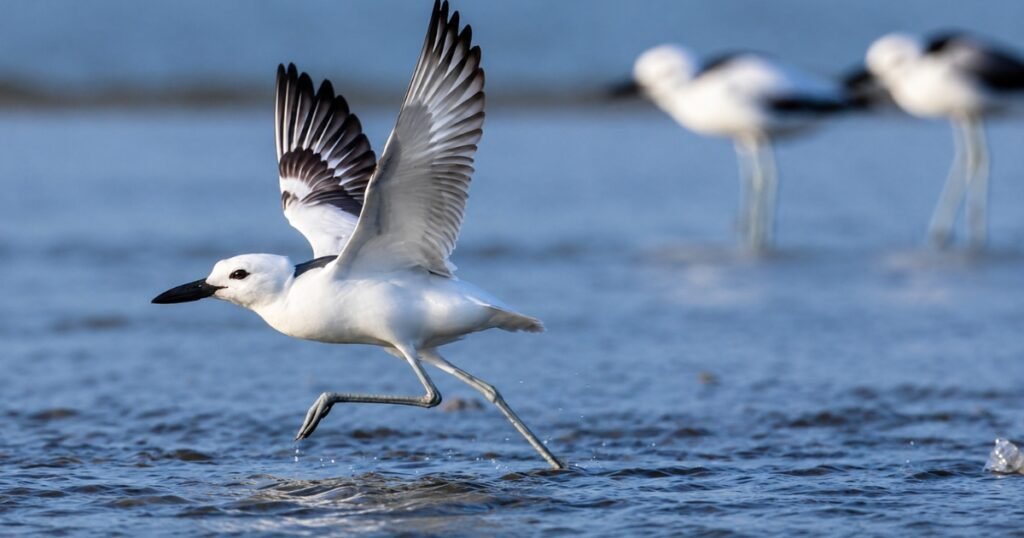
This unique adaptation enables them to tackle a variety of terrains smoothly, demonstrating their ability to thrive in dynamic ecosystems. These plovers exhibit a fascinating relationship between their feet and feeding behavior; their specialized toe design acts as a tool for probing into sand and mud to uncover hidden prey.
Their foraging habits reveal not just resourcefulness but also a reflection of their ecological niche, emphasizing the intricate balance of avian life along coastal habitats. This connection between structure and function illustrates how adaptability fuels survival in even the most challenging environments.
Ducks
Ducks are fascinating creatures, particularly when it comes to their foot structure. Their palmate webbed feet feature three forward-facing webbed toes, making them proficient swimmers. This unique design allows them to glide effortlessly across the water’s surface while steering with remarkable precision.
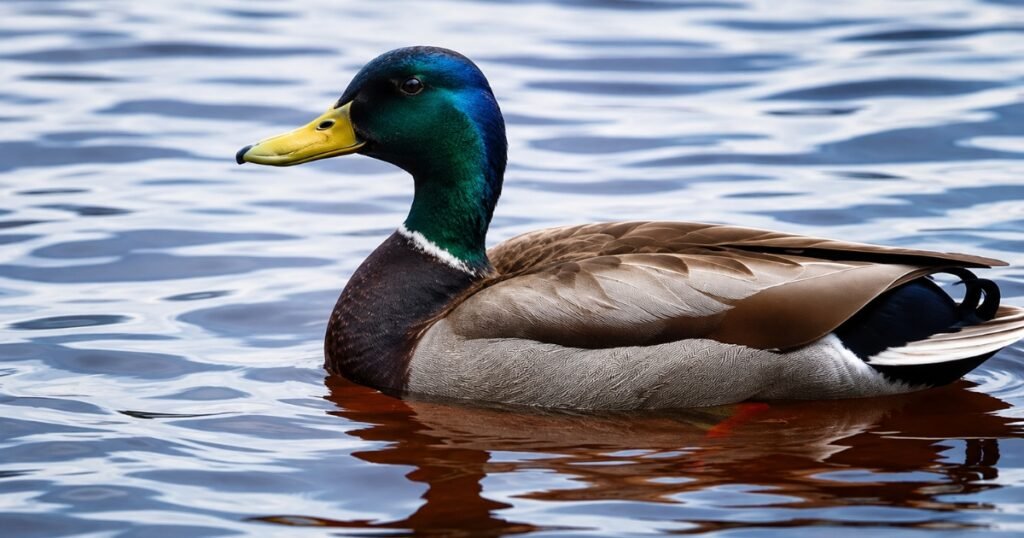
When observing ducks in a pond, one can’t help but marvel at how these remarkable adaptations enhance their natural swimming abilities. The coloration of duck feet can vary significantly depending on the species, serving not just aesthetic purposes but also functions in mating displays and camouflage.
Unlike many aquatic birds, ducks possess specialized foot structures that differ from those of geese and swans, focusing more on swimming efficiency rather than walking. Understanding “what are ducks feet called” reveals the intricate balance of form and function in these charming birds.
Flamingos
Flamingos have a distinctive foot structure that sets them apart from other waterfowl. Their feet are not only webbed but also uniquely shaped to facilitate wading through shallow waters.
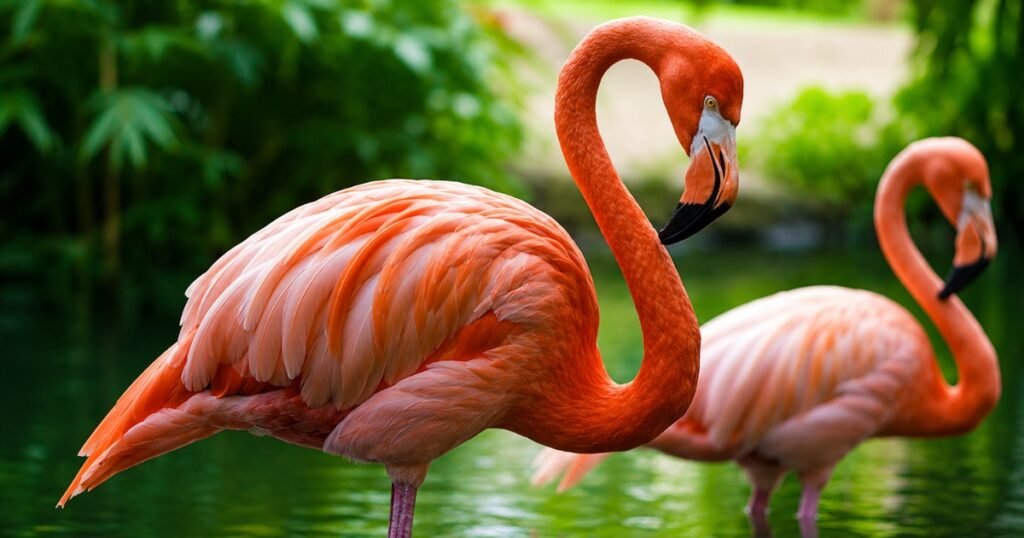
This specialized design helps them navigate muddy habitats where they search for food, as the webbing allows them to spread their weight more evenly and avoid sinking into the mud.
Flamingo feet significantly differ from duck feet; while ducks thrive in water with their powerful swimming adaptations, flamingos grace the shallows with feet adept for balance and foraging.
Their ability to walk gracefully through muck demonstrates a fascinating evolutionary strategy that showcases their unique ecological niche, blurring the line between water and land.
Geese
Geese, much like ducks, exhibit palmate feet, featuring webbing that connects their toes to aid in swimming. This adaptation is essential for their migratory lifestyle, allowing them to traverse large bodies of water efficiently.
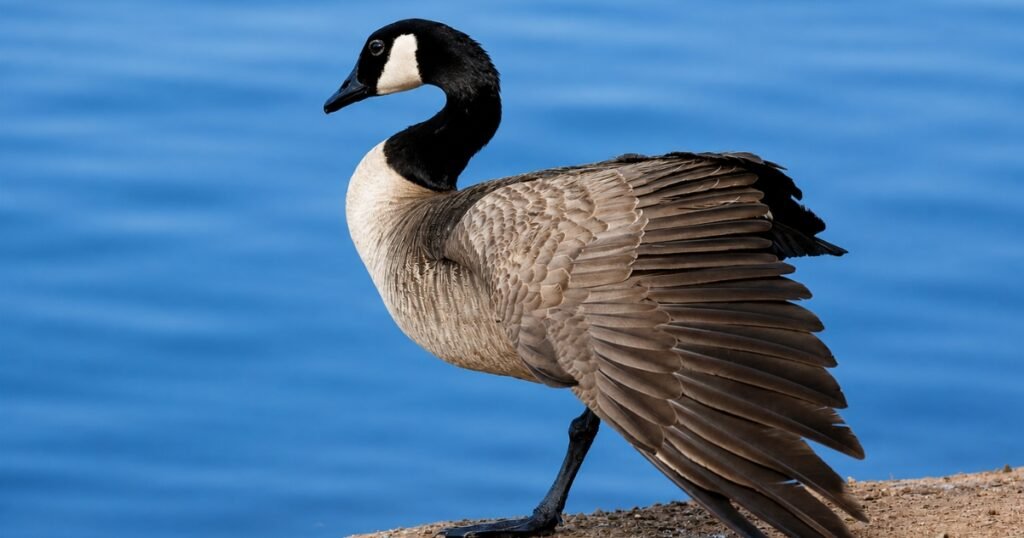
When on land, however, their webbed feet help maintain balance while walking and foraging in grasslands and fields, showcasing their versatility. Different goose species boast distinct foot adaptations suited to their environments. For instance, some have broader webbing, while others have more robust feet, tailored for specific habitats.
Understanding “what are geese feet called” highlights the diversity within this bird family, reflecting evolutionary responses to various ecological pressures. With a combination of swimming and walking abilities, geese exemplify nature’s ingenuity in adapting to diverse landscapes.
Loons
Loons are renowned for their specialized webbed feet, which are uniquely positioned toward the rear of their bodies. This placement offers remarkable advantages when diving; it allows them to generate more propulsion under the water, resulting in agile and powerful swimming.
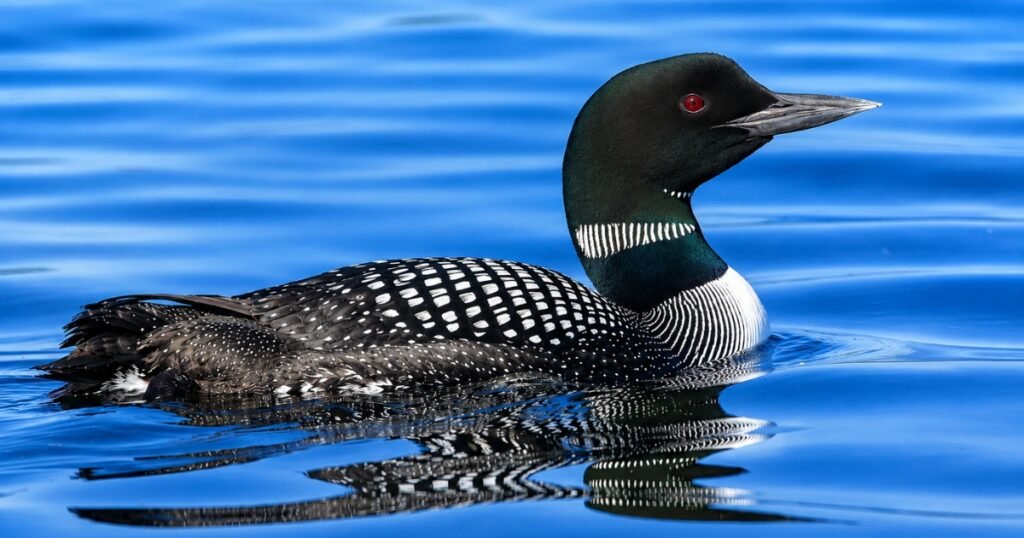
The rearward foot placement acts almost like a rudder, enhancing their maneuverability as they chase fish and navigate through aquatic environments. This anatomical design renders them less efficient on land; they struggle to walk and often appear clumsy, relying primarily on water for locomotion.
Pelicans
Pelicans showcase a distinctive totipalmate foot structure, where all four toes are connected by extensive webbing, creating broad webbed feet. This adaptation allows for excellent propulsion and stability while swimming, making them highly effective divers as they plunge into the water to catch fish.
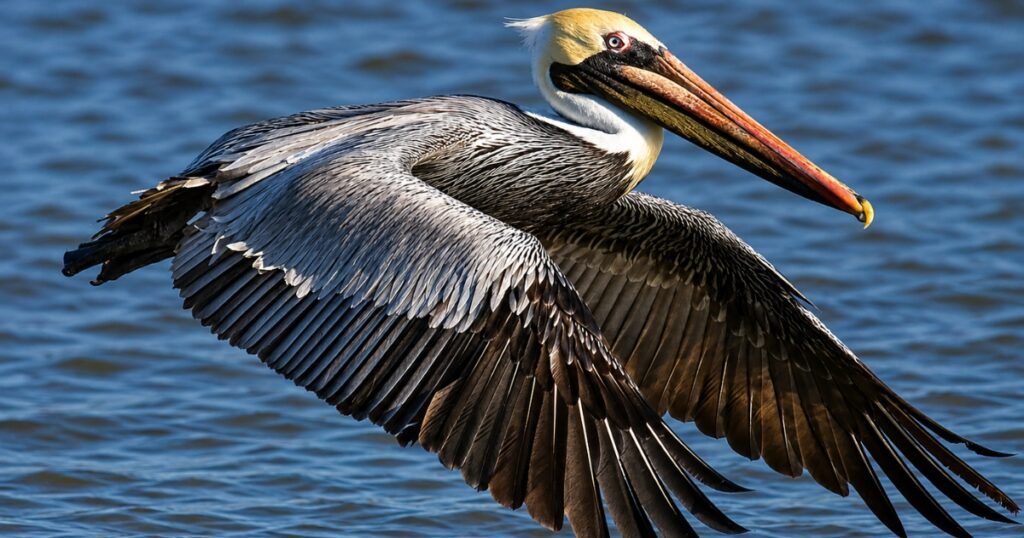
Unlike duck feet, which have a more serrated webbing designed for dabbling, the pelican’s web configuration facilitates greater thrust, helping them glide smoothly through their aquatic habitats. This evolutionary advantage positions pelicans as formidable hunters of the fish-rich waters they inhabit.
Penguins
Penguins feature webbed feet that are integral to their swimming abilities, allowing them to streamline their bodies and propel themselves with impressive speed underwater. Their feet not only assist in swimming but also aid in maintaining balance and maneuverability on ice; the webbing provides traction during their spirited waddles across frozen landscapes.
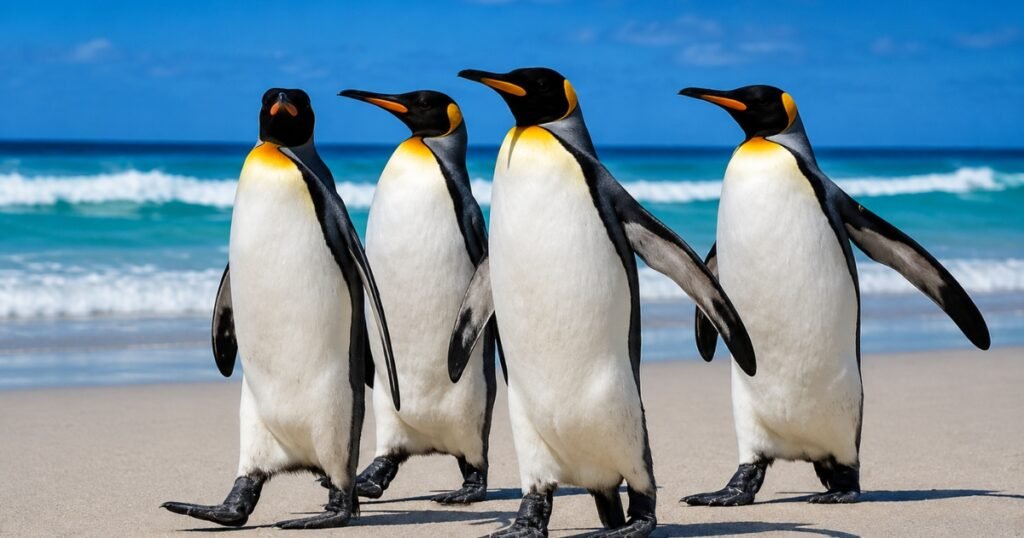
Unlike many land birds, penguin feet are positioned more towards the back of their bodies, contributing to their unique swimming technique and reducing drag. These adaptations are crucial for temperature regulation, as their feet have blood vessels that minimize heat loss while adapting to their frigid habitats.
Puffins
Puffins possess webbed feet that play a significant role in both swimming and diving, acting as powerful paddles that aid their underwater foraging. The distinctive coloration of their feet, often bright orange or yellow, not only adds to their charm but also serves as a signal during mating displays.
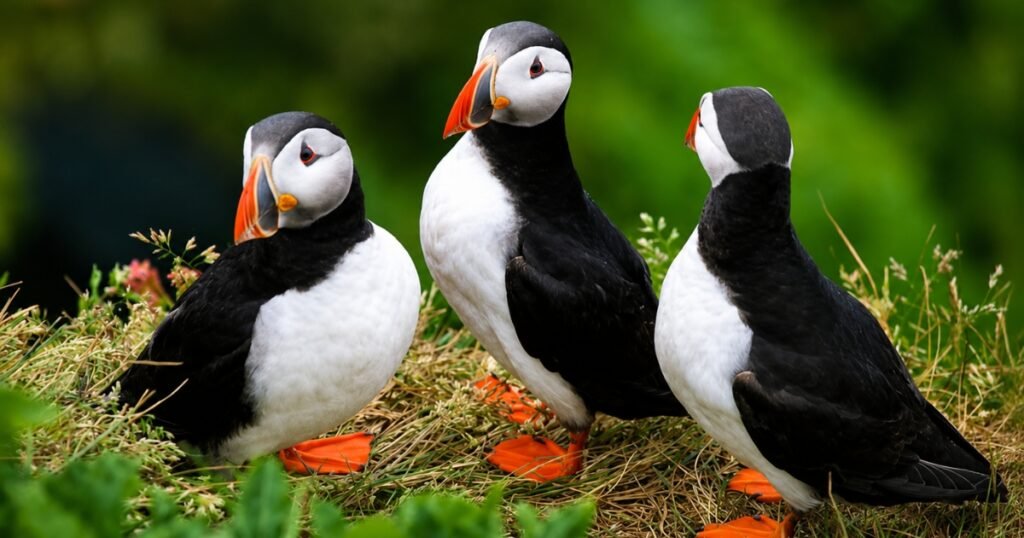
In the water, puffins use their feet in conjunction with their wings, allowing them to navigate effectively while diving for fish. This combined movement showcases their evolutionary adaptation to a life spent primarily in marine environments, blending agility and grace beneath the waves.
Seagulls
Seagulls are fascinating creatures, particularly when you observe their webbed feet, which are an evolutionary marvel. These webbed structures allow for efficient swimming, enabling gulls to glide smoothly through both calm coastal waters and crashing surf in search of food.
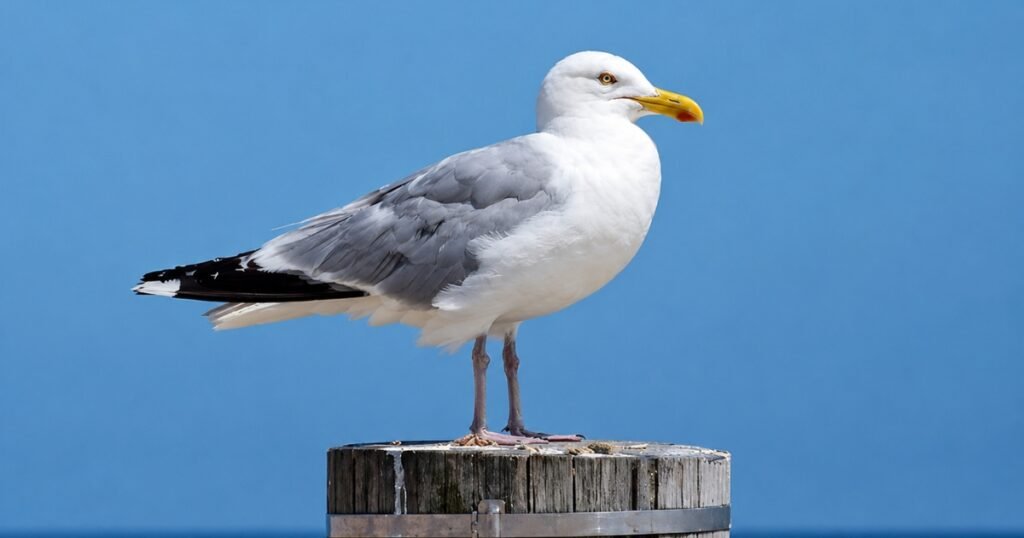
Unlike some birds that rely solely on their wings for life at sea, gulls use their feet to paddle with precision, diving into the water when the opportunity arises. On sandy beaches, their unique foot design also aids in walking, helping them navigate in a variety of terrains without losing their footing.
When comparing gull feet to duck feet, distinct differences emerge. While both feature webbing, gulls possess more elongated and agile toes, lending them a gracefulness in both flight and foraging.
Ducks, in contrast, have broader, more stocky feet that suit their aquatic lifestyle, allowing easy navigation through weeds and marshes. This specialization highlights the adaptability of these birds to their respective environments.
Trumpeter Swans
Trumpeter swans dominate their habitats with grace, thanks in large part to their large, webbed feet. These extensive webbing structures allow them to glide through the water with minimal resistance, making them incredibly efficient swimmers.
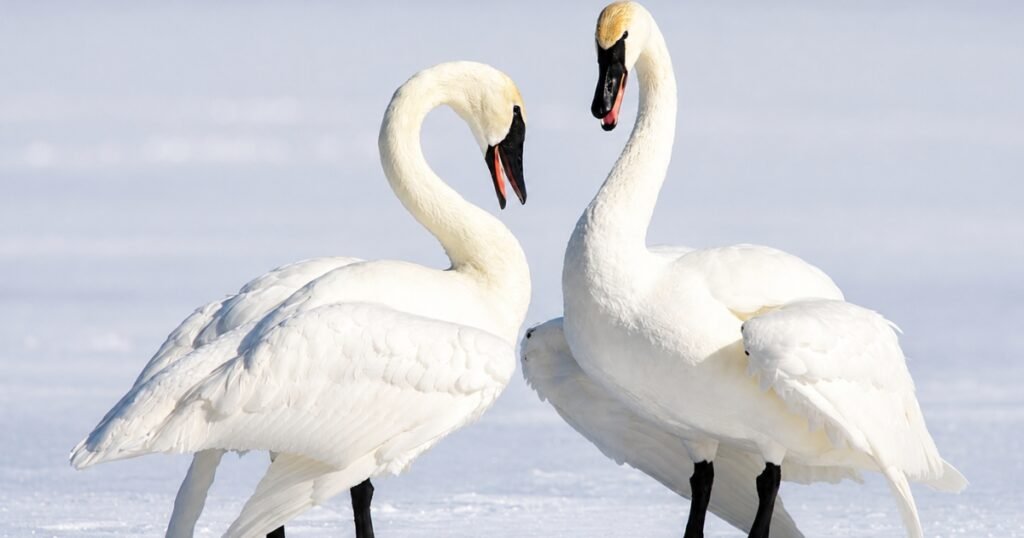
heir feet act like paddles, providing propulsion without the need for constant flapping, which helps conserve energy during long journeys across lakes and rivers.
The swans’ large body size significantly complements their foot structure, enabling easy movement in shallow waters. Their ample wingspan, coupled with robust legs, gives them a unique ability to traverse various aquatic terrains while foraging for food.
The impressive synergy between their size and webbed feet illustrates an exceptional adaptation, making them resilient ambassadors of wetland ecosystems.
Reptiles With Webbed Feet
Webbed feet are a rarity among reptiles largely due to their evolutionary paths, typically favoring adaptations suited to terrestrial life. While many animals have thrived with such features, most reptiles have developed other methods of locomotion.
Aquatic environments do inspire some adaptations, though. In reptiles that swim, the webbing serves as a powerful tool, fusing toes to enhance thrust and maneuverability.
It’s essential to differentiate between true webbing and partially webbed toes, as the latter can provide advantages in both land and water, offering versatility for the creature in varying environments.
Alligators
Alligators boast distinctively webbed hind feet that are essential for their aquatic agility. This webbing allows them to paddle seamlessly through water, enhancing their swimming efficiency. The front feet, however, are not as webbed; they’re designed primarily for gripping and holding onto prey while also assisting in locomotion on land.
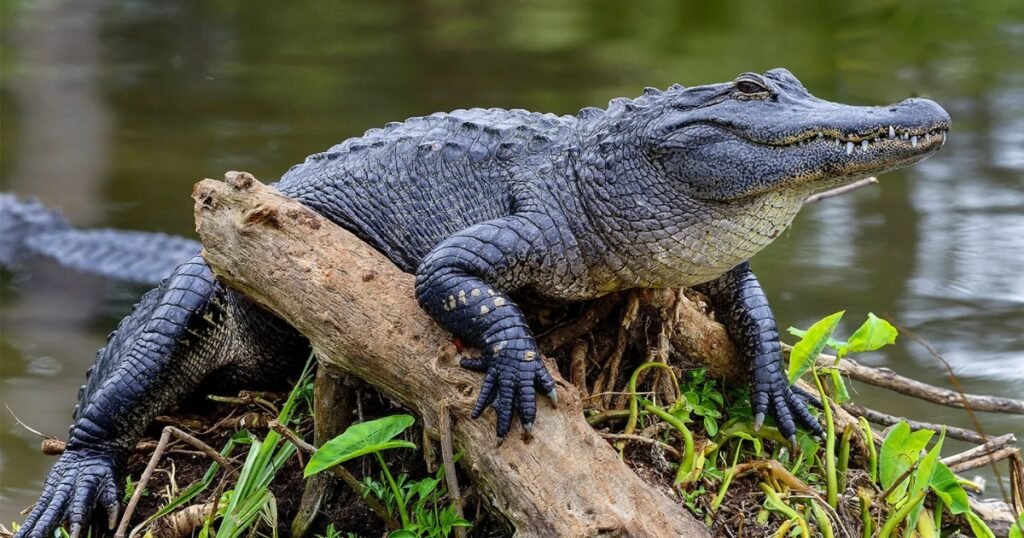
When alligators transition from water to land, their wider, webbed hind feet help support their weight, enabling powerful movements even on solid surfaces.
Crocodiles
Like their close relatives, crocodiles also feature webbed hind feet that assist in swimming. The webbing acts as a propeller, allowing for impressive acceleration and maneuverability in water. Differences emerge in their feet, with crocodiles possessing narrower, more elongated toes compared to alligators.
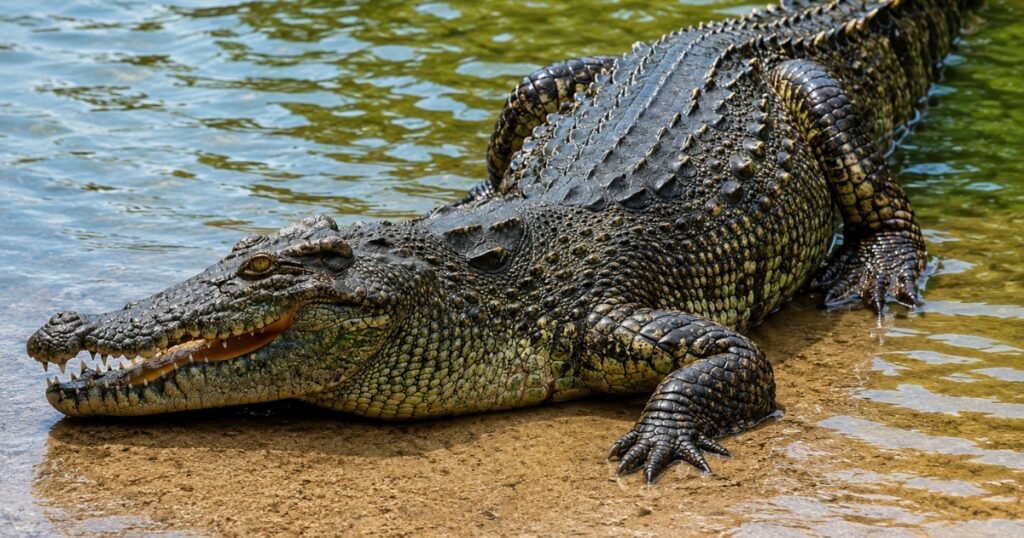
This structure is advantageous for navigating through dense vegetation and contributing to their semiaquatic lifestyle. The webbing maximizes their swimming efficiency while also allowing some flexibility on land.
Iguanas
Among iguanas, only certain species, like the Green Iguana, exhibit toe webbing that aids in their swimming abilities. This webbing varies in extent depending on the species, reflecting their unique adaptations to habitat.
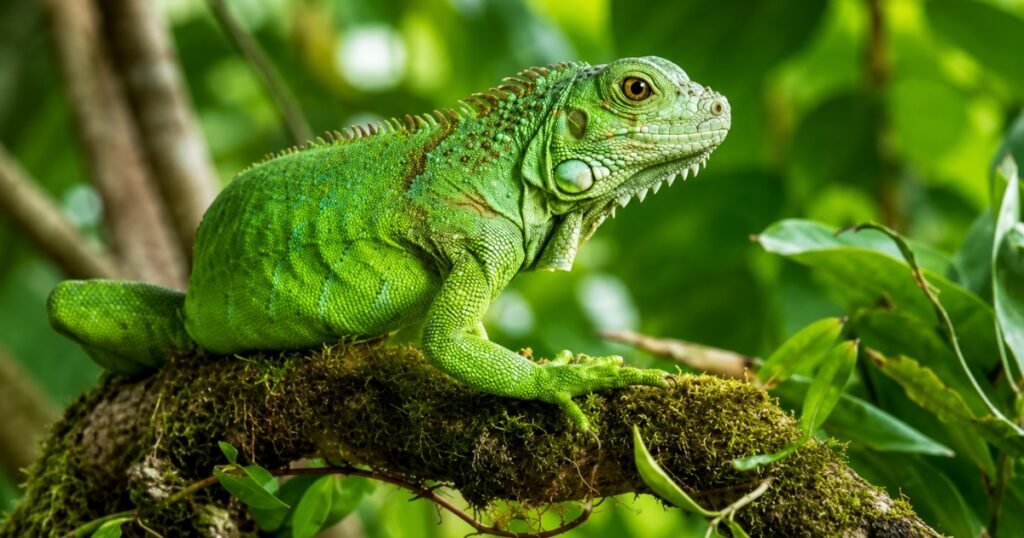
The enhanced surface area of their feet helps them glide through water effortlessly, but it doesn’t compromise their agility when climbing trees or traversing rocky terrains. Their feet also play a critical role in grasping branches, showcasing a fascinating balance between their aquatic and terrestrial lifestyles.
Amphibians With Webbed Feet
Webbed feet are a common evolutionary feature among aquatic and semi-aquatic amphibians, providing them with the necessary adaptations to thrive in their watery environments. The webbing between their toes acts like paddles, enhancing propulsion and maneuverability while swimming.
Unlike toe pads found on various tree frogs that help with climbing, webbing primarily serves a functional role in aquatic navigation. This specialization highlights a fascinating aspect of amphibian evolution: the perfect balance between terrestrial and aquatic life.
Axolotls
Axolotls exemplify an extraordinary aquatic lifestyle, living their entire lives in water without undergoing metamorphosis like most amphibians. Their feet and toes exhibit a unique structure initially appearing webbed, they function more as a means to assist in their movement rather than classic webbed adaptations.
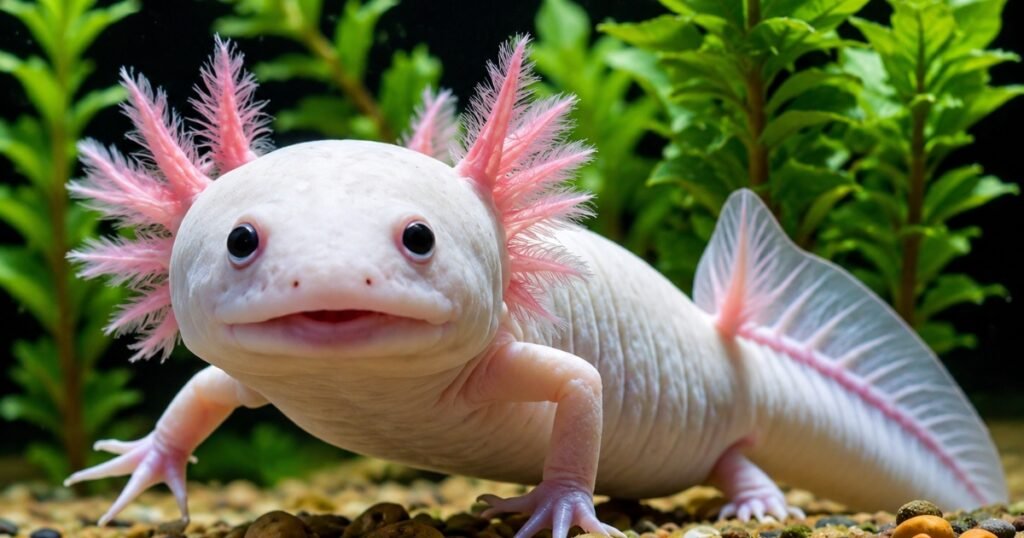
With small limbs that allow for subtle navigation through their environment, axolotls use a combination of gentle kicks and a swishing motion of their tail for propulsion. Although their toes might look connected, they aren’t fully webbed; instead, they demonstrate a fascinating blend of form and function adapted for life in a semi-stagnant environment.
American Bullfrogs
American bullfrogs boast large hind feet adorned with extensive webbing that amplifies their swimming prowess. This anatomical feature enables these frogs to glide seamlessly through the water, navigating with impressive speed.
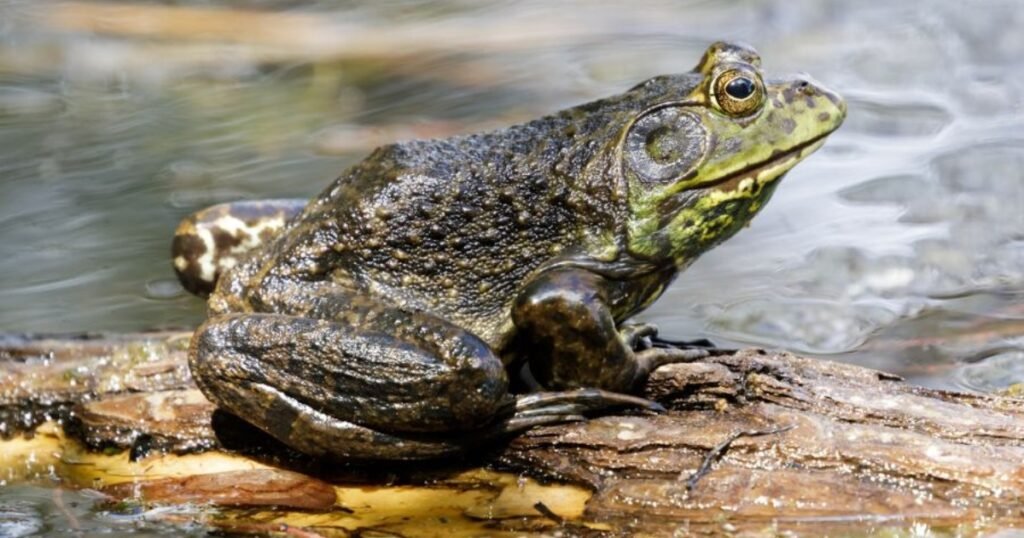
While their robust legs are adaptations for powerful jumps on land, the webbing is vital for optimizing their movements while swimming, allowing a rare blend of agility on both land and in water. The distinction between swimming adaptations and jumping features makes bullfrogs fascinating examples of dual-purpose anatomical design in amphibians.
Common Frogs
Common frogs possess distinctive webbed hind feet that facilitate effective swimming, but their front feet are quite different. With less webbing and more specialized structures, the front feet primarily assist in balance and climbing rather than in aquatic locomotion.
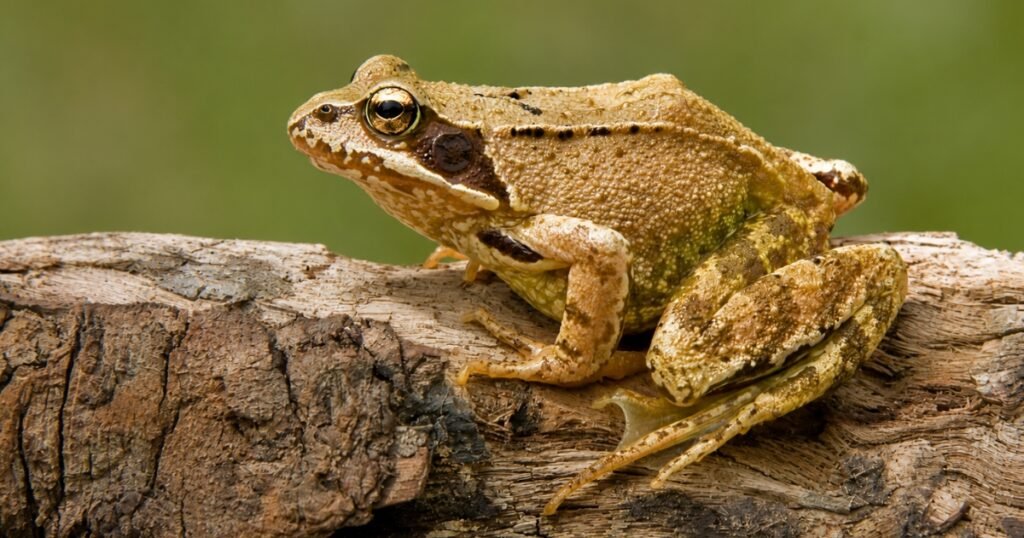
The structure of these feet adapts dynamically to their habitat, allowing them to transition seamlessly between terrestrial and aquatic environments, showcasing the remarkable versatility of amphibians.
As they navigate various habitats, these frogs illustrate how foot morphology is intricately linked to lifestyle and survival strategies in fluctuating ecosystems.
Natterjack Toads
Natterjack toads possess a unique foot structure that sets them apart from other amphibians. Their toes are equipped with distinctive webbing, enhancing their ability to navigate wet environments. This webbing aids in both swimming and burrowing, allowing them to move swiftly through sandy habitats or while seeking shelter during dry spells.
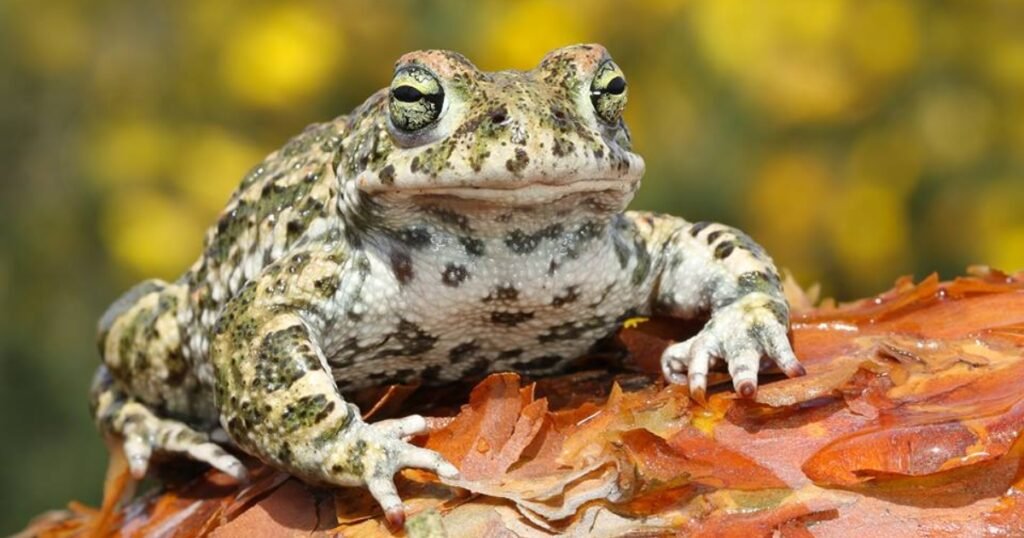
Unlike strongly aquatic frogs, natterjack toads have a more terrestrial lifestyle, indicated by their shorter limbs and bulkier body, which makes them less reliant on water yet still proficient in wet conditions.
The burrowing behavior of natterjack toads showcases how their foot structure is adapted for both movement and survival. When toads retreat underground to escape harsh environments or predators, their webbed feet, combined with strong, muscular limbs, allow for effective digging.
This adaptation underscores a fascinating divergence from frogs, revealing the intricate balance between adaptation and lifestyle choices in amphibian species.
Turtles
While many envision turtles as creatures with webbed feet, it’s crucial to clarify that not all turtle species share this trait. Aquatic turtles do, indeed, often feature webbing between their toes, which aids their swimming capabilities.
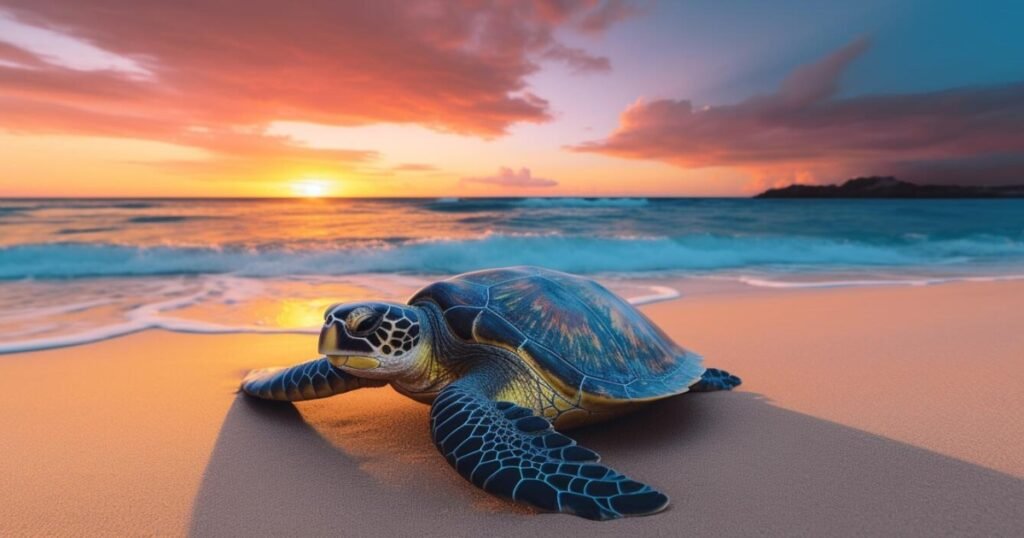
This adaptation allows them to paddle gracefully through water, but it serves a different purpose from the flippers seen in marine species. Terrestrial turtles tend to possess feet that are more circular and robust, designed for stability on land rather than efficiency in water.
Freshwater turtles exemplify the practical application of webbing, as they blend life between land and water. Their webbed feet allow for better maneuverability in rivers and ponds, while still providing the necessary grip for navigating terrestrial terrains.
Sea turtles have evolved to develop flipper-like limbs instead of traditional webbed feet, allowing for streamlined movement in the open ocean. This distinction highlights the incredible diversity within turtle adaptations, shaped meticulously by their habitats and lifestyles.
Mammals With Webbed Feet
Mammals with webbed feet have developed this feature primarily due to their environments. Over time, species that inhabit wetlands, rivers, or oceans have evolved webbing to enhance swimming efficiency, aiding in their survival and foraging strategies.
This adaptation helps reduce resistance in water, allowing for smoother and faster movement, essential for catching prey or escaping predators. The evolutionary path diverges between semi-aquatic and fully aquatic lifestyles, leading to a fascinating variety of adaptations.
For semi-aquatic mammals like capybaras, the webbing primarily serves as a tool for enabling movement in water while still allowing for effective navigation on land. In contrast, fully aquatic mammals, such as dolphins, exhibit entirely different adaptations, with limbs transforming into flippers.
Capybaras
Capybaras, the world’s largest rodents, showcase partially webbed feet that facilitate swimming and underwater movement. These adaptations enable them to glide through water with ease, a critical survival skill in their natural habitats of rivers and wetlands.
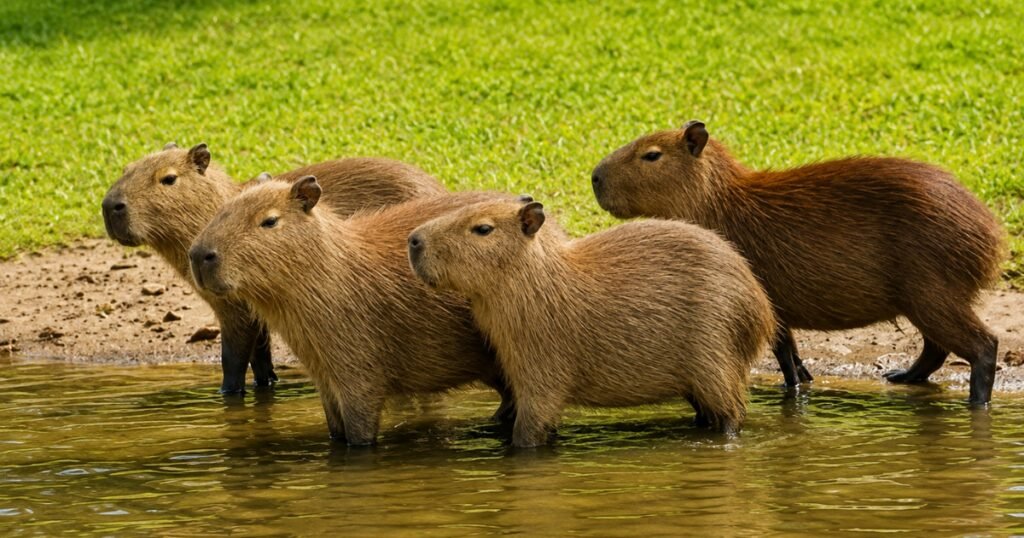
Their webbing helps them navigate swiftly, allowing them to evade aquatic predators or locate food sources, such as water plants, while remaining relatively maneuverable on land.
Living a semi-aquatic lifestyle, capybaras spend a significant amount of time in water, cooling off and socializing with their herd, a trait that also makes them one of the most sociable creatures around, as featured in our list of the friendly animals in the world.
Their partially webbed feet are perfectly designed to provide grip on muddy riverbanks while still offering the necessary propulsion during swimming.This balance between land and water mobility exemplifies nature’s ingenuity in crafting adaptations that best suit an animal’s lifestyle.
Eastern Moles
Eastern moles possess surprisingly specialized front feet designed primarily for digging, not swimming. Their front feet have broad, shovel-like shapes that allow them to tunnel through soil with great efficiency.
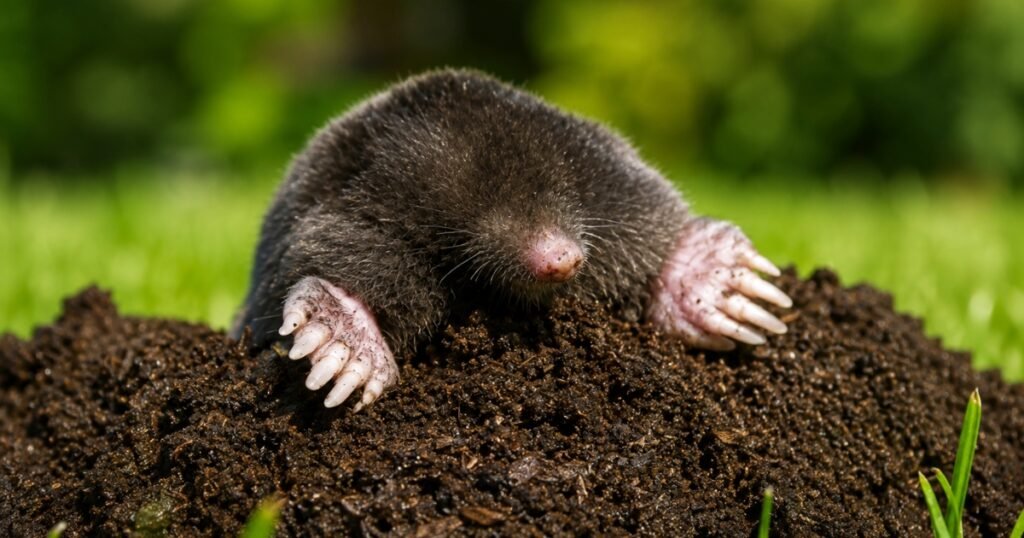
The toe webbing present is functional for their digging lifestyle, enhancing their ability to push soil aside, rather than serving any aquatic purpose. It’s crucial to understand that while eastern moles may have webbed toes, this adaptation is distinctly different from what we see in aquatic mammals.
Their feet are tailored for life underground, making them experts in moving through moist earth rather than water, showcasing how diverse adaptations can emerge even within similar features.
Fishing Cats
Fishing cats possess partial webbing between their toes, a unique adaptation that enhances their hunting abilities in aquatic environments. This specialized foot structure allows them to paddle gracefully through water while stalking fish and other prey.
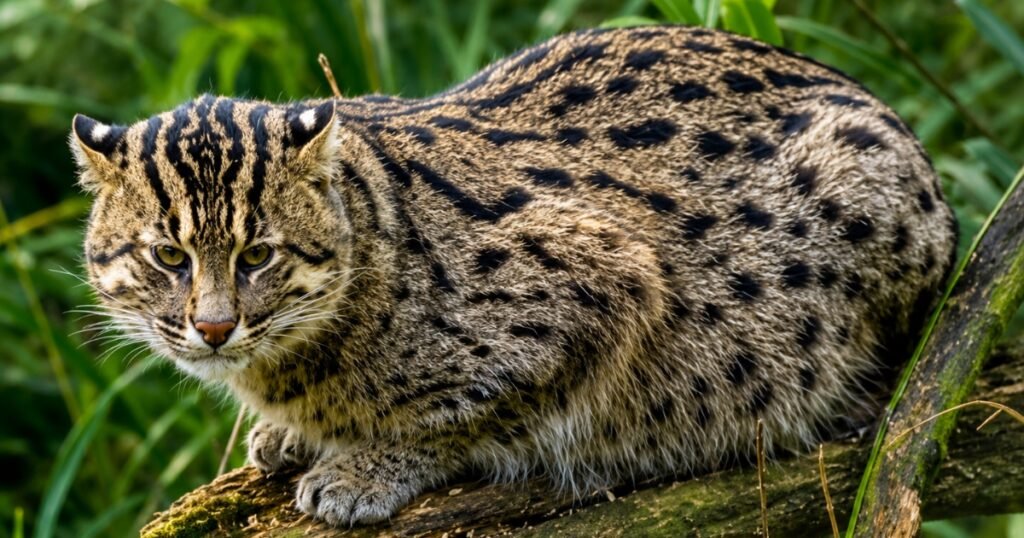
The slight webbing provides extra surface area, enabling them to maneuver swiftly without spooking their quarry, essential for a stealthy predation strategy. These cats display remarkable agility in their semi-aquatic habitats, using their webbed feet not just for swimming but also for traversing muddy banks and wetlands.
This adaptation exemplifies the incredible versatility of mammals, showcasing how slight alterations in anatomy can lead to remarkable behavioral advantages in specific environments.
Hose’s Palm Civets
Hose’s palm civets possess uniquely structured feet that showcase their adaptability to both arboreal and wetland environments. While they do not exhibit fully webbed feet, the partial webbing between their toes enhances their grip on wet surfaces and allows for agile climbing in trees.
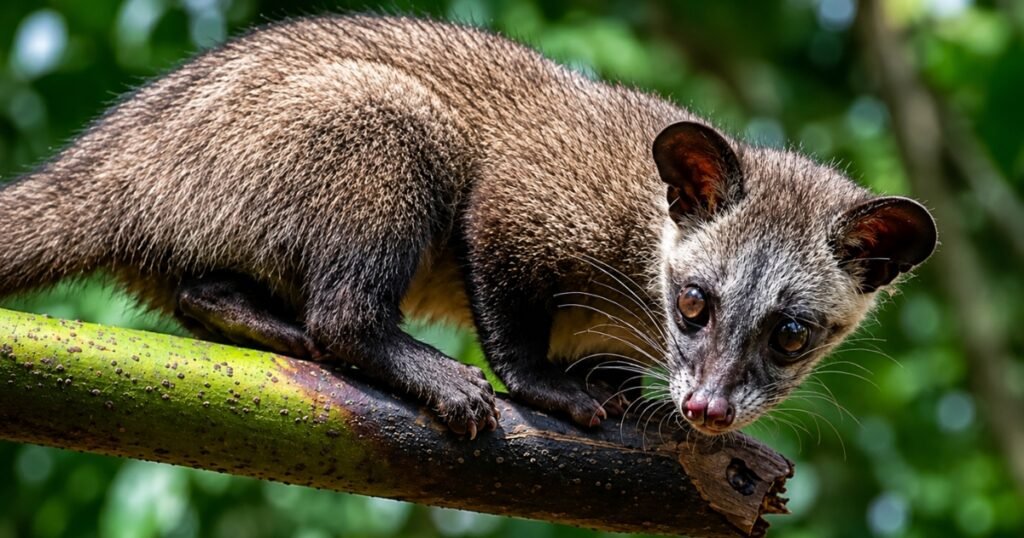
This adaptation is crucial as they navigate their habitat, which ranges from rainforest canopies to areas near water sources, where both climbing and agility are essential for foraging and escaping predators.
Their toes are equipped with strong claws that enhance their climbing abilities, but the webbing offers slight assistance when maneuvering through muddy terrains. This blend of climbing prowess and semi-aquatic capability makes Hose’s palm civets fascinating creatures, showcasing the diverse adaptations mammals have developed to survive in mixed environments.
Minks
Minks have fascinating feet characterized by partial webbing that enables their semi-aquatic lifestyle. While they are agile on land, it’s their ability to swim efficiently that sets them apart; this adaptation is crucial for hunting fish and other aquatic prey.
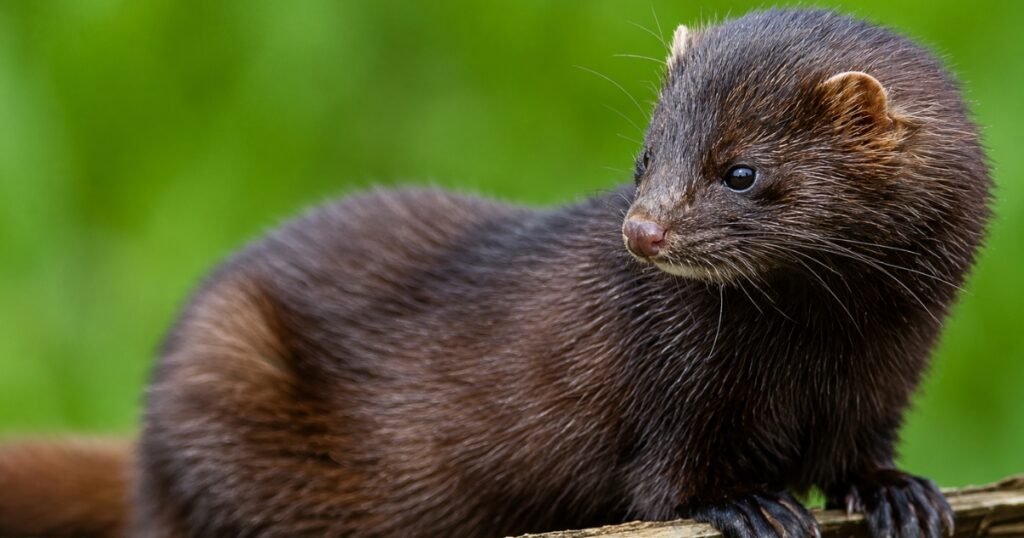
Their partial webbing allows for effective paddling, differentiating them from otters, whose feet are fully webbed for streamlined swimming. Minks are agile swimmers, darting through water with a swiftness that highlights their hunting prowess.
This unique foot structure makes minks exceptional hunters, as they can swiftly pursue prey in the water before returning to land. The combination of partially webbed feet and sharp claws embodies a perfect hunting strategy that enhances their survival in diverse ecosystems.
Muskrats
Muskrats showcase webbed hind feet that are perfectly suited for swimming. These adaptations allow them to navigate wetlands with ease, supporting their lifestyle as proficient foragers in marshy areas.
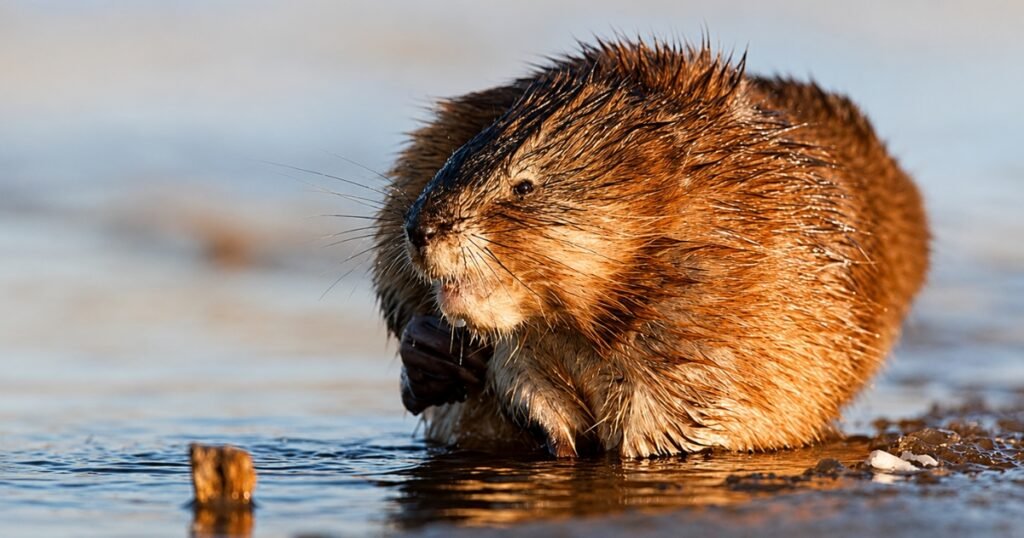
The webbing between their toes acts as paddles, empowering them to glide through the water efficiently, which is essential for both escaping predators and hunting for food beneath the surface.
In comparison to beavers, muskrats have more slender frames and rely more on their agility rather than the construction prowess that beavers exhibit. Their wonderfully adapted feet are a testament to evolution, allowing muskrats to thrive in aquatic environments where their agile swimming skills provide a significant advantage.
Newfoundland Dogs
Newfoundland dogs are renowned for their large, webbed paws, which make them excellent swimmers. The webbing between their toes facilitates powerful paddling, allowing these gentle giants to navigate waters with ease and grace.
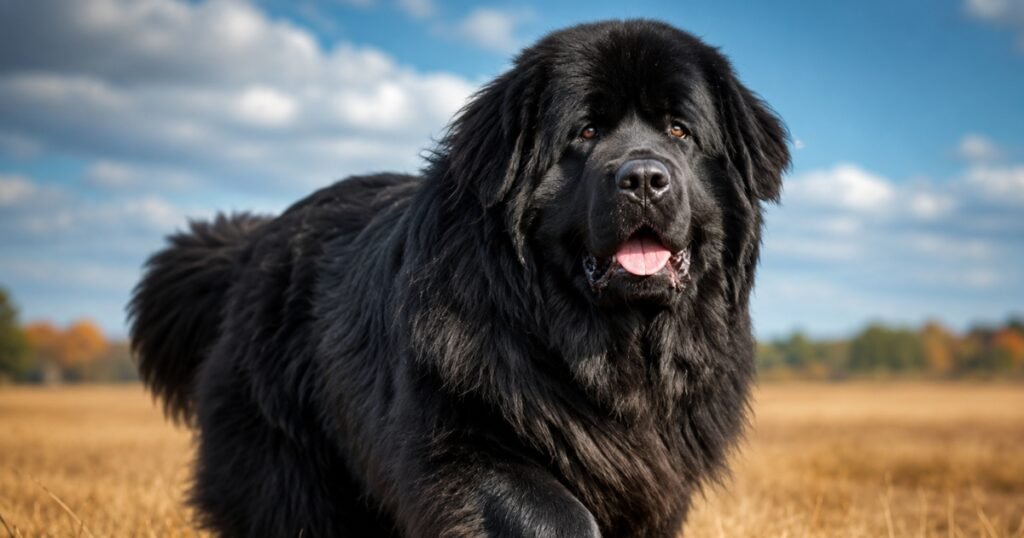
This adaptation is particularly useful for their historical role as working and water-rescue dogs, where their swimming abilities would save lives in treacherous conditions.
In addition to their webbed feet, Newfoundlands are equipped with a thick, waterproof coat that insulates them against cold water, providing further protection during rescues.
Combining strength, buoyancy, and agility, these dogs are masters of water, showcasing how selective breeding has enhanced their natural capacities for swimming and rescuing.
North American Beavers
With their large webbed hind feet, North American beavers are adept swimmers, crucial for their lives in aquatic environments. These powerful paddles allow them to navigate swiftly through rivers and streams, where they gather materials for their iconic dams.
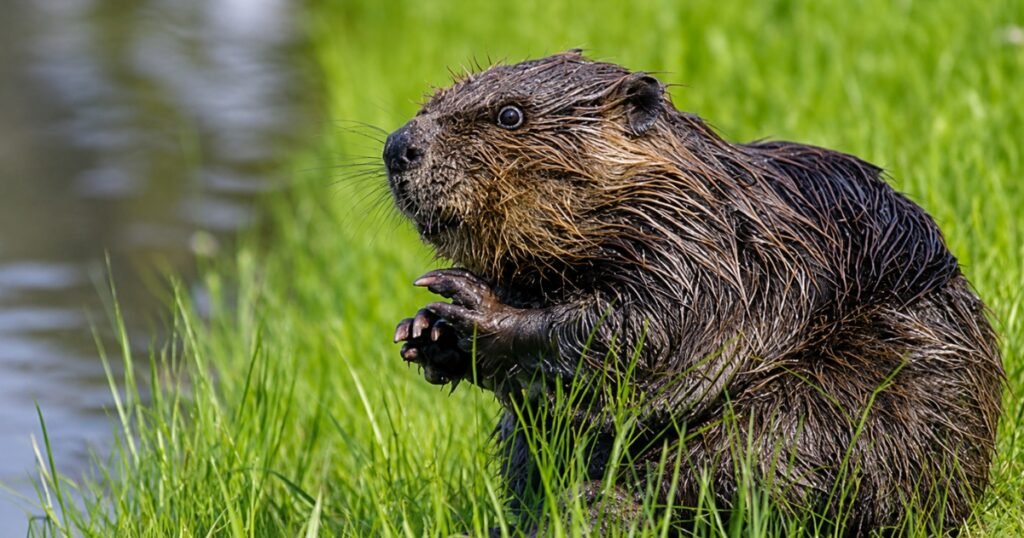
Complementing their webbed feet, beavers possess a rudder-like tail that aids in propulsion, ensuring smooth and controlled movement through water. Their feet are uniquely structured to support an ambitious lifestyle of construction and maintaining their lodges, highlighting their role as ecosystem engineers.
The combination of their webbed feet and remarkable tail illustrates how adaptation can cultivate a species that thrives in aquatic habitats while shaping the very landscapes they inhabit.
Opossums
Opossums possess a unique foot structure that sets them apart from many mammals, featuring non-webbed but highly dexterous paws. Their front feet, endowed with a more clawed and grasping form, allow them to navigate tree branches with agility, while their hind feet resemble those of other quadrupeds, providing stability for climbing.
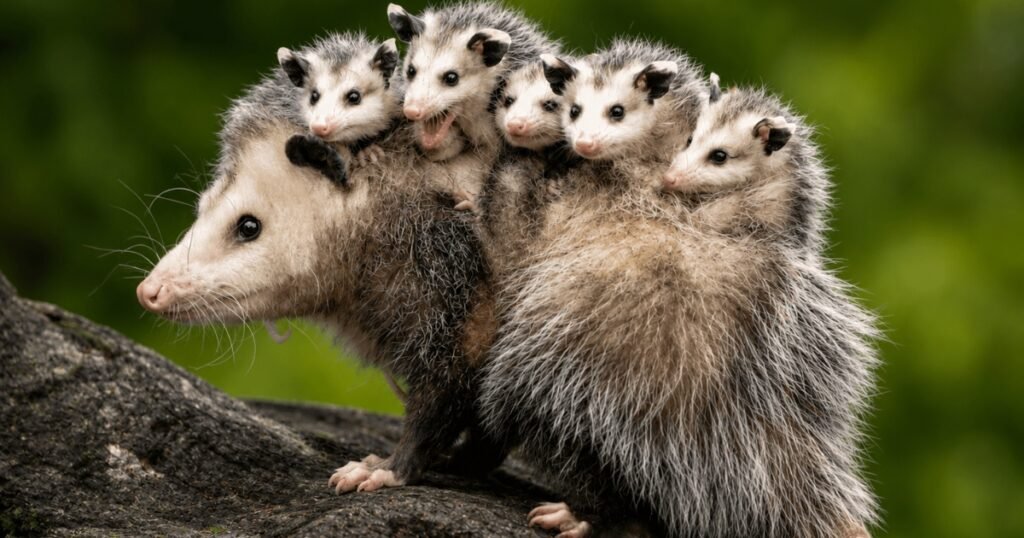
While their feet are not truly webbed, the slight skin between their toes aids in grip, giving them an edge in climbing trees. Despite lacking full webbing, their creative adaptation in foot structure allows them to maneuver effectively in their wooded habitats.
Platypus
The platypus is an exceptional example of a mammal with strongly webbed feet, perfectly designed for both terrestrial and aquatic environments. While swimming, its front feet utilize extensive webbing that acts like paddles, propelling it efficiently through water.
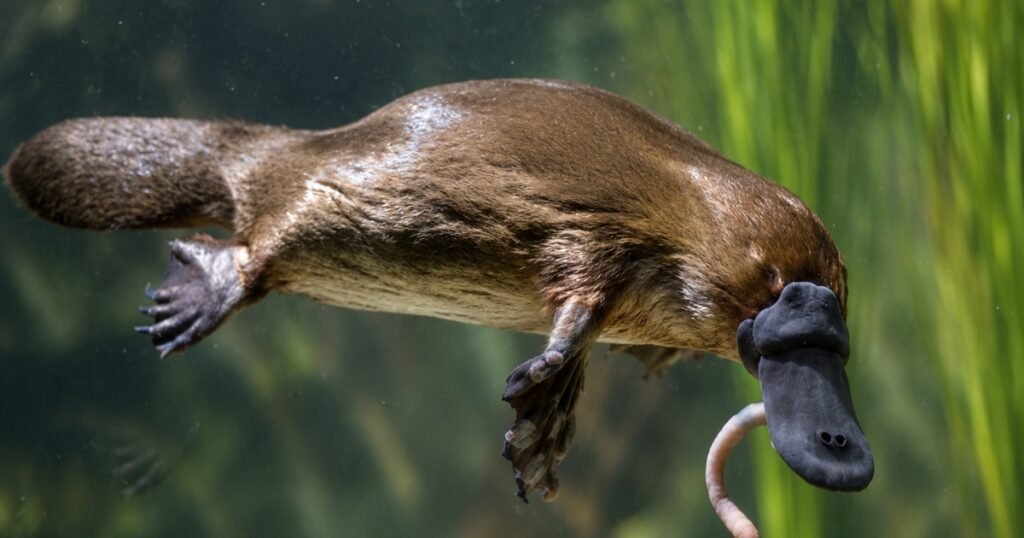
Remarkably, when the platypus traverses land, this webbing retracts, allowing the hidden claws to emerge for better traction on solid surfaces. This adaptability showcases the platypus’s dual lifestyle, enabling it to hunt underwater for shrimp and other crustaceans, making it a marvel of evolution among mammals.
Polar Bears
Polar bears exhibit slight webbing between their toes, a feature crucial for their aquatic lifestyle. The webbing enhances their swimming ability by allowing them to paddle efficiently, using their enormous forelimbs to glide through icy waters with minimal resistance.

Their large paws are also adeptly designed to distribute weight on snow and ice, preventing them from sinking. This combination of adaptations allows polar bears to thrive in their harsh Arctic habitats, seamlessly transitioning between swimming and traversing the frozen landscape with ease.
Portuguese Water Dogs
Portuguese Water Dogs are distinguished by their well-developed webbed feet, which significantly enhance their swimming prowess. Historically bred for fishing-related tasks, these dogs exhibit remarkable ability in paddling effortlessly through water, thanks to the webbing that functions like fins.
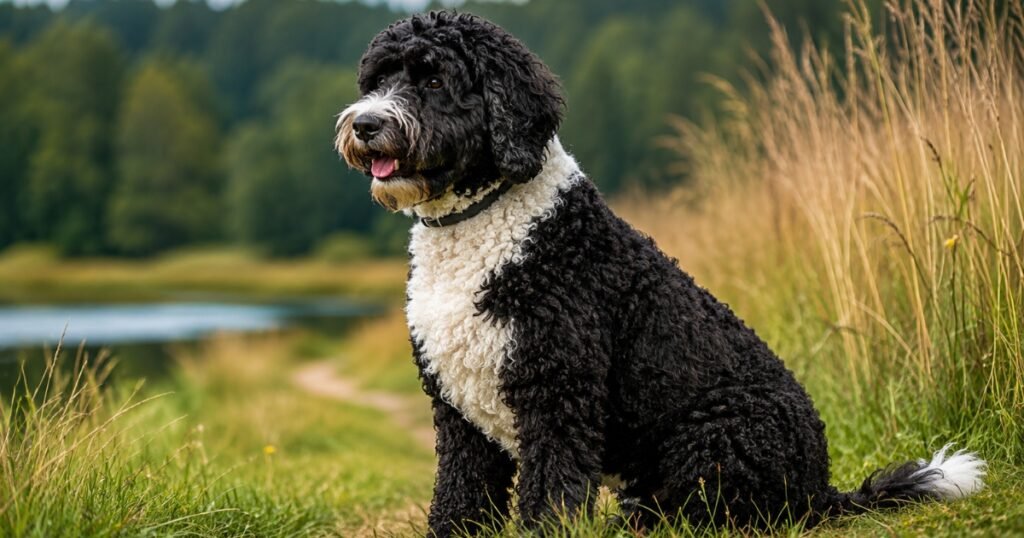
Their sturdy and muscular physique complements their swimming capabilities, allowing them to retrieve nets and fish for fishermen. The dense, curly coat of these dogs provides insulation and protection from the cold, making them perfectly equipped for aquatic adventures and showcasing their rich heritage as versatile working animals.
Sea Otters
Sea otters are marine mammals distinguished by their webbed hind feet, which play a crucial role in their swimming prowess. These feet are shaped like paddles, allowing otters to glide effortlessly through the water with remarkable agility.
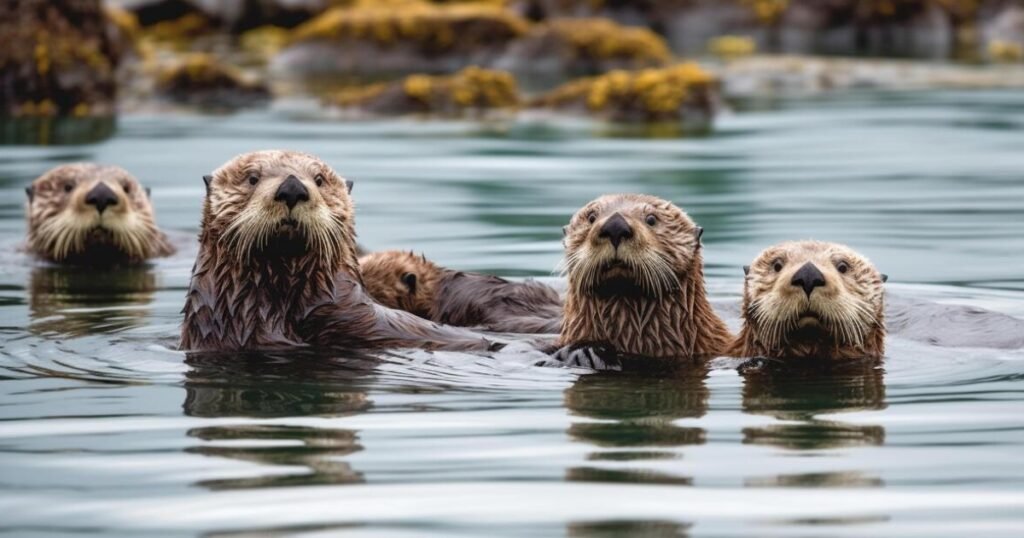
Their strong, muscular hind limbs propel them quickly, making them adept hunters and divers. The webbed design enhances their surface area, providing both speed and maneuverability that is essential in catching marine prey like sea urchins and crabs.
It’s fascinating how these adaptations correlate directly with their marine lifestyle, enabling them to thrive in diverse oceanic environments.
Siberian Huskies
Unlike many aquatic mammals, Siberian Huskies boast a unique paw structure that effectively supports their survival in harsh snowy climates. While they don’t have true webbing like sea creatures, some Huskies exhibit connective tissue between their toes, enhancing their ability to traverse deep snow.

This distinctive foot design, along with fur-covered paw pads, prevents snow from accumulating between their toes, allowing them to maintain traction while running. It’s interesting to note that their foot structure is an evolution suited more for propulsion in snow than for swimming, demonstrating that webbing can serve diverse environmental needs.
Sphynx Cats
When it comes to Sphynx cats, their toe structure leans more towards the unique than the conventional. While this breed possesses elongated toes with normal spacing, they do not exhibit true webbed feet like those seen in water-loving mammals.
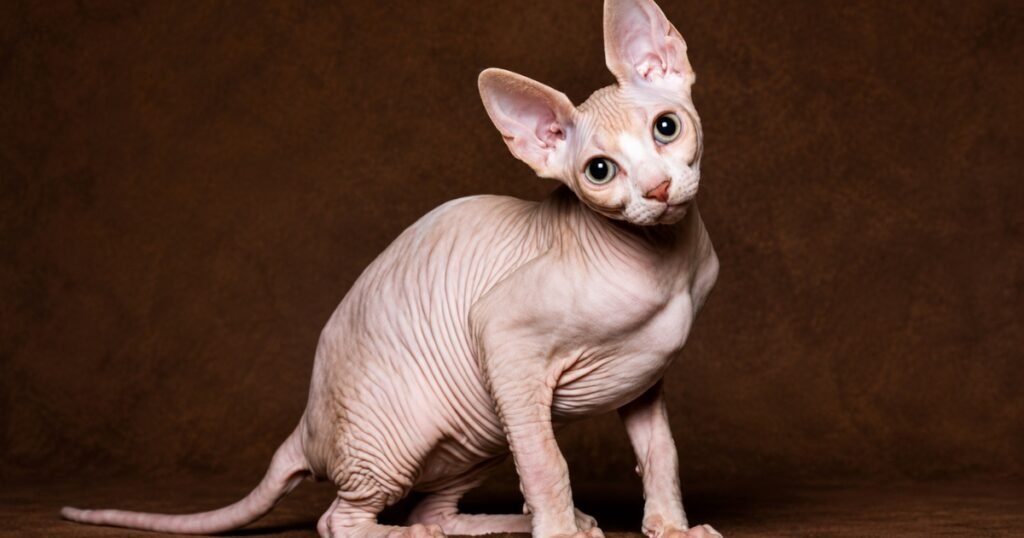
Their paw shape is elegant yet practical, assisting in their agility around the home rather than through water. The absence of actual webbing distinguishes them from some breeds that are intended for swimming or aquatic environments.
Understanding these differences adds an intriguing layer to the Sphynx’s appeal, highlighting the diversity of adaptations in the animal kingdom.
How Do Webbed Feet Help Animals?
Webbed feet help animals in various ways. Let’s explain all of these one by one:
Swimming: Webbed feet are a remarkable adaptation that enhances an animal’s ability to swim efficiently. This unique feature creates a larger surface area, allowing for increased propulsion through water.
For species like ducks and frogs, webbing transforms a simple foot movement into a powerful stroke, enabling them to navigate swiftly through their aquatic habitats.
Propulsion Through Water: When it comes to propulsion, webbing acts like a natural paddle, facilitating smoother and faster movements.
Animals such as otters and some birds use their webbed feet to push against the water, generating powerful thrusts that aid in chasing prey or escaping danger. This efficiency is crucial, especially in environments where aquatic predators lurk and quick escapes are essential for survival.
Steering and Balance: Steering is another fascinating function of webbed feet. The ability to subtly adjust foot position allows creatures like swans and turtles to maneuver with precision, whether dodging predators or shifting directions while hunting.
In muddy or soft terrains, webbed feet provide balance, preventing the animal from sinking and enabling them to traverse various landscapes while searching for food or shelter.
Walking Through Mud and Soft Surfaces: In habitats where mud and soft ground are prevalent, webbed feet serve as a versatile tool for stability. Species like the common moorhen can walk across muddy banks with ease, using their webbing to distribute weight and avoid getting stuck.
Hunting Aquatic Prey: For hunting aquatic prey, webbing offers a distinct advantage. Animals like herons use their webbed feet to create sudden splashes that can disorient fish, making capturing them easier. This strategic use of webbing showcases how different species adapt their features for survival in unique ways.
Escaping Predators: Webbed feet also play a critical role in escape tactics. When threatened, animals such as waterfowl can quickly escape predators by diving or swimming away, leveraging their webbing for rapid acceleration.
Variability in Function: It’s important to understand that the role of webbing varies across species. While ducks primarily use their webbed feet for swimming, other animals like raccoons may have them to enhance dexterity while foraging in waterlogged areas.
Types of Webbed Feet
Webbed feet are adapted for swimming and moving through wet environments, but not all webbed feet have the same structure. The amount of webbing between the toes can vary considerably among birds, mammals, reptiles, and amphibians. The main types include palmate, totipalmate, semipalmate, and lobate feet.
Palmate Feet
Palmate feet feature three front toes that are interconnected by webbing, making them highly effective for swimming. This design is commonly seen in waterfowl such as ducks and geese, allowing them to paddle effortlessly through aquatic environments.
The streamlined shape helps these birds navigate both still and flowing waters with grace, ensuring they can evade predators while foraging for food beneath the surface.
Totipalmate Feet
Totipalmate feet take webbing to the next level, as all four toes are fully connected. A prime example of this foot type is found in pelicans, which rely on their extensive webbing for efficient swimming and fishing.
The design enhances their ability to swiftly maneuver in water, making them proficient hunters that can dive and scoop up prey with remarkable agility. This adaptation showcases nature’s ingenuity, with each foot structure serving a unique purpose in the avian world.
Semipalmate Feet
Semipalmate feet bear partial webbing, featuring slight connections between the toes. This structure is prevalent among certain shorebirds and aquatic species, facilitating a balance between walking on land and swimming elegantly.
While these birds might not stand out in the typical webfoot category, their feet provide just the right amount of support for wading through shallow waters while still allowing for agile movement on solid ground.
Lobate Feet
Lobate feet are fascinating because they feature separate lobes at the tips of each toe, rather than a continuous webbing. Birds with this foot type, such as certain species of coots, can swim effectively due to these unique adaptations.
The lobes offer a different style of propulsion in water, demonstrating that not all foot structures labeled as “webbed” serve the same function. By appreciating these variations, we gain insight into the diverse evolutionary adaptations that enhance bird survival across various environments.
Why Do Animals Have Webbed Feet?
Animals have webbed feet for many reasons which are discussed below:
Evolutionary Adaptation: Webbed feet serve as a fascinating example of evolutionary adaptation, where animals develop traits that enhance their survival in specific environments.
Aquatic Habitats: Inhabiting aquatic environments compels many animals to adapt physically to thrive. Webbed feet provide the perfect solution, allowing creatures like ducks and frogs to glide effortlessly through water.
Natural Selection: Natural selection plays a pivotal role in the prevalence of webbed feet. Animals that possess this trait tend to be better swimmers, making them more effective at catching prey and evading predators.
Swimming Efficiency: The streamlined design of webbed feet enhances swimming efficiency by reducing drag and improving propulsion. This design allows animals like otters and certain fish species to maneuver swiftly in water, making them adept hunters.
The energetic savings from efficient swimming can be vital, especially when resources are scarce, as it enables longer foraging trips and greater access to food.
Food Acquisition: Food acquisition is intrinsically linked to how effectively an animal can hunt or forage in aquatic environments. Webbed feet enhance precision and speed, enabling species such as waterfowl to dip and dive for aquatic plants or small fish.
Predator Avoidance: Webbed feet also contribute to predator avoidance strategies among aquatic animals. The quick, agile movements afforded by webbing help prey escape quicker from lurking predators.
Environmental Adaptation: Lastly, the presence of webbed feet highlights how species adapt to their environments. From the deserts of Australia where certain amphibians have evolved this trait to escape droughts, to temperate lakes where birds showcase their webbing for efficient travel, the range of habitats with webbed-footed species illustrates the intricate connections animals maintain with their ecosystems.
Animals With Webbed Feet VS Animals With Flippers
| Webbed Feet | Flippers |
| Individual toes remain recognizable | Toes are highly modified/contained |
| Flexible membrane connects toes | Broad paddle-like limb |
| Common in ducks, frogs, beavers | Common in seals, sea turtles, penguins |
| Useful for swimming and walking | Primarily specialized for swimming |
Conclusion
Exploring the fascinating world of animals with webbed feet reveals how these unique adaptations play a crucial role in their survival and behavior. From swimming gracefully in water to traversing wetlands effortlessly, webbed feet offer these creatures a distinct advantage in their environments.
Whether it’s the playful otter or the majestic swan, each animal showcases the beauty of evolution. Understanding their habitats and lifestyles deepens our appreciation for the diversity of life on Earth.
FAQs
What Are Animals With Webbed Feet?
Animals with webbed feet are those that have skin between their toes, which aids in swimming and wading.
What Animals Have Webbed Feet?
Examples include ducks and swans from birds, otters and beavers from mammals, certain turtles among reptiles, and frogs among amphibians.
What Are Geese Feet Called?
Webbed feet, or palmate feet, are common in many animals that live in or near water, helping them swim efficiently. Geese, ducks, and swans are typical examples, as their webbing allows for better propulsion in aquatic environments.
What Mammals Have Webbed Feet?
Various mammals possess webbed feet as well, including otters, beavers, and some species of kangaroos. These adaptations enable them to thrive in water, aiding in swimming and maneuvering.
Do All Ducks Have Webbed Feet?
Not all ducks have webbed feet; while most do, species like the wood duck possess sharp claws for perching. Some diving ducks feature specialized lobes instead of traditional webbing.