Male Vs Female Axolotl: How To Tell The Difference
Distinguishing between male vs female axolotl can be a perplexing challenge, particularly when dealing with juveniles whose traits aren’t fully developed. Let’s explore the main differences between male and female axolotls, providing you with the knowledge to confidently identify their gender. Understanding these distinctions is crucial for enthusiasts who want to manage breeding and care effectively.
Male Vs Female Axolotl: Key Differences
When it comes to distinguishing between male and female axolotls, keen observation reveals subtle yet fascinating differences.
Male Axolotl Characteristics
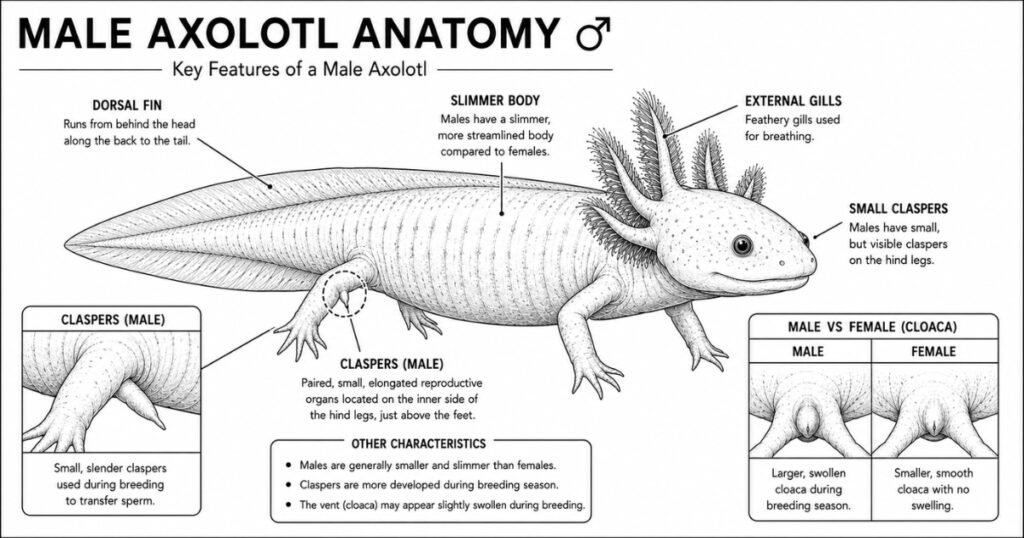
Male axolotls typically exhibit a more slender and streamlined body shape. This streamlined physique aids in their agility, allowing them to engage in more active behaviors, essential during mating seasons.
The most notable feature distinguishing males is the cloaca, which appears more pronounced and prominent, making it easier to identify them during close observations.
Their tails are generally longer and more robust, contributing to their overall slender proportions, while their typical physical development showcases a more athletic form.
Female Axolotl Characteristics
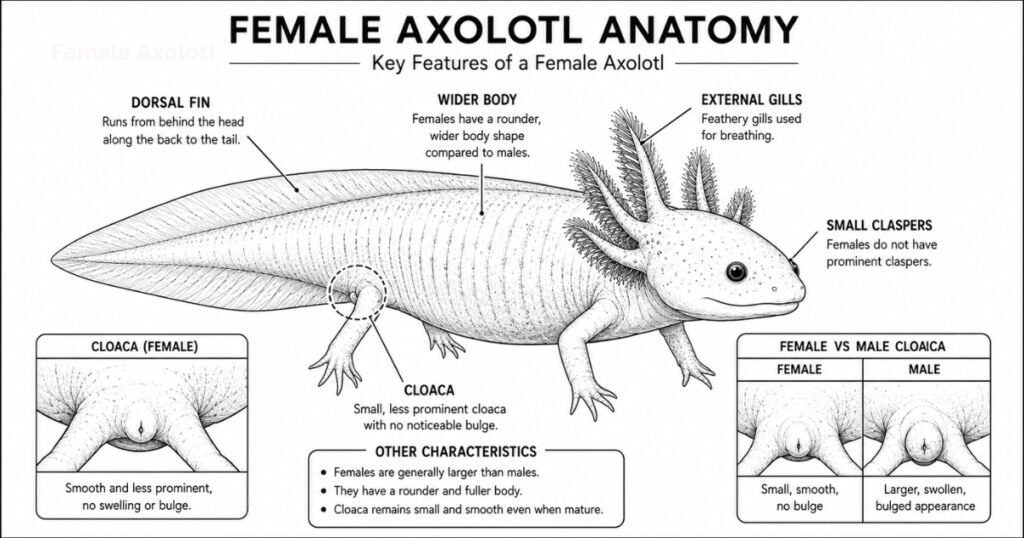
Female axolotls possess a bulkier body shape, which supports their reproductive functions. Their cloacas are less pronounced, often appearing rounder and more inconspicuous.
A key characteristic is their wider abdomen, designed to accommodate eggs when they are ready to spawn. As they develop, females often show a more rounded appearance compared to their male counterparts, indicating a readiness for breeding cycles.
This difference not only highlights their role in reproduction but also adds to the fascinating diversity of these captivating creatures.
Axolotl Male Vs Female: What Are The Main Differences?
| Feature | Male Axolotl | Female Axolotl |
| Body Shape And Size | Usually leaner and more elongated, especially during breeding season. | Generally rounder and bulkier due to developing eggs. |
| Cloaca Size And Shape | Cloaca is more pronounced and wider, often appearing like a flattened disk. | Cloaca is smaller, more compact, and rounded. |
| Abdomen And Body Width | Typically has a sleeker and narrower abdomen. | Usually has a wider abdomen, especially when carrying eggs, creating a noticeable bulge. |
| Tail And Overall Proportions | Tail is generally broader and more robust, supporting movement during mating. | Tail may appear slimmer and more elongated, contributing to buoyancy and swimming. |
Axolotl Gender: Male Or Female?
Determining the gender of an axolotl can be quite the adventure, as these enchanting creatures have subtle yet fascinating characteristics.
Signs Of A Male Axolotl
Determining the gender of an axolotl can be quite a challenge. The most common distinguishing feature is the cloaca, a small opening located near the tail. In males, this area is typically more pronounced and may appear swollen during mating season, while females usually have a flatter cloaca.
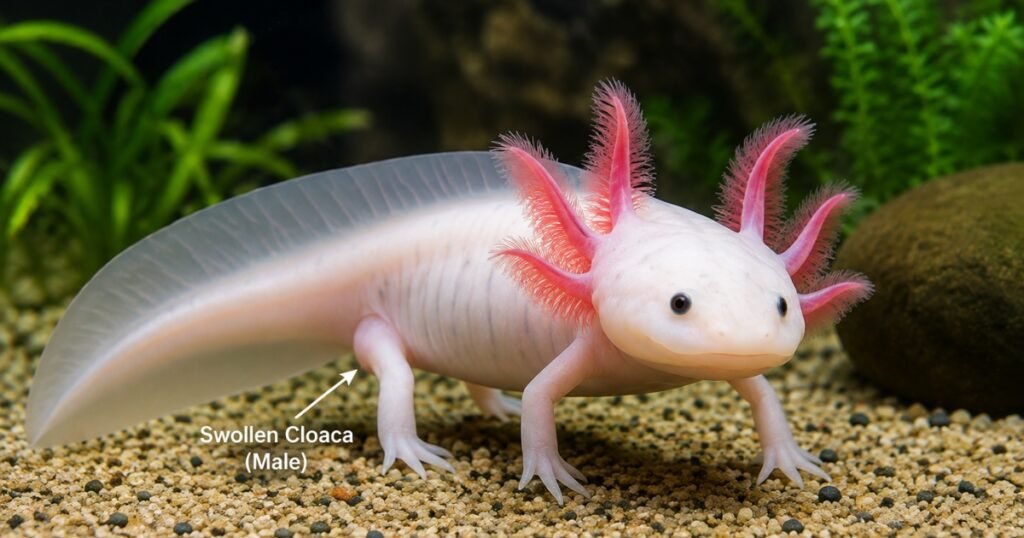
It’s important to note that relying solely on this visual feature can lead to misidentification, as swelling can also result from other factors, such as water quality or stress.
Signs Of A Female Axolotl
Females generally have rounder, plumper bodies, especially when they are carrying eggs, a sign of their readiness to reproduce. Their cloaca tends to be wider than that of males, yet this can be misleading, as it may also result from factors unrelated to gender.
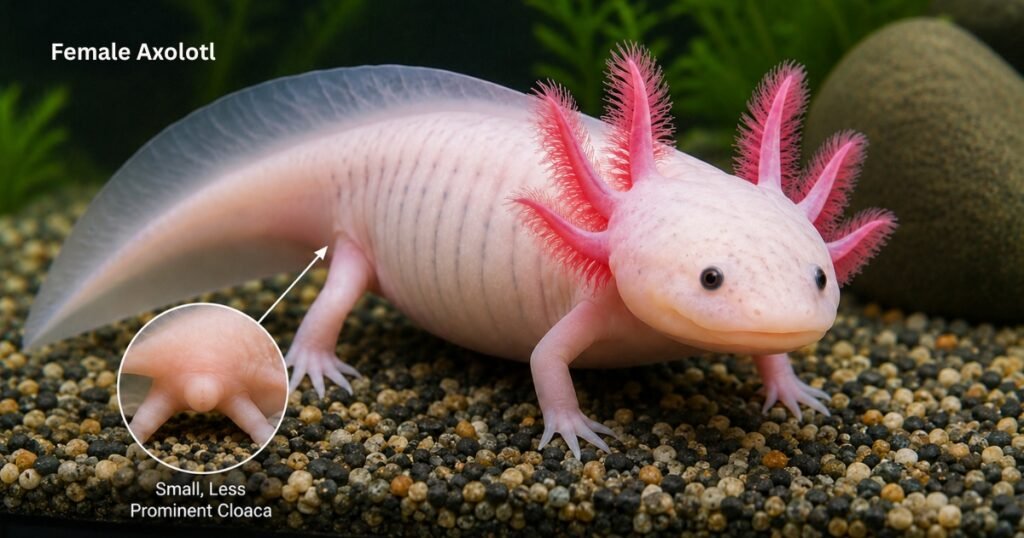
Observing their behavior, particularly during feeding times, can yield insights; females often exhibit a more relaxed demeanor compared to their vibrant male counterparts.
Why Cloaca Identification Can Be Misleading
Despite the cloaca being a primary gender marker, it’s vital to consider various factors influencing its appearance. For instance, a stressed axolotl may show temporary swelling regardless of its sex, making a single observation an unreliable metric.
Therefore, a comprehensive approach that includes examining overall body shape, color intensity, and behavioral traits can provide a more accurate understanding of your axolotl’s gender.
Engaging in this multi-faceted analysis will not only enhance your knowledge but also deepen your appreciation for these fascinating creatures.
Female Axolotl Anatomy And Reproductive Features
| Reproductive Feature | Female Axolotl |
|---|---|
| Female Reproductive Anatomy | Female axolotls have a pair of well-developed ovaries responsible for producing eggs. Their reproductive anatomy supports egg development and reproduction. |
| Ovaries | The ovaries contain developing eggs and become more noticeable as the female approaches the breeding period. |
| Egg Development | Eggs develop through different stages of growth and maturity before being released during breeding. |
| Egg Production | A female axolotl can produce up to around 1,000 eggs during a single breeding cycle, although the number can vary. |
| Egg Structure | Axolotl eggs are surrounded by a gelatinous coating that helps protect them after they are laid. |
| Egg Hydration | As eggs mature, they absorb water and increase in size before being released. |
Oviduct Function
After the eggs have matured, they travel through the oviducts, which serve as conduits for the eggs to reach the external environment. The oviducts are lined with ciliated cells that help to transport the eggs smoothly.
This process ensures that fertilization can occur outside the body, highlighting the axolotl’s reliance on external gamete interaction for reproductive success. This reproductive strategy isn’t unique to amphibians either marine species like the Geoduck also rely on releasing eggs and sperm directly into the water to reproduce.
The oviduct’s unique structure and function are vital for successful egg laying, demonstrating the extraordinary evolution of their reproductive system.
What Happens When A Female Produces Eggs?
Once the eggs are ready for release, the female axolotl will lay them in carefully designed clusters. This communal behavior often involves pheromonal communication with potential mates, ensuring that fertilization chances are maximized.
The gelatinous sheaths surrounding the eggs not only protect them but also provide essential nutrients for the developing embryos, showcasing nature’s ingenuity in safeguarding the future of this unique species.
As the eye-catching clusters are laid in water, they become a vibrant testament to the reproductive prowess of female axolotls, signifying hope for biodiversity amidst their endangered status.
Male Axolotl Anatomy And Reproductive Features
| Reproductive Feature | Male Axolotl |
|---|---|
| Male Reproductive Anatomy | Male axolotls have reproductive structures including the testes, which produce sperm. Their cloaca is a multifunctional opening involved in reproduction and the release of reproductive materials. |
| Spermatophore Production | During breeding, males produce gelatinous sperm packets called spermatophores. They deposit these packets on the substrate, where females can pick them up for fertilization. |
| Role Of Cloaca | The cloaca plays an important role in the reproductive process and is involved in the release of reproductive materials. |
| Reproductive Strategy | Male axolotls use spermatophores rather than direct sperm transfer, making their reproduction adapted to external fertilization. |
How Male Axolotls Reproduce?
Reproduction in male axolotls is a remarkable dance. Once a female is enticed by the male’s courtship behaviors, she approaches the spermatophores, which he has released as a reproductive lure.
The female then absorbs these sperm packets, leading to fertilization inside her body. This method ensures a higher survival rate for offspring, as females can choose the optimal time for egg laying, often in the safety of their aquatic environment.
How Males And Females Differ During Breeding?
During the breeding season, male and female axolotls exhibit clear behavioral and physical differences. Males often flaunt brighter colors and more pronounced features to attract females, while females tend to be rounder with a more robust body shape, preparing to bear eggs.
While in the throes of courtship, males engage in a series of intricate displays, showcasing not just their vitality but also their genetic fitness, which is a critical factor in the selection process by females.
Conclusion
Recognizing the differences between male and female axolotls is an essential skill for any axolotl keeper. By closely observing attributes such as body shape, size, and cloacal features, you can confidently identify the gender of your axolotl.
This knowledge can significantly impact your breeding plans and care routines, ensuring that both male and female axolotls thrive in a suitable environment. With this guide, you should now feel equipped to make informed decisions about your pet.
FAQs
How To Tell If An Axolotl Is A Boy Or Girl?
To determine if an axolotl is a boy or girl, look for the presence of a wider, flatter cloaca in females, while males typically have a more pronounced, narrower cloaca, especially during breeding season.
Why Can’t We Touch Axolotls?
It’s not strictly forbidden to touch axolotls, their sensitive skin can absorb harmful substances, so it’s best to minimize contact to avoid causing stress or potential harm.
Are Axolotls All Girls?
Not all axolotls are girls; they can be either male or female. In breeding, both sexes are vital, as males and females contribute to the continuation of the species.
When Can You Tell Axolotl Gender?
You can typically distinguish axolotl genders around 6 to 12 months of age, when males develop a more pronounced cloaca and their bodies become slimmer compared to females.
At What Age Can Axolotls Get Pregnant?
Axolotls can become sexually mature and potentially breed at about 12 to 18 months, depending on their size and health.