26 Animals With Stripes: Complete List, Facts, Habitats & Pictures
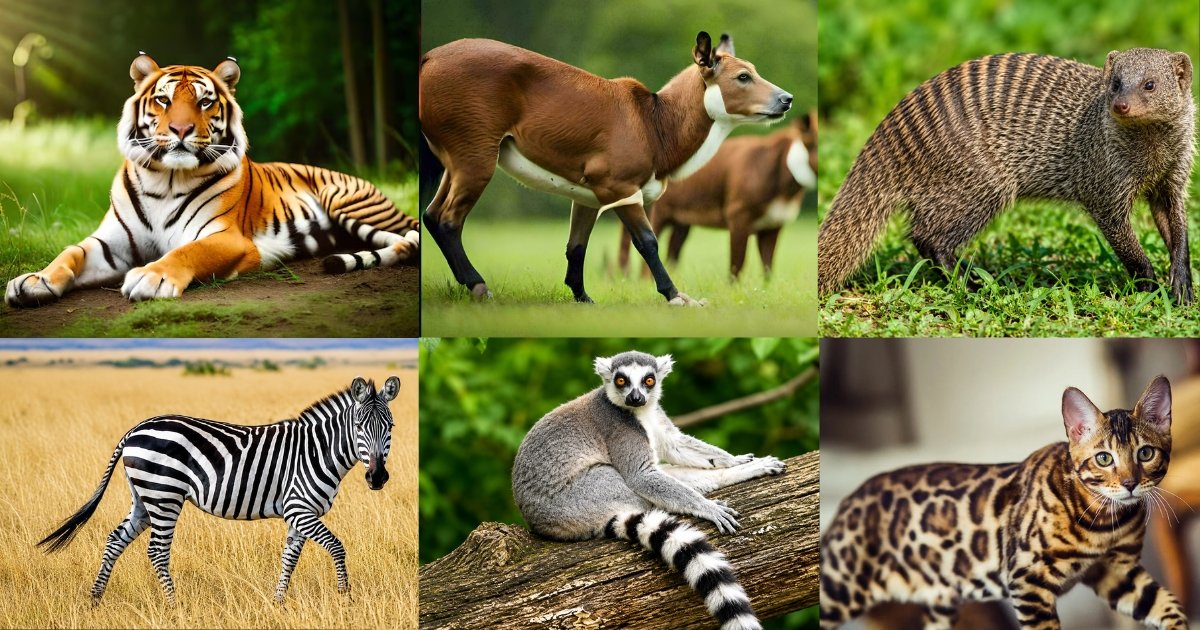
Animals with stripes are a remarkable group, showcasing these dazzling designs that can serve multiple purposes such as camouflage and species recognition. In this comprehensive guide, we dive into the world of striped creatures, offering a brief overview of various types, from familiar zebras to lesser-known species.
This blog post promises to deliver information about their names, physical characteristics, diet preferences, and the role of stripes in their survival, while also highlighting some interesting trivia you won’t want to miss.
What Are Stripes On Animals?
Stripes on animals are unique patterns that can appear on various body coverings, including fur, skin, scales, and feathers. These markings, whether they are bold or narrow, vertical or horizontal, serve multiple purposes in the animal kingdom.
For instance, vertical stripes often help animals like tigers and zebras blend into their environments, allowing them to evade predators or sneak up on prey. In contrast, horizontal stripes may create an illusion of length, making the animal appear faster or longer than it is.
The diversity in stripe patterns ranging from irregular designs to ring-like formations adds to the visual complexity of striped animals. This stark contrast with spots highlights an important distinction; while spots often scatter and provide camouflage, stripes usually follow a linear path, enhancing movement perception.
Biologically, stripes play significant roles in communication, mating displays, and even thermoregulation among animals that have stripes, making them not just aesthetically pleasing but essential for survival. Understanding these stripes on animals opens a window into the fascinating adaptations that nature employs to thrive in various habitats.
Why Do Animals Have Stripes?
Stripes serve multiple fascinating purposes across the animal kingdom. Camouflage is one of the most intriguing uses; in dense vegetation or dappled light, the striped patterns of animals like zebras can help them blend into their surroundings, making it challenging for predators to spot them.
This adaptive trait isn’t just about hiding, though; it also plays a role in predator protection. Certain striped species, like the tiger, can confuse their prey when prowling through forests, as the shifting stripes disrupt their outline, enhancing stealth during the hunt.
Beyond mere survival, stripes facilitate communication and species recognition. For instance, the distinctive stripe patterns of different zebra species allow them to identify one another, fostering social bonds within their herds.
In the realm of mating displays, the vibrant stripes on certain insects can attract mates, signaling fitness and genetic strength. Warning coloration is crucial in some cases; striking patterns in wasps and other insects serve as a deterrent to potential predators, signaling that they possess toxins or unpleasant qualities.
In various habitats, from jungles to savannas, stripes provide a remarkable evolutionary advantage, illustrating nature’s ability to intertwine beauty and utility in the incredible tapestry of life.
Detailed List of Animals With Stripes
There are many species with distinctive patterns, from tigers and zebras to snakes, fish, insects, and small mammals. If you are wondering what animals have stripes, the following list highlights some of the most fascinating striped animal and explains their appearance, habitat, diet, and the purpose of their stripes.
Tiger
| Field | Details |
|---|---|
| Scientific Name | Panthera tigris |
| Class | Mammalia |
| Diet | Carnivore |
| Range Map | South and Southeast Asia including India, Nepal, Russia, and Indonesia |
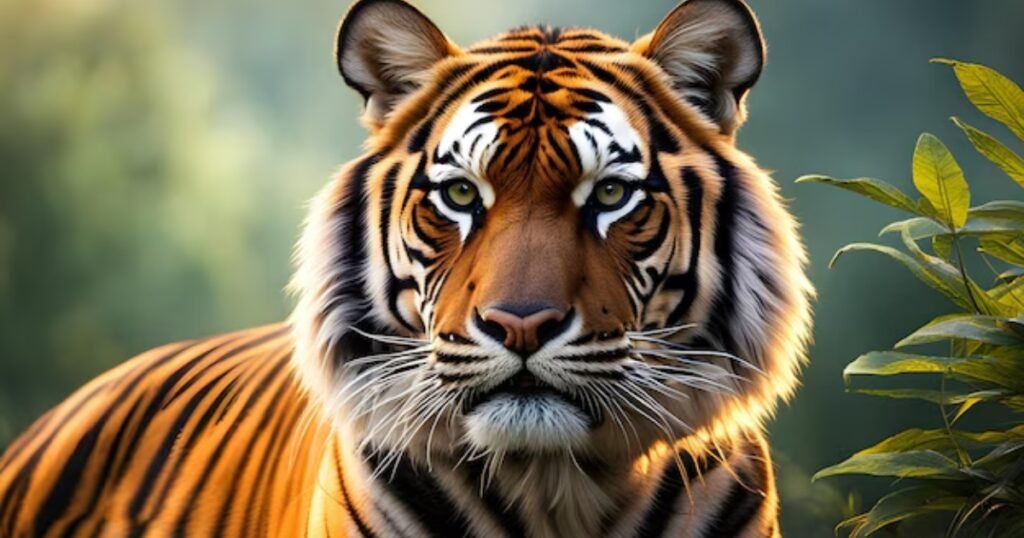
Tigers primarily inhabit the dense forests and grasslands of Asia, ranging from India to parts of Southeast Asia and Siberia. Their magnificent orange coats are adorned with black stripes that create a striking pattern, unique to each individual, much like human fingerprints.
These tiger stripes not only enhance their beauty but also serve a crucial role in their survival; they break up the outline of the tiger, making it harder for prey to spot them amidst the dappled light of their forest homes.
With a diet primarily consisting of large ungulates, tigers are formidable hunters. Their solitary nature allows for stealth and precision, especially when using their stripes for camouflage during nighttime hunts.
An interesting fact about tigers is that they are the largest wild cats in the world, with some weighing up to 600 pounds, making their striking appearance all the more impressive. The intricate interplay of tiger stripes animal against their muscular form showcases how nature enhances not just functionality but also aesthetics.
Plains Zebra
| Field | Details |
|---|---|
| Scientific Name | Equus quagga |
| Class | Mammalia |
| Diet | Herbivore |
| Range Map | Eastern and Southern Africa |
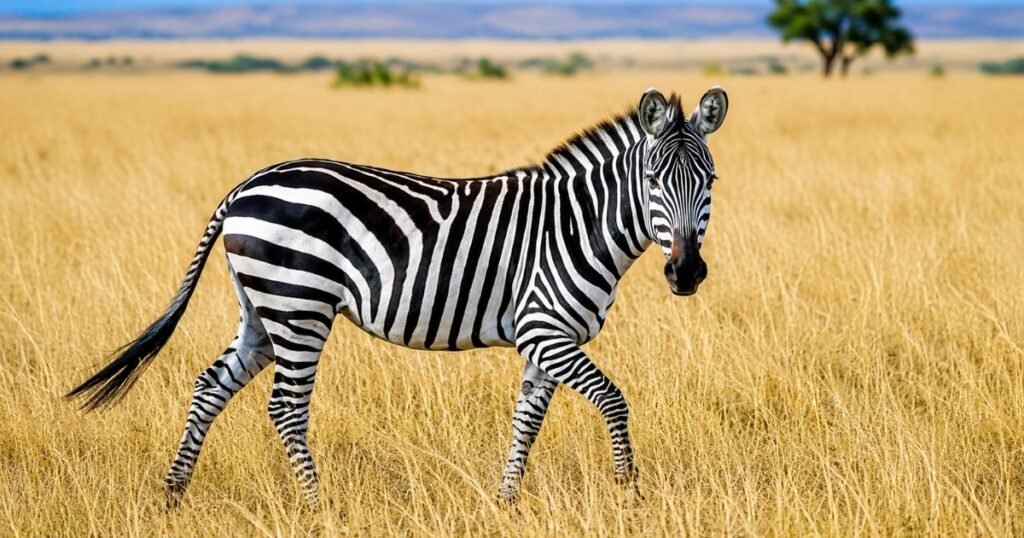
Plains zebras roam the savannas and grasslands of eastern and southern Africa, their striking black-and-white stripe pattern immediately recognizable. Each zebra has a distinct configuration of stripes, making them as individual as fingerprints, and these wide, bold patterns serve several purposes.
Beyond aesthetic appeal, these stripes may confuse predators by creating an optical illusion during a chase, and they are thought to help regulate body temperature and deter biting flies. Socially, zebras form strong bonds within their herds, demonstrating a remarkable sense of community.
Their herbivorous diet primarily consists of grasses, which they graze on in groups for safety and efficiency. An intriguing aspect of zebra life is their vocalizations; they communicate through a range of sounds, including barks and whinnies, to maintain group cohesion and alert their companions to danger. Zebra stripes not only mark their identity but also demonstrate the wonders of evolution in social species.
Okapi
| Field | Details |
|---|---|
| Scientific Name | Okapia johnstoni |
| Class | Mammalia |
| Diet | Herbivore |
| Range Map | Democratic Republic of Congo |
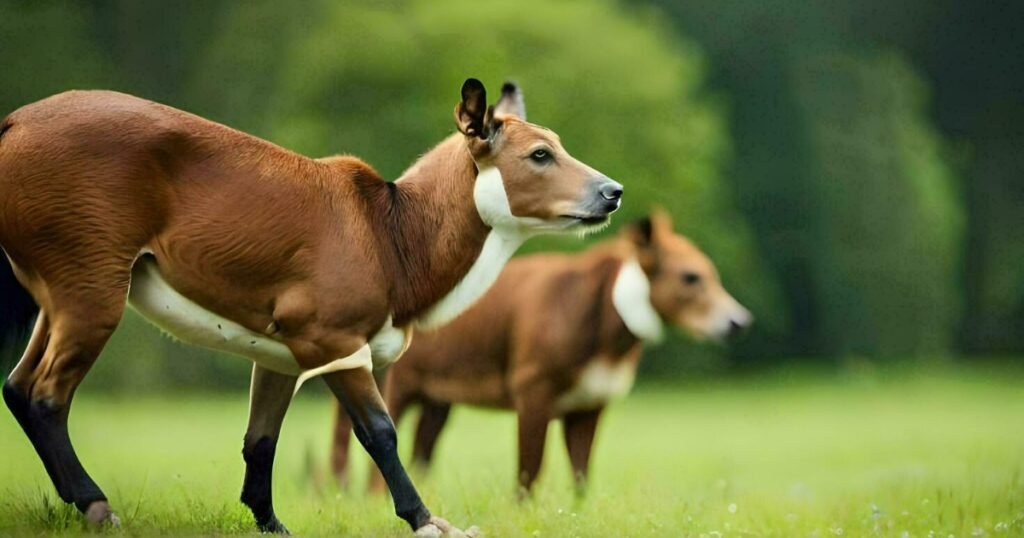
The elusive okapi thrives in the dense African rainforests, a habitat that is uniquely suited to their survival due to its rich biodiversity. This remarkable animal has a body reminiscent of a horse, yet its legs sport zebra-like stripes, adding to its distinctiveness among striped animals.
The stripes on the okapi’s legs may provide effective camouflage, breaking up its outline against the complex patterns of the forest, helping it evade predators.
A herbivore, the okapi primarily feeds on leaves, fruits, and grasses found in its lush environment. Interestingly, it shares a close evolutionary relationship with giraffes, both belonging to the same family, Giraffidae.
A fascinating fact about the okapi is that they are often called “forest giraffes,” highlighting their unique connection while still standing out as one of the animal kingdom’s most unusual creatures. The presence of stripes in such a varied niche demonstrates the adaptability and ingenuity of nature.
Banded Mongoose
| Field | Details |
|---|---|
| Scientific Name | Mungos mungo |
| Class | Mammalia |
| Diet | Omnivore |
| Range Map | Sub-Saharan Africa |
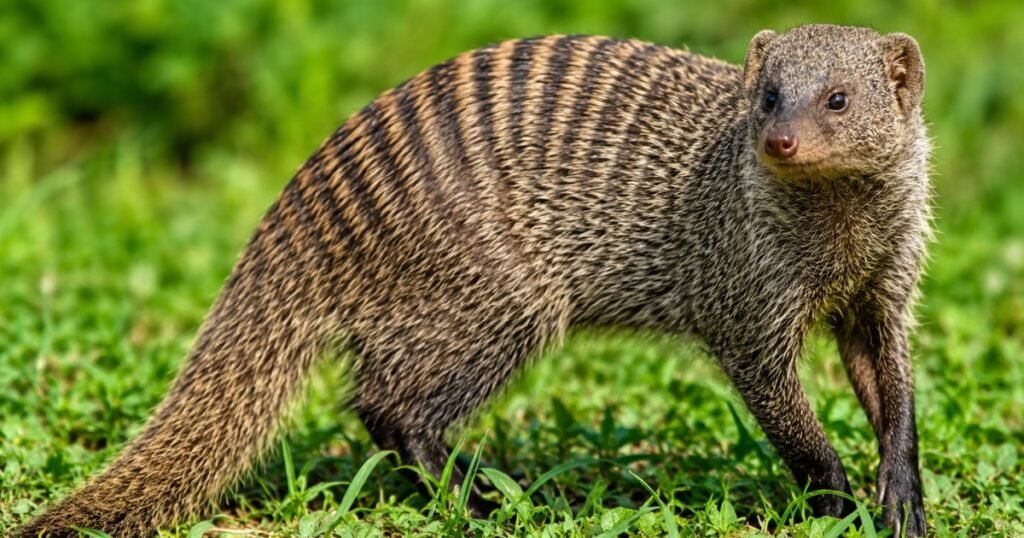
The banded mongoose thrives in the grassy plains and savannas of Africa, often near woodland edges or agricultural fields. With a body length of about 12 to 16 inches, these agile creatures boast a sleek appearance graced with distinct stripes.
The bands of light and dark fur stretch across their bodies, providing excellent camouflage among the grasses and underbrush. As scavengers and opportunistic feeders, their diet consists of insects, small mammals, and fruits, showcasing their adaptability.
Social creatures, banded mongooses live in tight-knit groups that can range from a handful to over 30 individuals, highlighting their strong communal bonds. When threatened, they exhibit a unique defense behavior by forming a protective circle around their young, standing guard against predators.
An interesting fact about these mongooses is their cooperative breeding strategy, where non-breeding adults help care for the young, enhancing their survival rate.
Striped Hyena
| Field | Details |
|---|---|
| Scientific Name | Hyaena hyaena |
| Class | Mammalia |
| Diet | Carnivore |
| Range Map | North Africa, Middle East, and South Asia |
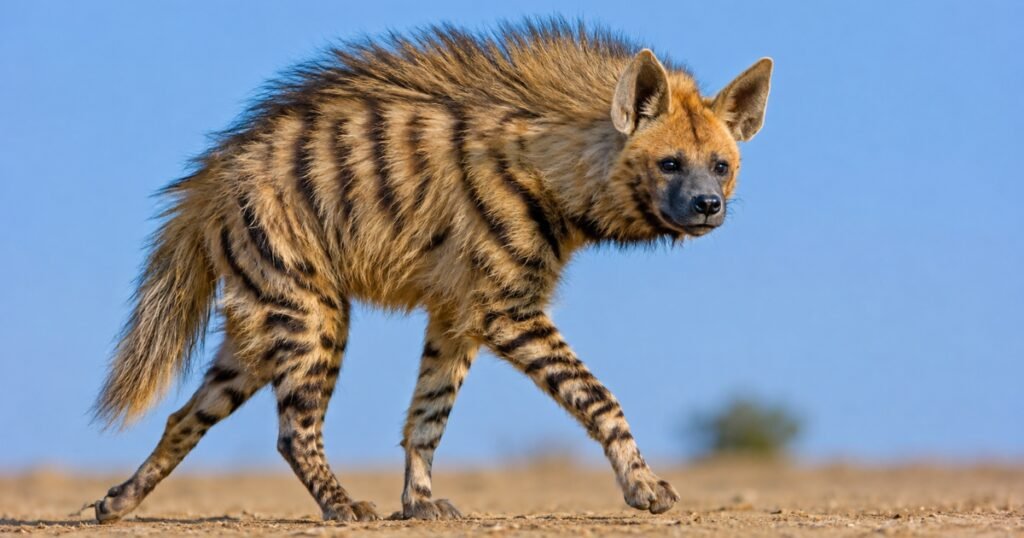
The striped hyena is predominantly found in the dry grasslands, open woodlands, and semi-desert regions of North and East Africa, as well as parts of the Indian subcontinent. Clad in a grayish-brown coat decorated with bold dark stripes, they are easily distinguishable from their spotted counterparts due to their unique coat pattern and more slender build.
Their diet is primarily carnivorous, with a preference for carrion, although they will also hunt small mammals and birds when needed. Nocturnal by nature, these hyenas play a crucial role in their ecosystem as scavengers, helping to maintain balance by cleaning up carcasses and regulating prey populations.
An interesting fact about the striped hyena is their capability to produce a range of vocalizations, which includes whoops, growls, and cackles, making them highly communicative and social despite their solitary hunting methods.
Ring-Tailed Lemur
| Field | Details |
|---|---|
| Scientific Name | Lemur catta |
| Class | Mammalia |
| Diet | Omnivore |
| Range Map | Southern and southwestern Madagascar |
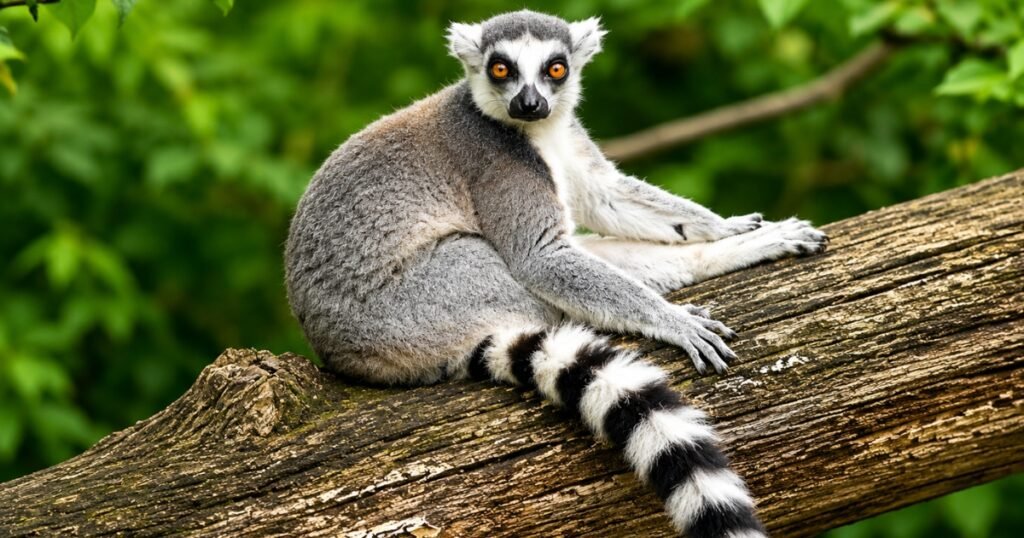
Endemic to Madagascar, the ring-tailed lemur is a striking primate well-known for its distinctive black-and-white striped tail, which can be longer than its body.
The purpose of this fabulous tail pattern goes beyond just aesthetics; it serves as a signal during social interactions, helping maintain cohesion within the troop. Their diet consists primarily of fruits, leaves, and flowers, reflecting the rich biodiversity of their forested habitat.
Ring-tailed lemurs live in matriarchal groups, showcasing strong social dynamics that emphasize cooperation and collective movement. They communicate using a range of vocalizations and body language, reinforcing bonds among troop members.
An interesting fact is that these lemurs are known for their sunbathing behavior, where they sit upright with their arms stretched to soak in the sun, a quirky yet social activity that showcases their playful nature.
Bengal Cat (Wild-Type Cat)
| Field | Details |
|---|---|
| Common Name | Bengal Cat (Wild-Type Cat) |
| Scientific Name | Prionailurus bengalensis |
| Class | Mammalia |
| Diet | Carnivore |
| Range Map | South and Southeast Asia, including India, Nepal, China, and Indonesia |
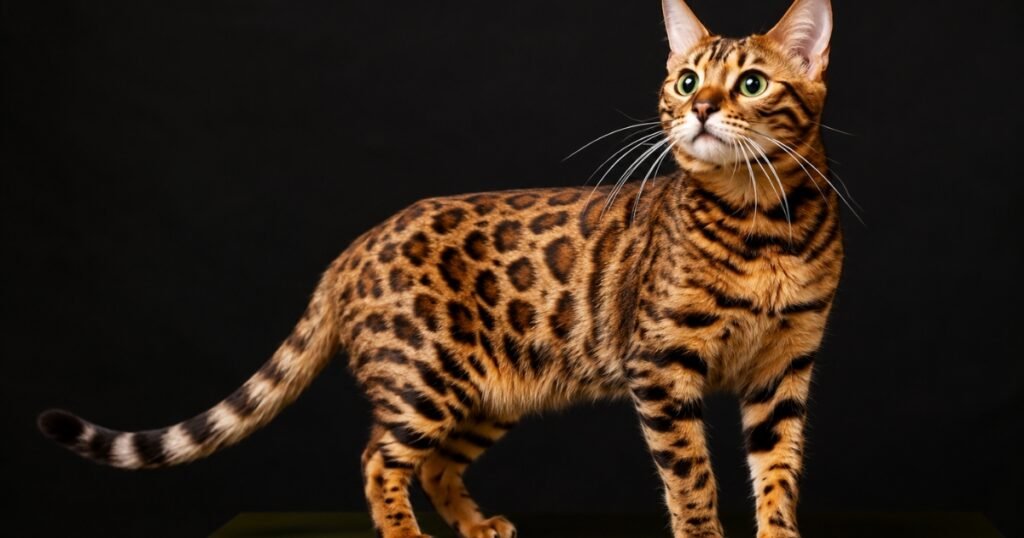
The wild-type Bengal cat showcases a striking coat with bold, earth-toned colors and unique, rosette-like spots that mirror its leopard ancestors. Typically, wild Bengals exhibit tabby stripe patterns that can range from subtle to pronounced, enhancing their wild aesthetics.
In contrast to domestic Bengal cats, which have been selectively bred for specific colorations and temperaments, wild Bengals maintain a more rugged appearance and natural instincts, reflecting their ancestry from the beautiful Asian leopard cat. Their coats are usually a mix of browns, golds, and warm tones, designed to camouflage them in dense foliage.
These remarkable cats are found in the subtropical forests of Asia, largely in regions like Bangladesh and Nepal, where their lineage points to an extraordinary hybridization journey.
Their diet primarily consists of small mammals, birds, and reptiles, showcasing their prowess as skilled hunters. Unlike their domesticated counterparts, wild Bengals are more elusive, thriving in their natural habitats, which lend them a fierce and beautiful mystique.
Striped Skunk
| Field | Details |
|---|---|
| Scientific Name | Mephitis mephitis |
| Class | Mammalia |
| Diet | Omnivore |
| Range Map | North America, USA, Canada, and Mexico |
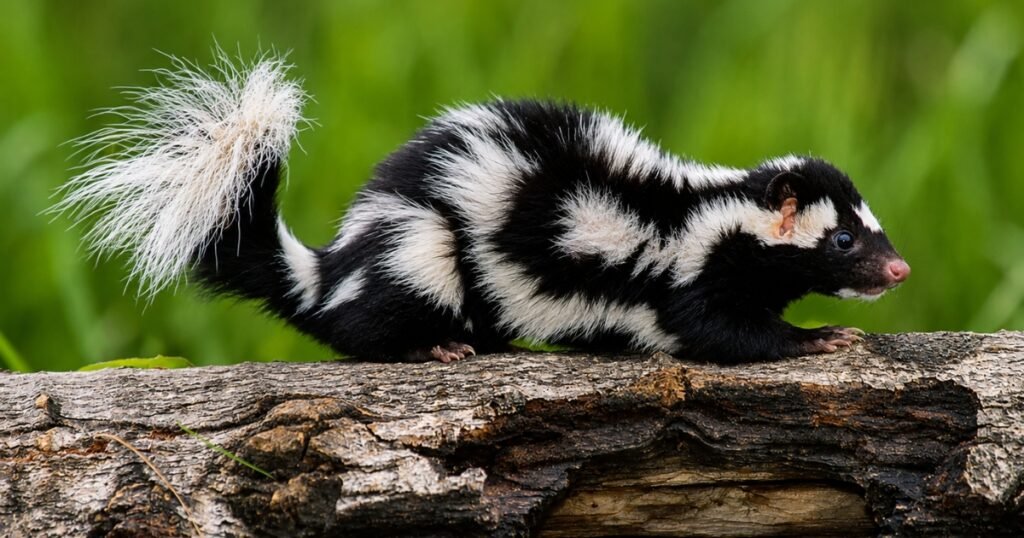
Striped skunks inhabit a variety of North American environments, from woodlands to urban areas, making them versatile survivors. Their iconic white stripes on glossy black fur serve as nature’s no-entry sign, warning potential predators of their unpleasant defense mechanism.
This striking coloration is not just for aesthetics; it effectively communicates “stay away,” saving skunks from conflict. Their defensive spray, a pungent fluid ejected from glands near the base of the tail, can reach up to 10 feet, providing an effective deterrent.
A nocturnal diet primarily includes insects, small rodents, and fruits, allowing skunks to browse under the cover of darkness. Despite their notorious reputation, striped skunks are often gentle and social creatures.
Their adaptability to urban settings highlights their remarkable ability to thrive alongside humans, turning urban jungles into their playgrounds.
Coral Snake
| Field | Details |
|---|---|
| Scientific Name | Micrurus fulvius |
| Class | Reptilia |
| Diet | Carnivore |
| Range Map | Southeastern United States |
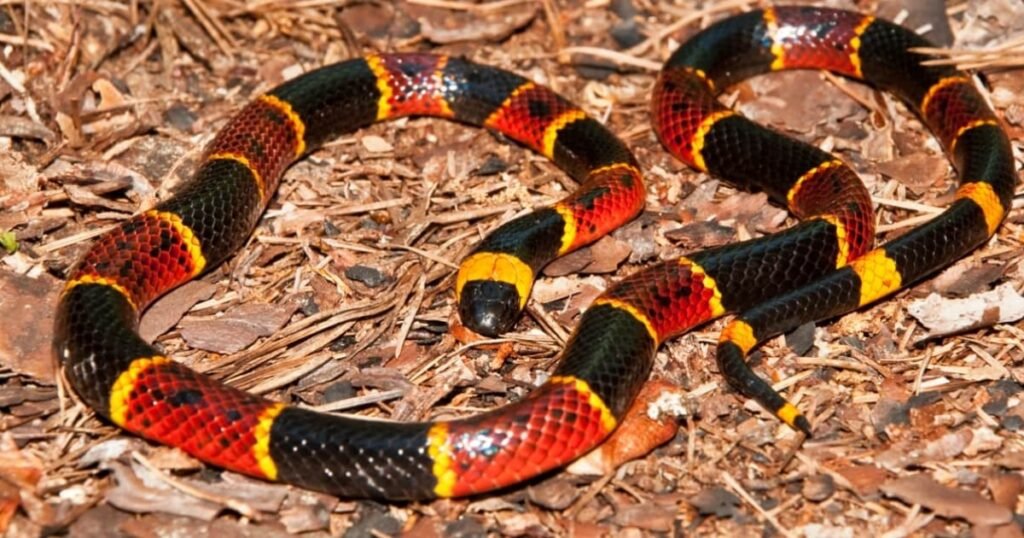
Coral snakes can be found across tropical areas of North America, weaving through environments ranging from sandy deserts to coastal forests. Their vivid red, yellow/white, and black bands not only capture the eye but also inform predators of their venomous nature; the adage “red on yellow, kill a fellow” helps distinguish them from non-venomous look-alikes.
This bright coloration serves as a warning, enhancing the survival strategy of these reptiles. Remarkably, coral snake venom is potent, toxic enough to cause serious harm or even death if not treated promptly.
Coral snakes primarily nourish themselves on small lizards and other snakes, relying on stealth and precision to subdue their prey. It’s crucial to differentiate them from harmless mimics, such as the milk snake, which sport similar color patterns but have different band arrangements.
As a safety note, anyone encountering a coral snake should maintain distance, as their venomous bite can be life-threatening. An interesting fact is that, unlike many other snakes, coral snakes have fixed fangs, making their bites highly specialized in delivering venom efficiently.
Tiger Salamander
| Field | Details |
|---|---|
| Scientific Name | Ambystoma tigrinum |
| Class | Amphibia |
| Diet | Carnivore |
| Range Map | North America, from Canada to Mexico |
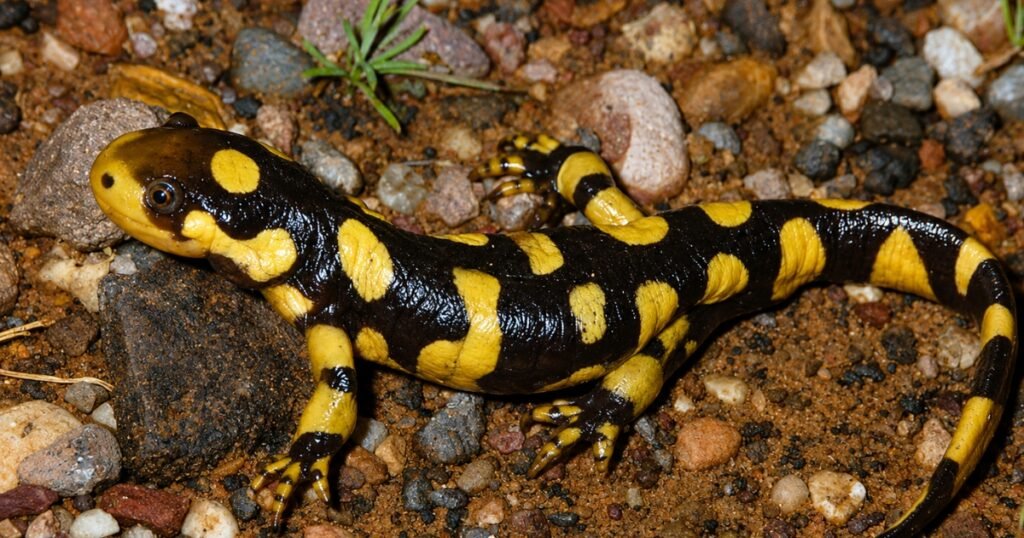
The Tiger Salamander thrives in a variety of habitats, including forests, grasslands, and wetlands scattered across North America. Its striking appearance features bold yellow or olive patterns contrasted with dark markings, making it a visual standout against its surroundings.
Typically adorned with irregular stripes or bands, this amphibian boasts a remarkable ability to camouflage itself in the leaf litter and crevices of its habitat. These salamanders primarily feast on a diet of invertebrates, such as earthworms and insects, but they also consume small vertebrates when the opportunity arises.
As they progress through their life cycle, they undergo a fascinating transformation from aquatic larvae to terrestrial adults, usually thriving in moist environments. Their primary defense mechanism involves secreting toxins through their skin, dissuading potential predators from making a meal of them.
The Tiger Salamander can regenerate lost limbs, showcasing an intriguing facet of their biology that continues to inspire scientific research.
Clownfish
| Field | Details |
|---|---|
| Scientific Name | Amphiprion ocellaris |
| Class | Actinopterygii |
| Diet | Omnivore |
| Range Map | Indian and western Pacific Oceans, Australia, Southeast Asia, and Japan |
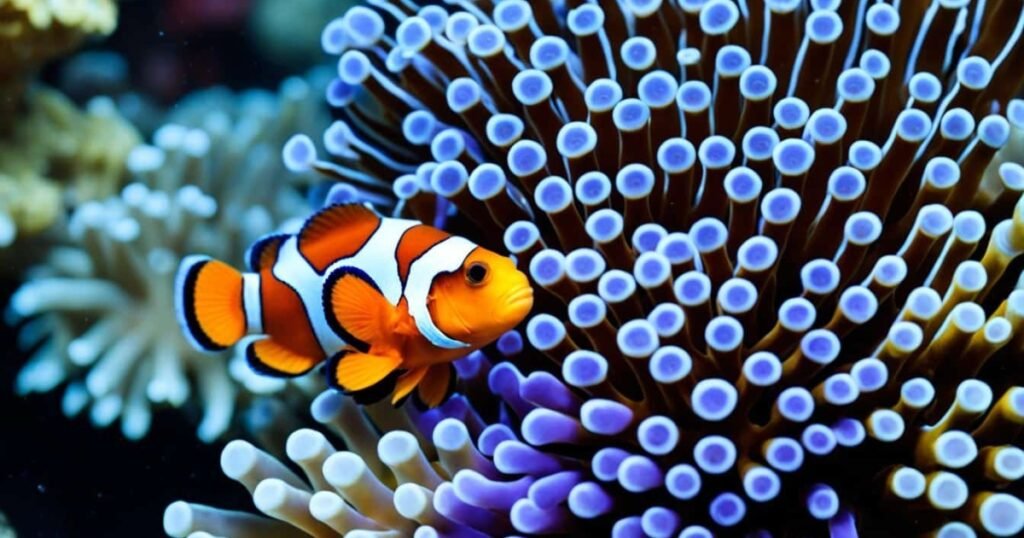
Clownfish inhabit the vibrant beauty of coral reefs in warm marine waters, where they create a symbiotic relationship with sea anemones. Their eye-catching orange bodies are adorned with distinct white vertical stripes, which not only make them recognizable but also serve as a vital part of their identity among their hosts.
Clownfish thrive on a varied diet that includes small zooplankton and algae, enhancing their role within the reef ecosystem. Protection from predators is a unique aspect of their life, as the clownfish benefits from the stinging tentacles of the anemone, which provide safety while the fish offers nourishment and cleaning in return.
Their social structure is equally fascinating, often demonstrating a strict hierarchy within their groups, with a dominant female leading the pack. An interesting fact about clownfish is that they are all born male; they can change sex, allowing for flexibility in breeding and social dynamics.
Convict Tang
| Field | Details |
|---|---|
| Scientific Name | Acanthurus triostegus |
| Class | Actinopterygii |
| Diet | Herbivore |
| Range Map | Tropical Pacific Ocean, including Hawaii, Fiji, and French Polynesia |
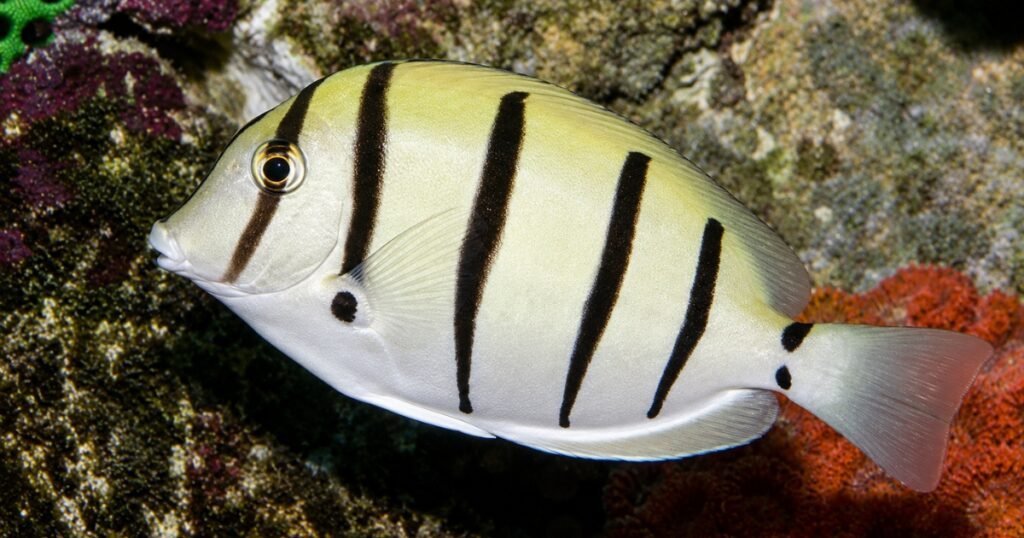
The Convict Tang thrives in the warm, tropical waters of the Indo-Pacific region, primarily found in coral reef environments where it plays a crucial role in maintaining the ecosystem’s health. Its body is characterized by bold vertical stripes that serve multiple purposes: camouflage among coral and a warning signal to potential predators.
This vibrant patterning not only helps them blend into the reef but also communicates their health and vitality to other tangs. Feeding on algae and providing essential grazing services, the Convict Tang helps prevent algal overgrowth on corals, showcasing its importance within the reef’s food web.
Their behavior is equally captivating; these fish are known for their social structures, often forming small groups that exhibit cooperative foraging. An intriguing fact about the Convict Tang is that when threatened, they can rapidly change their coloration, highlighting just how adaptive and aware they are of their surroundings.
Bumblebee
| Field | Details |
|---|---|
| Scientific Name | Bombus terrestris |
| Class | Insecta |
| Diet | Herbivore |
| Range Map | Europe, western Asia, and parts of North Africa |
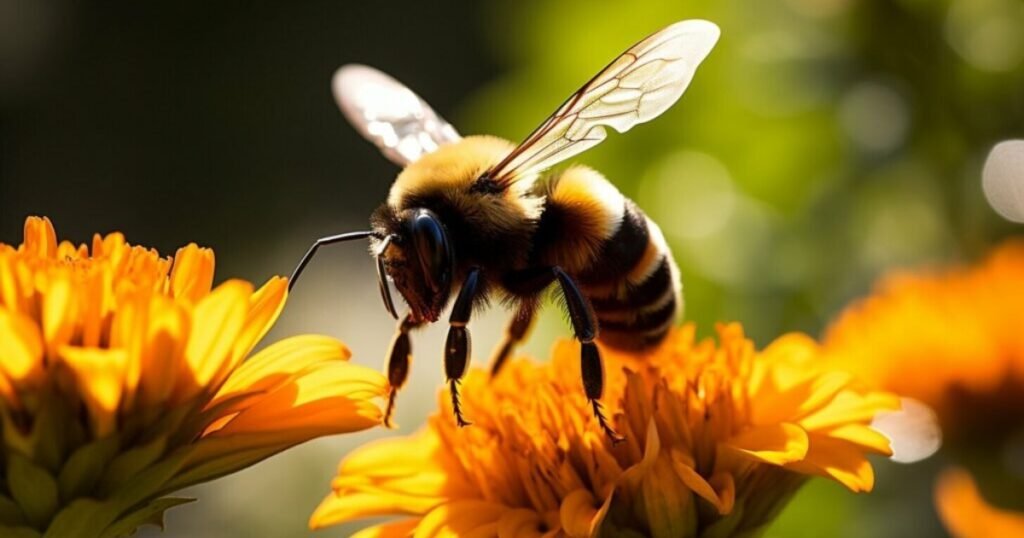
Scientific classification places the bumblebee within the family Apidae, typically under the genus Bombus. These fuzzy insects are known for their striking yellow and black striped appearance. Many bumblebees are adorned with stripes primarily as a form of warning coloration; this signals to potential predators that they can sting a lesson often learned the hard way.
Beyond their defense mechanism, bumblebees play a crucial role in pollination, aiding in the reproduction of countless plants, including highly valued agricultural crops. Their diet consists mainly of nectar and pollen, which they gather from a variety of flowering plants.
Bumblebees thrive in diverse habitats, from meadows to gardens, and even in urban environments. Interestingly, these industrious pollinators can fly in cooler temperatures than most bees, allowing them to be among the first to visit spring flowers.
Their unique adaptation truly makes them champions of their environment much like other insects featured in our list of the smartest insects in the world, which showcases nature’s tiniest yet cleverest creatures.
Striped Dolphin
| Field | Details |
|---|---|
| Scientific Name | Stenella coeruleoalba |
| Class | Mammalia |
| Diet | Carnivore |
| Range Map | Temperate and tropical oceans worldwide |

The striped dolphin makes its home in the vast expanses of the ocean, thriving in both warm and temperate waters across the globe. This marine marvel features a sleek, blue-gray body accentuated by distinctive stripes along its sides, which serve not only as a visual signature but potentially as a form of camouflage in the shimmering sea.
Their diet is diverse, consisting mainly of fish and squid, showcasing their adaptive foraging abilities. Social creatures by nature, striped dolphins often travel in pods, which can include large numbers of individuals.
Their communication is fascinating, involving a variety of clicks, whistles, and body movements that facilitate social bonding and hunting coordination a trait shared by their close relatives, who rank among the friendly animals in the world.
Renowned for their agility, these dolphins can swim at impressive speeds, leaping out of the water with acrobatic flair. An interesting fact is that the stripes on their bodies darken as they age, marking their passage through life in the big blue.
Eastern Chipmunk
| Field | Details |
|---|---|
| Scientific Name | Tamias striatus |
| Class | Mammalia |
| Diet | Omnivore |
| Range Map | Eastern North America, including the United States and Canada |
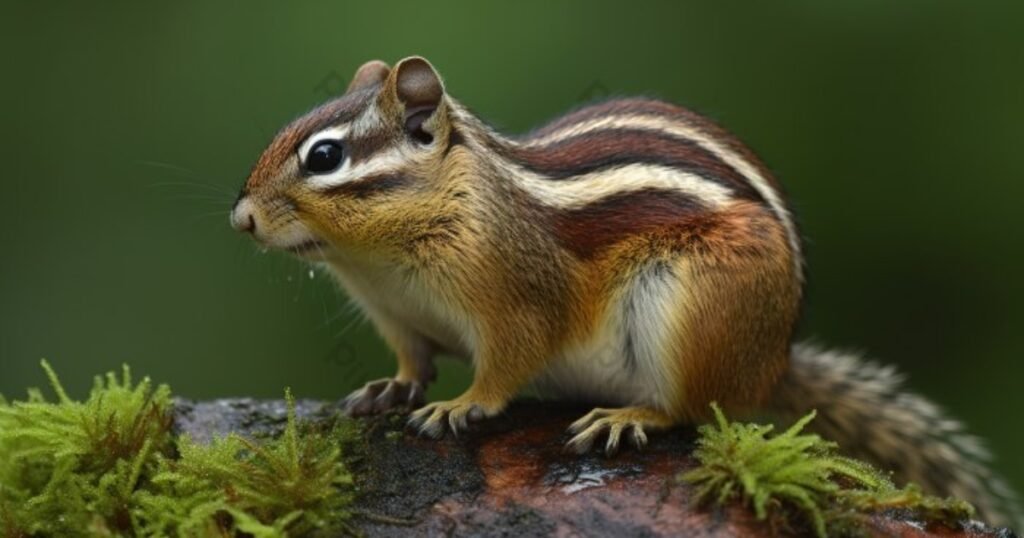
The Eastern chipmunk is commonly found across North America, thriving in diverse habitats such as forests, gardens, and urban areas. Its body is marked by dark and light stripes running down its back, providing both camouflage and a delightful aesthetic that captures the essence of nature.
Chipmunks also exhibit distinctive facial markings, which add to their charming appeal and help researchers in identifying individuals. Their diet is omnivorous, primarily consisting of seeds, nuts, fruits, and occasionally insects, showcasing a balanced nutritional strategy.
One of the fascinating behaviors of chipmunks is their burrowing aptitude; they create elaborate underground tunnels that serve as both homes and storage spaces for food. In fact, these little critters are nature’s own food hoarders, often stashing away surplus supplies for winter.
An interesting tidbit, chipmunk stripes can vary in intensity and width, making them a unique subject for wildlife enthusiasts and photographers.
Malayan Tapir
| Field | Details |
|---|---|
| Scientific Name | Tapirus indicus |
| Class | Mammalia |
| Diet | Herbivore |
| Range Map | Southeast Asia, including Malaysia, Thailand, and Sumatra |
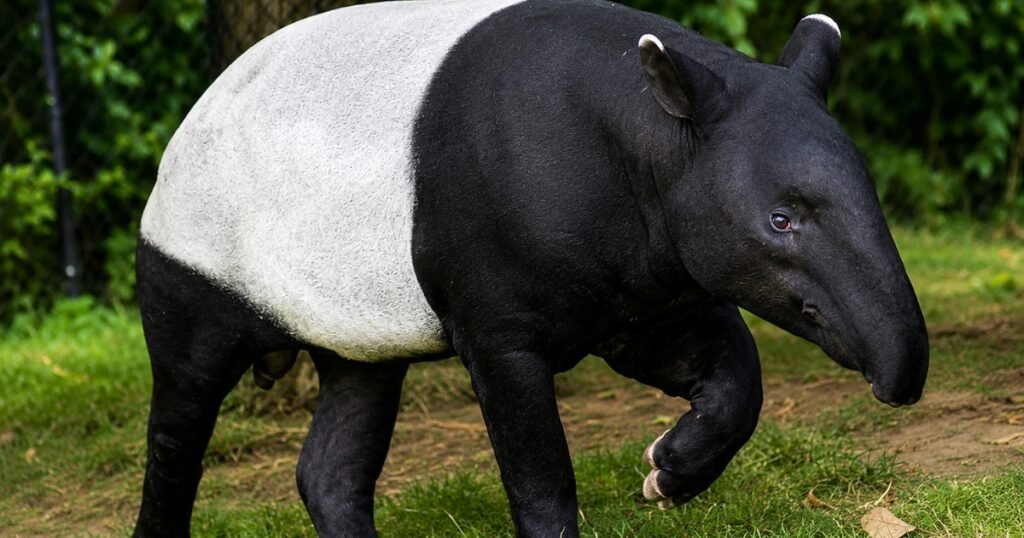
Found primarily in the tropical forests of Southeast Asia, the Malayan tapir boasts a striking black-and-white body pattern that sets it apart from other wildlife. This unique coloration is not just for show; it plays a critical role in camouflage, allowing the tapir to blend seamlessly into the dappled sunlight filtering through the dense foliage.
As a nocturnal herbivore, its diet primarily consists of leaves, fruits, and shrubs, making it a vital player in its ecosystem by aiding in seed dispersal. The Malayan tapir shares its habitat with other tapir species, but it’s also part of a specialized niche due to its distinct appearance and adaptations.
An interesting fact to note is that despite their size and appearance, these gentle giants are quite elusive, often slipping away into the shadows at the slightest hint of danger.
Striped Marlin
| Field | Details |
|---|---|
| Scientific Name | Kajikia audax |
| Class | Actinopterygii |
| Diet | Carnivore |
| Range Map | Pacific Ocean, including waters near Hawaii, Japan, and Australia |
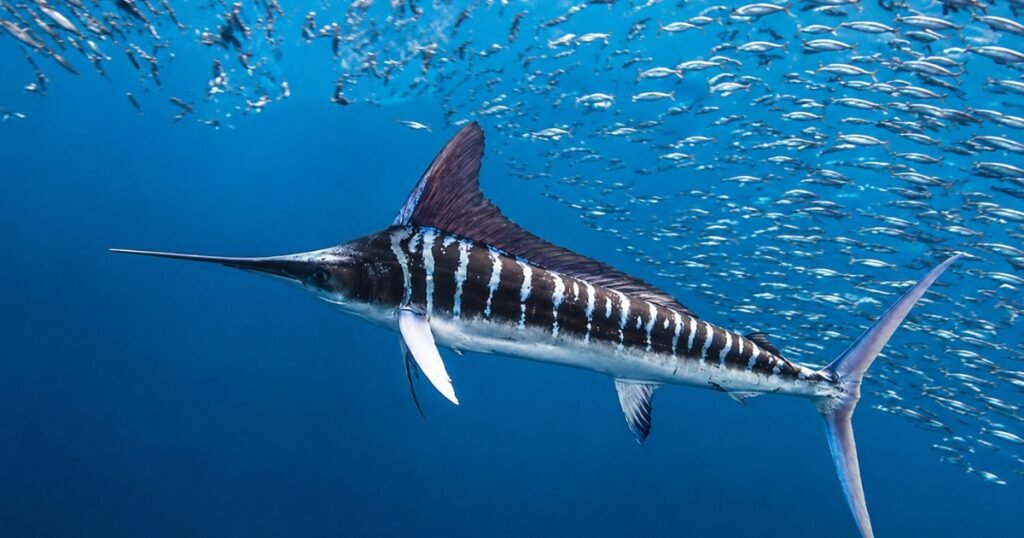
In the azure depths of the ocean, the striped marlin reigns supreme as a marvel of speed and agility. Characterized by its blue-gray body adorned with striking vertical stripes, this creature is not just a sight to behold but also a master of the hunt.
As formidable predators, striped marlins primarily feed on smaller fish, employing high-speed pursuits and stunning acrobatic displays to ensnare their prey. Their streamlined bodies are perfectly adapted for explosive bursts of speed, making them one of the fastest species in the ocean.
With incredible hunting behavior that includes using their stripes for confusion, these fish are as intelligent as they are swift. An engaging fact about striped marlins is that they are known to leap out of the water up to 10 feet high, leaving onlookers in awe of their athleticism while fishing.
Numbat
| Field | Details |
|---|---|
| Scientific Name | Myrmecobius fasciatus |
| Class | Mammalia |
| Diet | Insectivore |
| Range Map | Southwestern Australia |
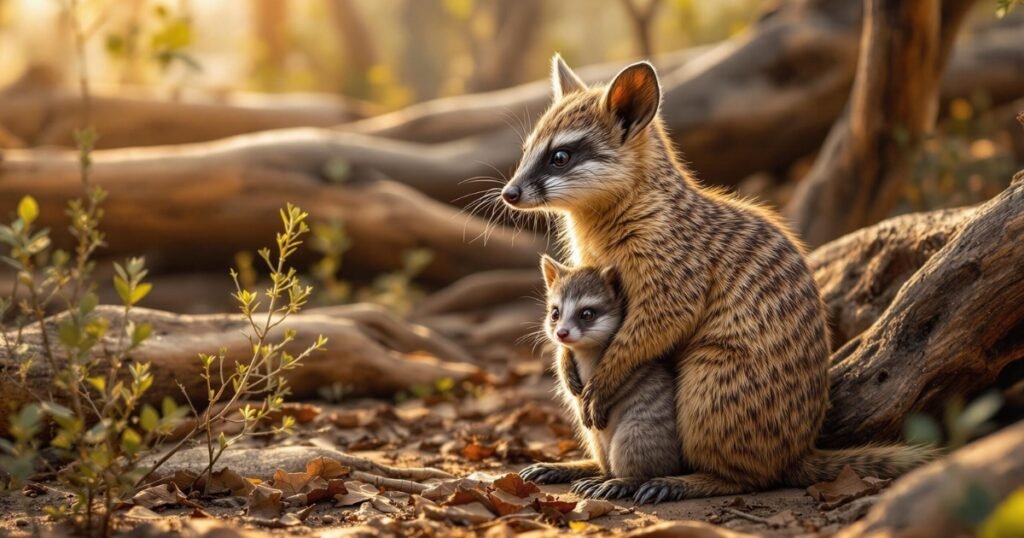
Native to Australia, the numbat is a small marsupial that showcases a beautiful reddish-brown body adorned with distinct white and dark stripes along its back. These stripes serve a vital role in camouflage, helping the numbat blend into the sun-dappled forest floor, protecting it from predators.
With a diet primarily consisting of termites, this unique creature employs a long, sticky tongue, extending it into narrow crevices to extract its favorite meal. Its feeding behavior and specialized adaptations make the numbat a fascinating subject of study, particularly considering its endangered conservation status.
These nocturnal marsupials are also known for their social structure, often found in small groups or family units, enhancing their chances of survival in the wild.
Striped Polecat
| Field | Details |
|---|---|
| Scientific Name | Ictonyx striatus |
| Class | Mammalia |
| Diet | Carnivore |
| Range Map | Sub-Saharan Africa |
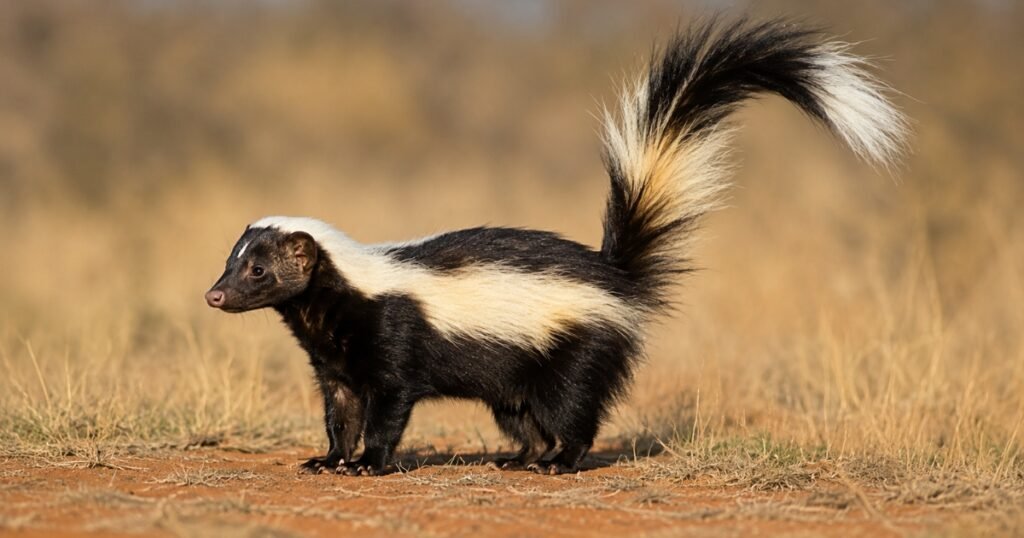
The Striped Polecat, with its sleek body and bold black-and-white stripes, is often mistaken for a skunk due to its formidable appearance. Found in the grasslands of Africa, these creatures use their striking stripes as a warning to potential predators. Their diet predominantly consists of insects and small mammals, but they are also known to scavenge.
When threatened, they emit a foul-smelling spray, a defense mechanism that effectively deters many threats. Interestingly, their stripes serve a dual purpose: not only do they warn of danger, but they also play a role in social signaling among mates.
Bongo
| Field | Details |
|---|---|
| Scientific Name | Tragelaphus eurycerus |
| Class | Mammalia |
| Diet | Herbivore |
| Range Map | Central Africa and parts of East Africa, including Kenya, Cameroon, and Congo |
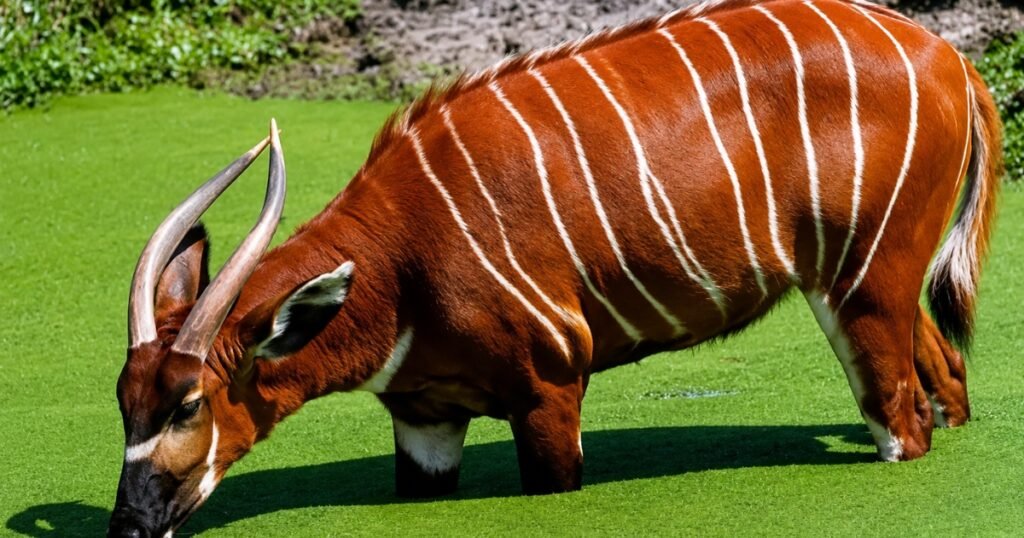
The Bongo, adorned in a striking reddish coat highlighted by white vertical stripes, is one of Africa’s most elusive antelopes. Residing in the dense, leafy forests of Central and West Africa, these stripes aid in camouflage amongst the dappled light of their habitat.
Known to be browsers, they primarily feast on leaves and shrubs, showcasing their adaptability to forest life. Their beauty and rarity make them a fascinating subject for conservationists, underscoring the importance of preserving their forest homes.
Grandidier’s Mongoose
| Field | Details |
|---|---|
| Scientific Name | Galidictis grandidieri |
| Class | Mammalia |
| Diet | Carnivore |
| Range Map | Southwestern Madagascar |
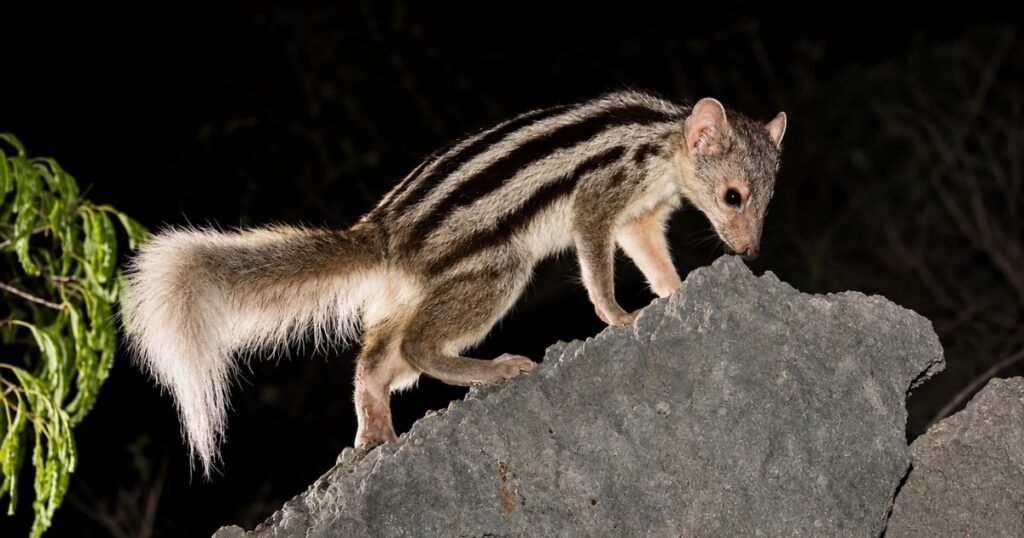
Unique to the island of Madagascar, Grandidier’s Mongoose features a body adorned with subtle stripes that enhance its charming appearance. These small mammals dwell primarily in the dry deciduous forests, where their agility and camouflage assist in hunting for insects, small rodents, and fruits.
Their social behavior is intriguing; often seen foraging in groups, they exhibit cooperative hunting tactics. Conservation efforts for this species are critical, given the continuing threats to its habitat.
Killdeer
| Field | Details |
|---|---|
| Scientific Name | Charadrius vociferus |
| Class | Aves |
| Diet | Carnivore |
| Range Map | North and Central America, including USA, Canada, and Mexico |
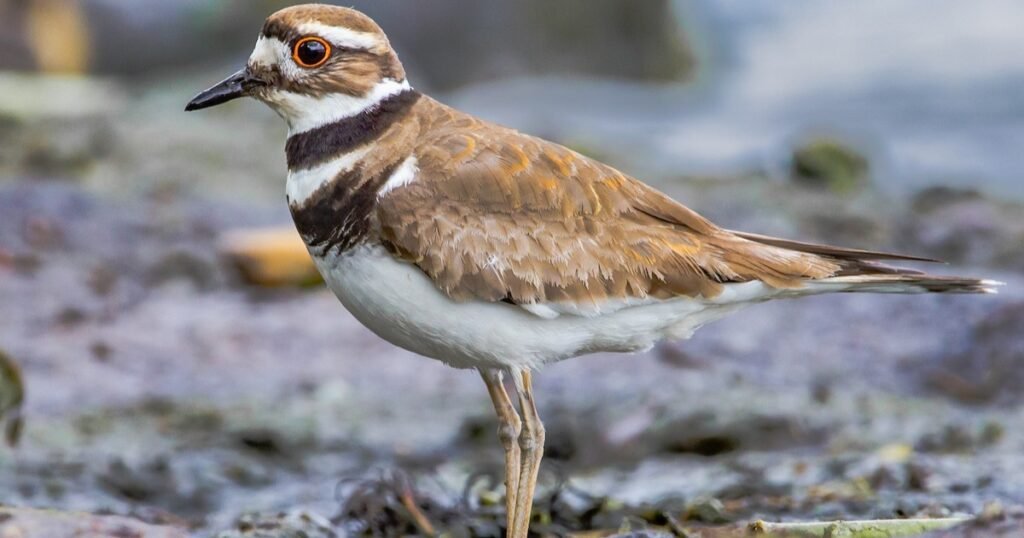
The Killdeer is easily recognized by its distinctive chest bands that tell a story of resilience. Found in open fields and shorelines across North America, these plovers nest directly on the ground, relying on their cryptic coloration to protect their young from predators.
When threatened, the Killdeer is known for its “broken-wing” act feigning injury to lure intruders away from the nest. Their adaptability to various habitats adds to their status as a beloved sight for nature lovers.
Aardwolf
| Field | Details |
|---|---|
| Scientific Name | Proteles cristata |
| Class | Mammalia |
| Diet | Insectivore |
| Range Map | Eastern and Southern Africa |
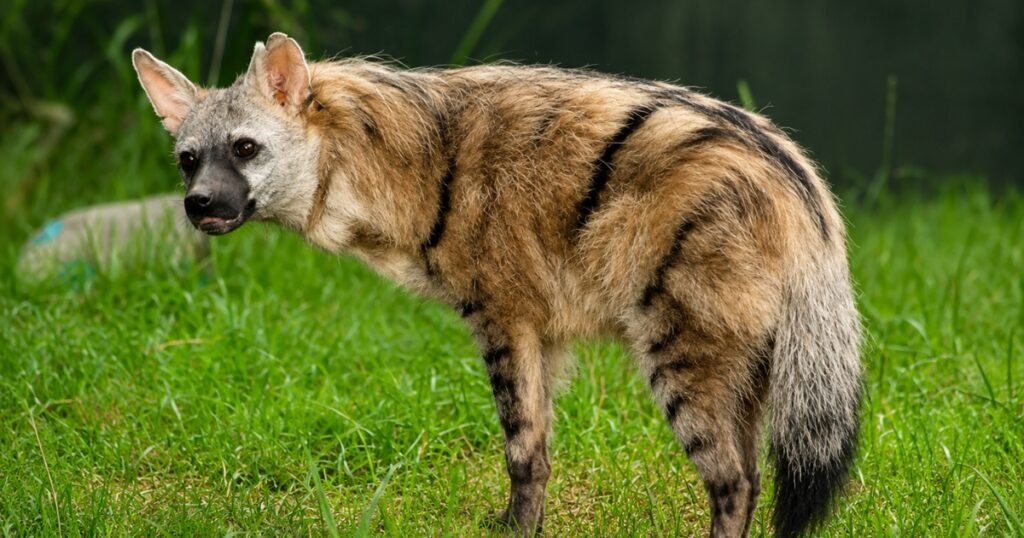
Residing within the African savannas, the Aardwolf’s striped coat serves not only for camouflage but also hints at its close relationship with hyenas. Diet-wise, this unique creature primarily feeds on termites, showcasing an unusual adaptation among carnivores.
Unlike its more aggressive relatives, the Aardwolf is non-confrontational, preferring to scavenge and burrow for its meals. This dietary specialization highlights the intricate balance of ecosystems in which these animals thrive.
Eurasian Hoopoe
| Field | Details |
|---|---|
| Scientific Name | Upupa epops |
| Class | Aves |
| Diet | Carnivore |
| Range Map | Europe, Asia, and Africa |
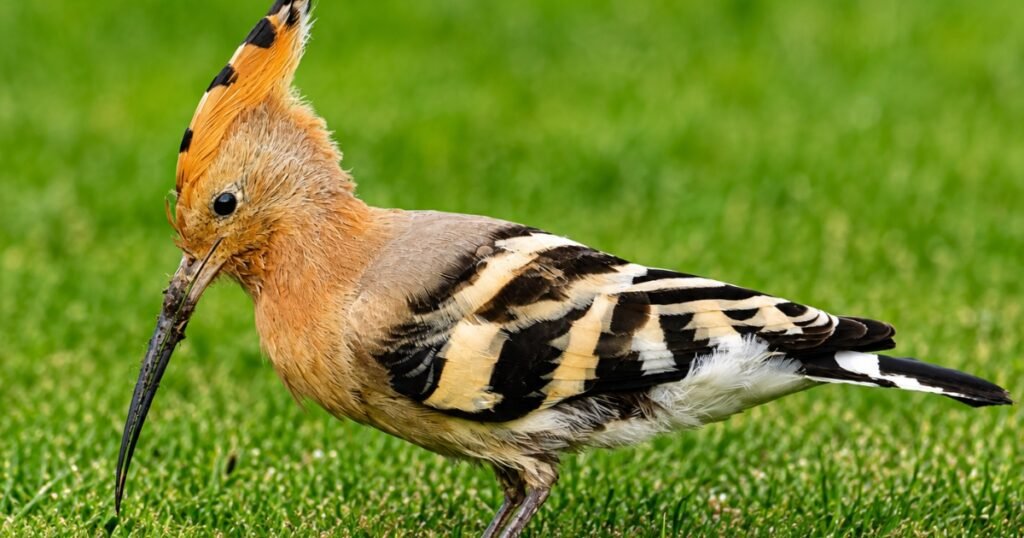
The Eurasian Hoopoe, distinguished by its unique black-and-white wing patterns and striking crest, is a charismatic bird found across Europe, Asia, and North Africa. Nesting in tree hollows, this avian marvel feeds on insects, larvae, and even small reptiles, using its long, curved beak to probe the ground.
Their vibrant appearance and peculiar calls make them a delightful sight for birdwatchers. The Hoopoe’s preference for relatively open habitats underscores its adaptability and ecological significance.
Zebra Spider
| Field | Details |
|---|---|
| Scientific Name | Salticus scenicus |
| Class | Arachnida |
| Diet | Carnivore |
| Range Map | Europe, North America, and parts of Asia |
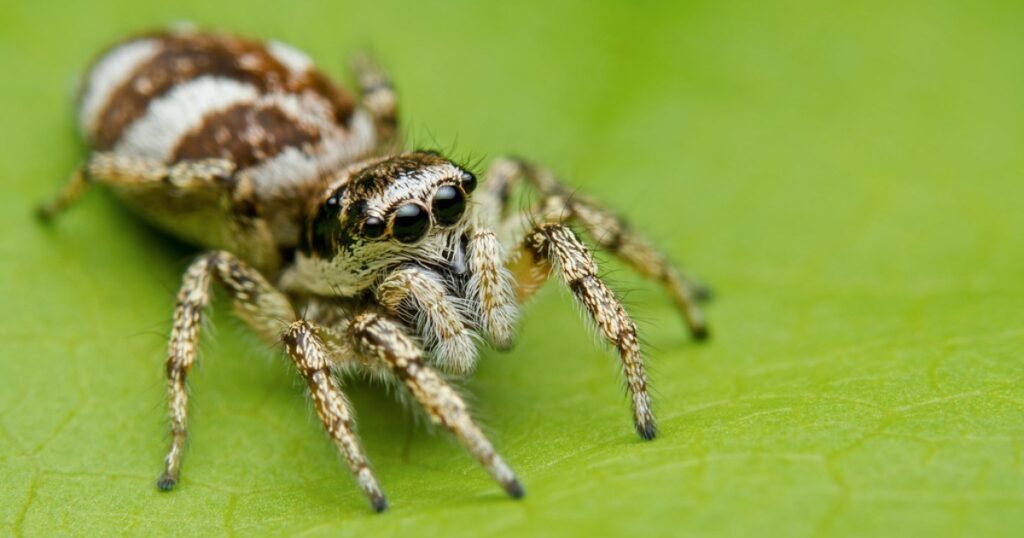
The Zebra Spider, with its captivating black-and-white striped body, is a skilled hunter among the jumping spider family. Found in various terrestrial habitats, its remarkable agility allows it to leap great distances in pursuit of prey, typically small insects.
Known for their incredible vision, these spiders utilize their vibrant coloration not just for camouflage but also as a warning to potential rivals. Their unique hunting style provides a fascinating glimpse into the diversity of predatory behaviors in the spider world.
Four-Striped Grass Mouse
| Field | Details |
|---|---|
| Scientific Name | Rhabdomys pumilio |
| Class | Mammalia |
| Diet | Omnivore |
| Range Map | Southern and Eastern Africa |
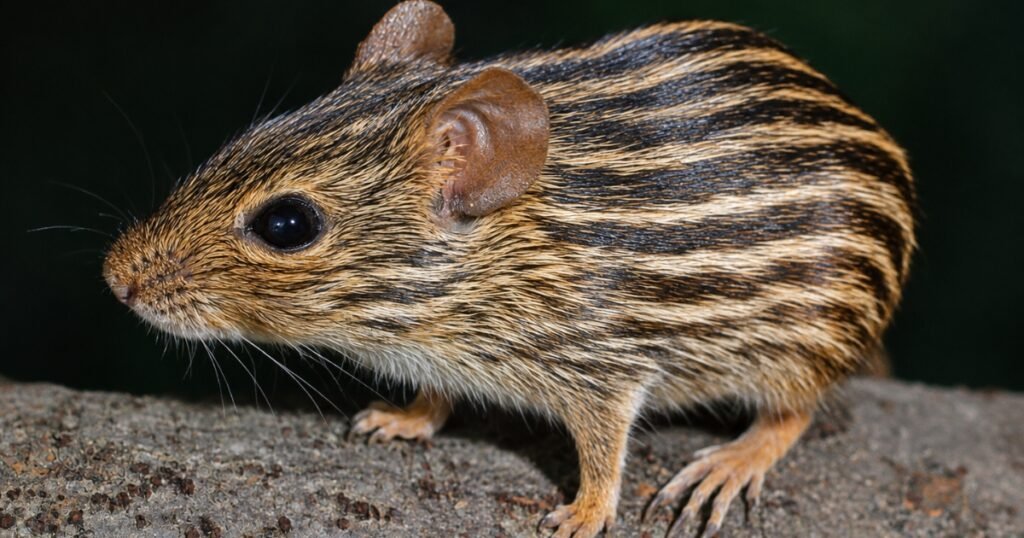
This small rodent, the Four-Striped Grass Mouse, is characterized by its distinctive four dark dorsal stripes, making it an endearing sight in southern Africa’s grasslands. These stripes not only enhance its camouflage against predators but also play a crucial role in signaling to other mice.
Herbivorous by nature, their diet consists of seeds and grasses, showcasing their adaptation to local ecosystems. Their intriguing social structures and burrowing behaviors provide a rich subject for study within their ecological community.
Types Of Stripes Found In Animals
Vertical Stripes
Vertical stripes are perhaps the most iconic in the animal kingdom, capturing the essence of agility and grace. Tigers, with their striking black stripes that alternate against their vibrant orange fur, utilize this pattern for camouflage in dense forests.
These vertical lines not only enhance their predatory stealth but also create an illusion of height, making them appear more formidable.
Horizontal Stripes
Horizontal stripes often convey a sense of stability and grounding. Zebras are the quintessential representatives of this pattern, their bold black-and-white stripes weaving across their entire bodies. This striking coloration serves multiple purposes, from confusing predators to regulating body temperature.
Bands
Banding is a unique stripe variation that creates structural patterns across an animal’s body. The ring-tailed lemur exemplifies this with its luxuriously patterned tail, showcasing distinct black and white bands. This striking tail serves essential purposes beyond mere beauty; it aids in communication among social groups and acts as a display during mating rituals.
Ringed Stripes
Ringed stripes offer another captivating way animals display their markings, resembling circles or bands that spiral around their bodies. The distinct look of the ringed pattern is most vividly seen in species like the Eastern diamondback rattlesnake, where the arrangement helps disrupt their outline among twigs and leaves. These rings serve a dual purpose: providing camouflage while also enhancing their striking appearance, creating a captivating visual enigma that often intrigues onlookers.
Longitudinal Stripes
Broad longitudinal stripes can often be seen on animals such as the striped skunk, where the iconic black and white markings define their silhouette. These stripes run along their backs, offering a striking appearance that serves as a warning to potential predators about their noxious spray.
Irregular Stripes
Irregular stripes present a fascinating deviation from traditional patterns, often enhancing an animal’s ability to blend into their environment. Species like the clouded leopard possess chaotic, swirl-like markings, creating a captivating aesthetic that mimics the dappled sunlight filtering through the forest canopy.
Contrasting Stripes
Contrasting stripes are particularly striking, as seen in the vividly marked Bengal cat with its bold stripes contrasting sharply against lighter fur. These patterns are not just visual spectacles but are key players in the animal’s ability to thrive. In nature, high contrast can deter predators or attract mates, playing a significant role in survival and reproduction strategies.
Stripes on Tails, Legs, and Bodies
Stripes can adorn various body parts, each serving distinct purposes. The okapi, for instance, showcases delicate leg stripes reminiscent of a zebra, functioning to confuse predators in the dappled forest light.
Animals With Stripes VS Animals With Spots
| Feature | Striped Animals | Spotted Animals |
| Pattern | Lines or bands | Dots or patches |
| Examples | Tiger, zebra, okapi | Leopard, cheetah |
| Main functions | Camouflage, warning, recognition | Camouflage, communication |
| Pattern location | Body, legs, tail | Body, face, limbs |
Conclusion
The world of animals with stripes is a vibrant tapestry woven with incredible diversity and adaptations. These striking patterns serve various purposes, from camouflage and communication to social signaling among species.
By examining the lives and environments of these animals, we gain valuable insights into the intricate balance of nature. As stewards of the planet, it is our responsibility to ensure that these marvelous creatures continue to thrive for generations to come.
FAQs
Why Do Some Animals Have Stripes?
Animals have stripes mainly for camouflage, helping them blend into their environment to hide from predators. Stripes can also help with communication, temperature regulation, and confusing predators during an attack.
Which Animal Has Stripes On Its Body?
Many animals have stripes on their bodies, including zebras, tigers, cheetahs, bongos, skunks, chipmunks, lemurs, and hyenas. Stripes appear in mammals, reptiles, fish, and insects across the world.
What Is a Stripes Animal Name?
A stripes animal name refers to an animal that has noticeable lines, bands, or stripes on its body. Some well-known examples include tigers, zebras, okapis, striped hyenas, striped skunks, and chipmunks.