18 Animals That Look Like Raccoons (With Pictures & Facts)
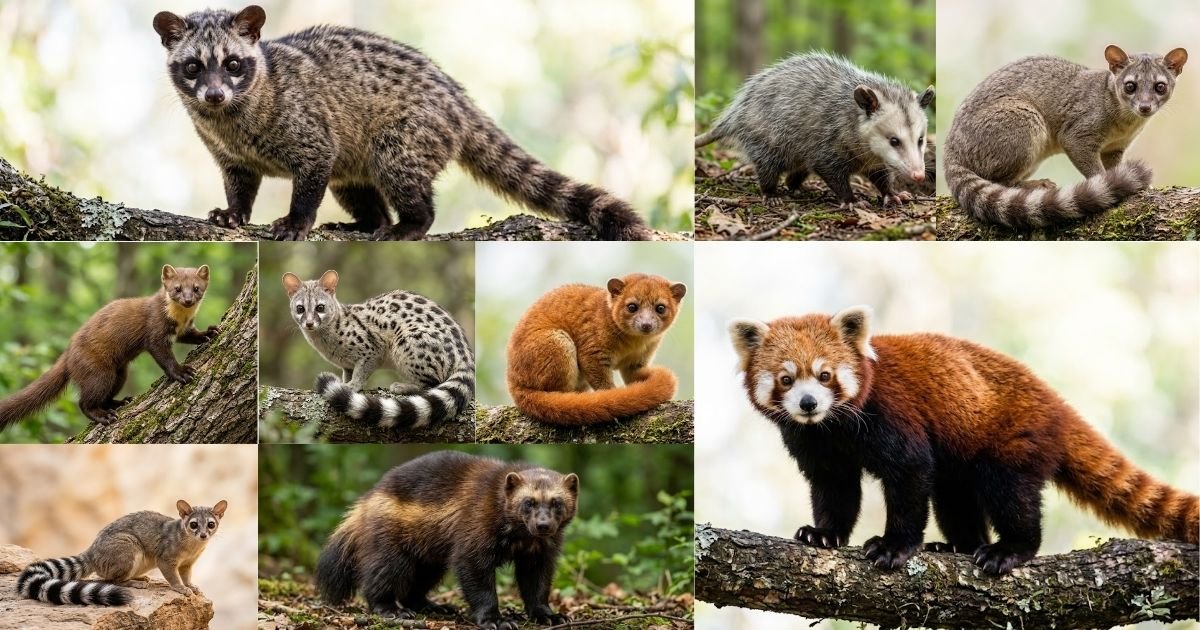
Imagine wandering through a forest and encountering a creature that looks strikingly similar to a raccoon only to realize it’s a completely different animal! Raccoons are easily identifiable by their iconic dark facial masks and ringed tails, but many other creatures boast similar features.
In this blog post, we’ll delve into 18 animals that look like raccoons, from their close relatives to those purely resembling them. By uncovering the distinctions between “similar appearance” and “closely related,” you’ll gain insight into the animal kingdom’s diversity.
What Makes An Animal Look Like A Raccoon?
The distinctive black or dark eye mask is perhaps the most iconic feature that draws parallels between animals like raccoons and their other counterparts. This facial marking not only serves as a form of camouflage in the dark but also enhances their expressive features, making these raccoon-like animals appear more intelligent.
A simple eye mask isn’t enough to categorize an animal as a raccoon relative; various traits must align to create the genuine raccoon look. Another noteworthy characteristic is the ringed or bushy tail, which can easily make one think of a raccoon. While many animals may sport a similar tail, such as the ring-tailed lemur, having one alone does not warrant raccoon classification.
Their gray, brown, or reddish fur, combined with a pointed or short snout, adds layers to this comparisons. Even behaviors, like being nocturnal climbers and foragers, play a crucial role in their ecological niche. Thus, it’s vital to understand that the essence of being a raccoon like animal transcends singular features; it’s about a constellation of traits that culminate in the unique identity of raccoons.
Read Also: Animal Camouflage: 16 Amazing Animals That CamouflageRaccoon-Like Animals Comparison Table
This comparison table highlights the key features and differences of each racoon like animal, making it easy to compare them with raccoons.
| Animal | Looks Like Raccoon Because | Family | Related to Raccoons? |
| Coati | Masked face, long tail | Procyonidae | Yes, same family |
| Ringtail | Striped tail and facial markings | Procyonidae | Yes, same family |
| Kinkajou | Large eyes, rounded face, bushy tail | Procyonidae | Yes, same family |
| Olinguito | Similar facial structure and body size | Procyonidae | Yes, same family |
| Cacomistle | Ringed tail and bushy appearance | Procyonidae | Yes, same family |
| Raccoon Dog | Dark facial mask and similar body shape | Canidae | No, different family |
| Red Panda | Facial markings and bushy ringed tail | Ailuridae | No, different family |
| Asian Palm Civet | Similar facial shape and elongated body | Viverridae | No, different family |
| Masked Palm Civet | Dark facial mask and similar appearance | Viverridae | No, different family |
| Common Genet | Slender body, spotted coat, and long tail | Viverridae | No, different family |
| Binturong | Dark coat, rounded face, and bushy tail | Viverridae | No, different family |
| European Badger | Stocky body and distinctive facial markings | Mustelidae | No, different family |
| American Badger | Facial markings and low, stocky body | Mustelidae | No, different family |
| Skunk | Black-and-white markings and mask-like face | Mephitidae | No, different family |
| Virginia Opossum | Gray coat, pointed face, and similar size | Didelphidae | No, different family |
| Pine Marten | Slender body and bushy tail | Mustelidae | No, different family |
| Fisher | Dark coat, long body, and bushy tail | Mustelidae | No, different family |
| Wolverine | Stocky body, dark facial markings, and rounded appearance | Mustelidae | No, different family |
18 Animals That Look Like Raccoons
| # | Animal |
|---|---|
| 1 | Coati |
| 2 | Ringtail |
| 3 | Kinkajou |
| 4 | Olinguito |
| 5 | Cacomistle |
| 6 | Raccoon Dog |
| 7 | Red Panda |
| 8 | Asian Palm Civet |
| 9 | Masked Palm Civet |
| 10 | Common Genet |
| 11 | Binturong |
| 12 | European Badger |
| 13 | American Badger |
| 14 | Skunk |
| 15 | Virginia Opossum |
| 16 | Pine Marten |
| 17 | Fisher |
| 18 | Wolverine |
Coati
| Attribute | Details |
|---|---|
| Scientific Name | Nasua narica |
| Family | Procyonidae |
| Size | 60–80 cm in length |
| Diet | Omnivorous (fruits, insects) |
Coatis, often mistaken for raccoons due to their striking appearances, possess unique characteristics that set them apart. Their long, flexible snouts are perfect for foraging in trees and underbrush, allowing them to reach into crevices for insects.
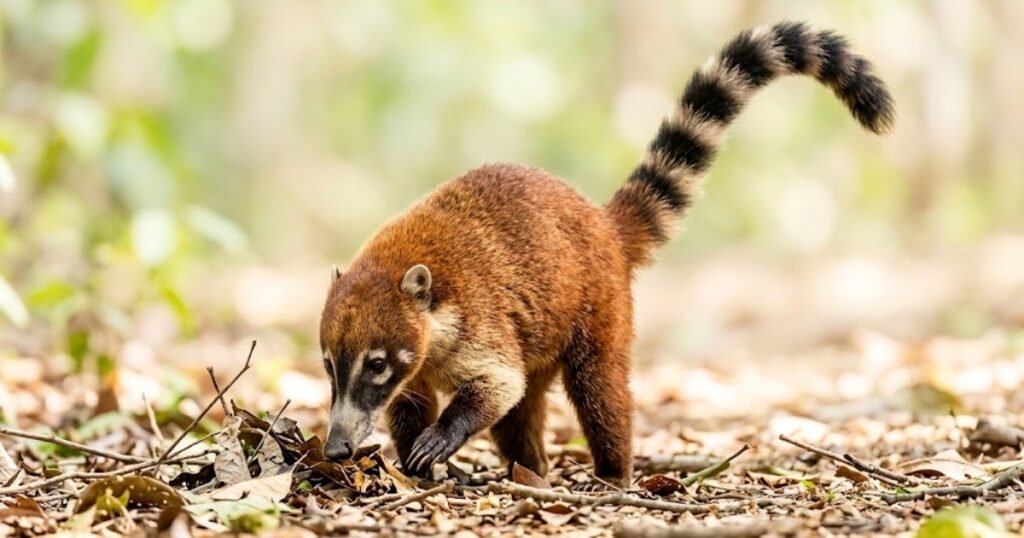
With their signature ringed tails, these animals not only exhibit playful acrobatics but also use their tail as a signaling device within their social groups. Though they share a similar body shape, coatis have shorter limbs and a more elongated snout, distinguishing them from the bulkier raccoon.
Behaviorally, coatis are social creatures that thrive in groups, often seen foraging or grooming one another. This social structure is key to their survival, as they work together to protect against predators.
A fascinating fact about coatis is that they have a curious habit of climbing trees, a behavior that diversifies their foraging strategies. Living within the Procyonidae family, coatis exhibit a complex interplay of adaptability and intelligence that makes them a captivating subject of study.
Ringtail
| Feature | Details |
|---|---|
| Scientific Name | Bassariscus astutus |
| Family | Procyonidae |
| Size | 14–18 inches long |
| Diet | Omnivorous (fruits, insects, small animals) |
The ringtail, often called the “ring-tailed cat,” is a fascinating creature that tends to be misunderstood. With its iconic ringed tail, large expressive eyes, and slender body, it captivates anyone fortunate enough to catch a glimpse of this nocturnal marvel.
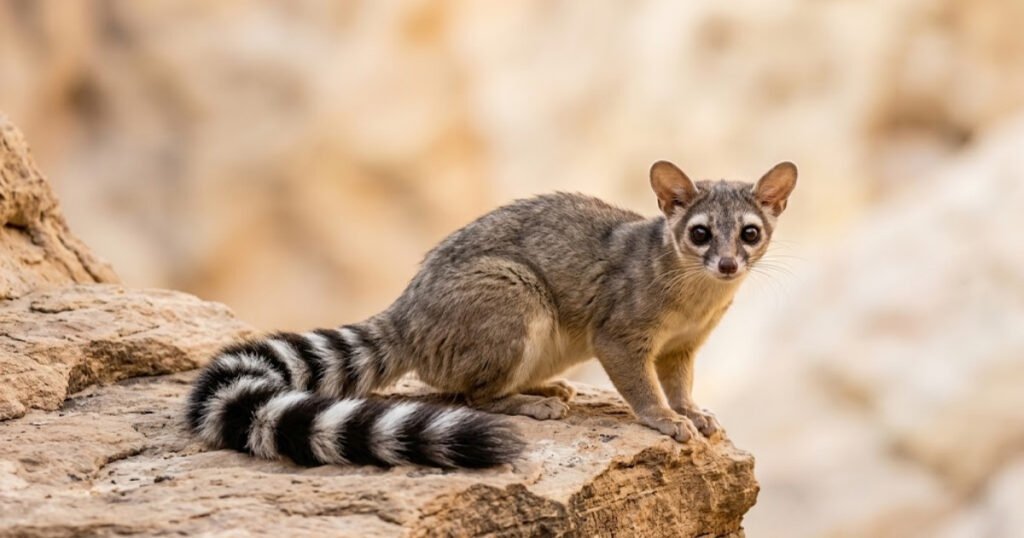
Although it shares some resemblance to raccoons, particularly in facial markings and size, the ringtail belongs to the procyonid family, distinguishing it from felids. Its unique appearance and nocturnal behavior set it apart, making it a true treasure of the animal kingdom.
While ringtails and raccoons both exhibit that charming, masked face, their lifestyles and habitats differ significantly. Raccoons are generally more opportunistic feeders and can be found in urban areas, whereas ringtails tend to prefer rocky terrains and wooded landscapes, showcasing their agility.
An intriguing fact about ringtails is their adaptability; they can rotate their ankle joints, allowing them to climb with remarkable dexterity. By observing these differences, it becomes clear that the ringtail is not just a smaller version of a raccoon but a distinct creature with its own set of unique traits.
Kinkajou
| Attribute | Details |
|---|---|
| Scientific Name | Potos flavus |
| Family | Procyonidae |
| Size | 16–24 inches (body length) |
| Diet | Frugivore (fruit and nectar) |
The kinkajou, with its round face and striking brown-golden fur, is a lesser-known gem of the rainforest. These nocturnal creatures come alive under the moonlight, using their large eyes to navigate their arboreal homes, where they skillfully maneuver through branches with their prehensile tails.
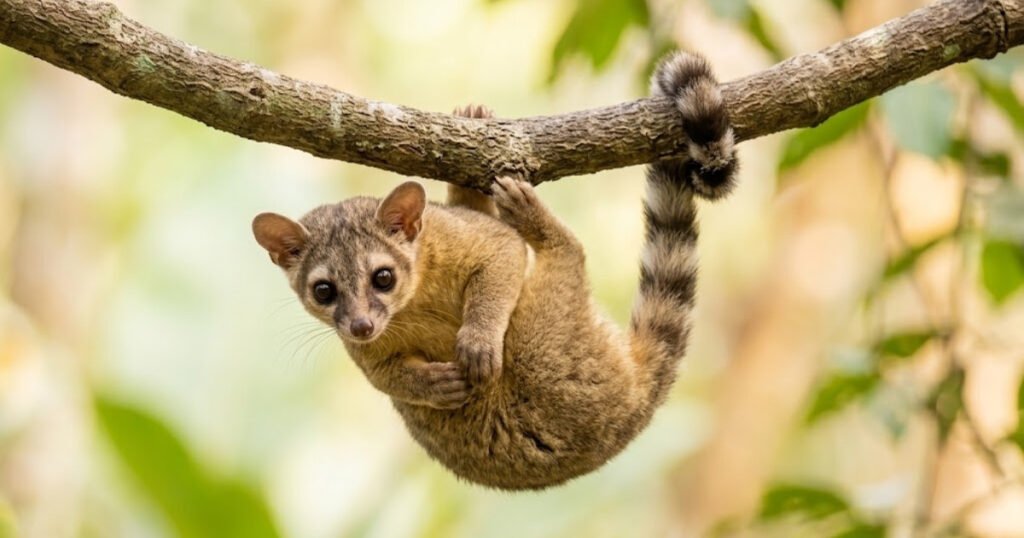
This adaptation allows them to grasp onto limbs, making them agile tree-dwellers that often feast on fruits and nectar. While they share a visual resemblance with raccoons particularly their mask-like faces and dexterous paws they belong to a different family altogether.
Despite their similar appearance, major differences set kinkajous apart from raccoons. Kinkajous are more closely related to the possum and exhibit a unique social nature, often living in small family groups, unlike the more solitary raccoon.
They also lack that raccoon’s notorious dexterity with human artifacts, instead honing their skills on the natural treasures found high in the rainforest canopy. An intriguing fact about kinkajous is their ability to taste the sweetness of fruits something many mammals can’t do thanks to a specialized genetic mutation.
Olinguito
| Attribute | Details |
|---|---|
| Scientific Name | Bassaricyon neblina |
| Family | Procyonidae |
| Size | 2–4 pounds (0.9–1.8 kg) |
| Diet | Frugivorous; also consumes insects and small vertebrates |
The olinguito, a captivating small mammal from the cloud forests of South America, is often compared to the raccoon due to its adorable features. With its compact body, large expressive eyes, and a delightful bushy tail, it shares a visually appealing resemblance with these iconic creatures.
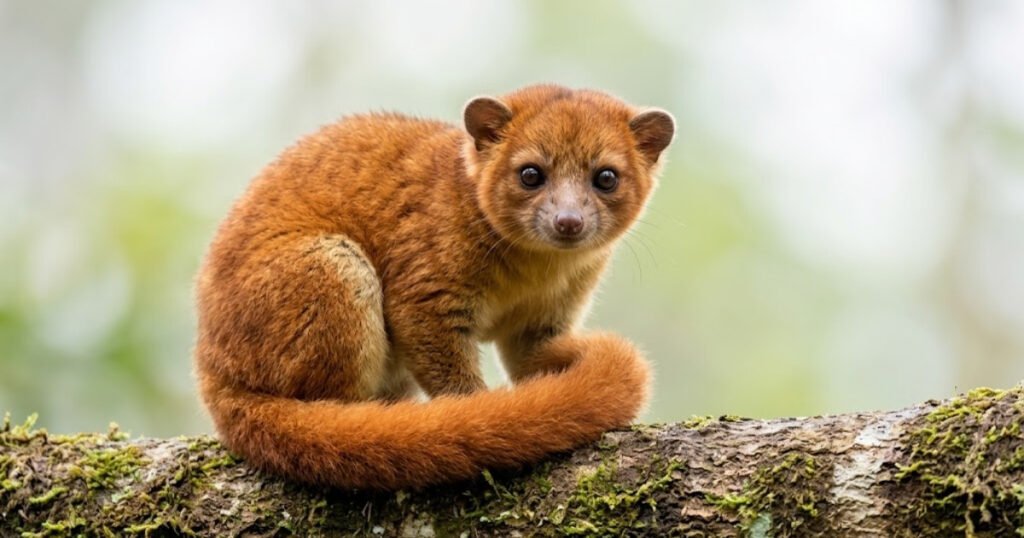
Like raccoons, olinguitos possess a playful demeanor, which makes them equally charming. The olinguito is distinct, belonging to the family Procyonidae, like raccoons but classified as a separate genus, Bassaricyon.
Significantly, olinguitos are more arboreal and adapted to life in the high-altitude cloud forests, whereas raccoons are often seen in a variety of habitats, including urban areas. While both have a similar facial structure with a masked appearance, olinguitos are smaller, averaging around 2 to 4 pounds, and have a more slender build.
Their diet mainly consists of fruit and insects, showcasing their unique adaptations compared to the omnivorous habits of raccoons. An intriguing fact about olinguitos is that they were only recently recognized as a distinct species in 2013, highlighting the ongoing wonders of biodiversity yet to be fully explored.
Cacomistle
| Trait | Details |
|---|---|
| Scientific Name | Bassariscus Sumichrasti |
| Family | Procyonidae |
| Size | 24–30 inches (including the tail) |
| Diet | Fruits, insects, small vertebrates |
The Cacomistle, or Bassariscus Sumichrasti, enchants with its long, ringed tail and striking mask-like facial markings, drawing immediate comparisons to the raccoon, yet this nocturnal marvel stands apart in many ways.
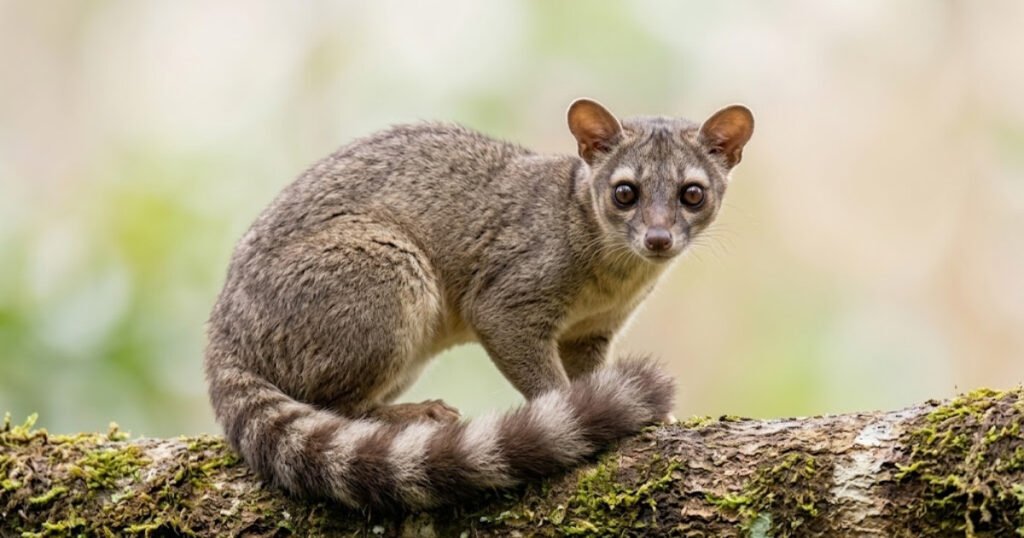
Inhabiting dense woodlands and open areas across the southwestern United States and parts of Mexico, its slender body allows it to navigate through trees with agility. While both share a penchant for scavenging and exhibit clever behaviors, the Cacomistle is more closely related to the mongoose than its raccoon counterparts.
What truly distinguishes the Cacomistle from raccoons is its unique adaptation to a primarily arboreal lifestyle; it possesses a longer, more flexible body suited for climbing, unlike the stocky build of a raccoon. The Cacomistle’s diet primarily consists of fruits, insects, and small vertebrates, while raccoons often indulge in human leftovers.
Unlike the overconfident raccoon, the Cacomistle relies heavily on stealth, using its keen senses to forage at nighttime. One captivating fact about this elusive creature is its remarkable ability to pounce and catch prey, showcasing its agility and hunter instincts hidden beneath a charming façade.
Raccoon Dog
| Attribute | Details |
|---|---|
| Scientific Name | Nyctereutes procyonoides |
| Family | Canidae |
| Size | 18–26 inches (45–66 cm) |
| Diet | Omnivorous (small mammals, fruits, insects) |
The raccoon dog, known scientifically as Nyctereutes procyonoides, is a fascinating creature that often causes confusion due to its masked face, reminiscent of the beloved raccoon. However, this curious canine belongs to the Canidae family, not the Procyonidae family, which includes raccoons.
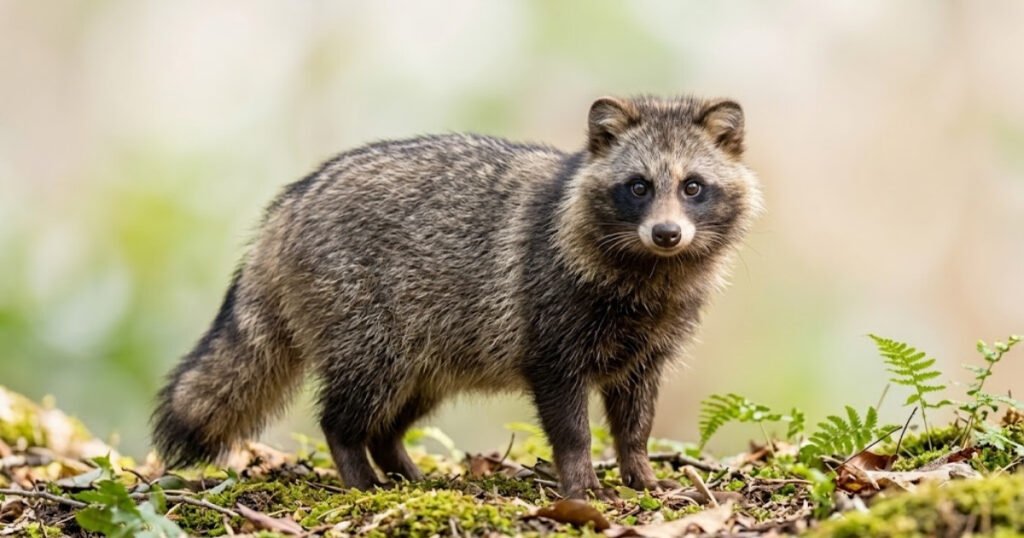
With a stocky body and thick fur that keeps it warm in colder climates, the raccoon dog provides a striking visual contrast to its more familiar counterpart. Notably, the raccoon dog’s tail is bushy and less ringed compared to the raccoon’s distinctive striped tail, while its overall body shape is more robust and compact.
What sets the raccoon dog apart are its unique adaptations and behavior. Unlike raccoons, which are primarily nocturnal foragers known for their dexterous hands, raccoon dogs rely on their keen sense of smell to hunt small animals, fruits, and insects.
This omnivorous diet allows them to thrive in various environments across East Asia and even parts of Europe. One interesting fact is that raccoon dogs are the only canids that hibernate, which adds to their intriguing nature as a blend of canine traits and raccoon-like appearances.
Red Panda
| Feature | Description |
|---|---|
| Scientific Name | Ailurus fulgens |
| Family | Ailuridae |
| Size | 20–26 inches in length |
| Diet | Primarily bamboo; also fruits, berries, and small animals |
The red panda, with its distinctive ringed tail and exquisite facial markings, captivates all who encounter it. Comparable in size to a domestic cat, this charming creature has evolved a compact body adept for tree climbing, allowing it to thrive in the rugged habitats of the Himalayas and southwestern China.
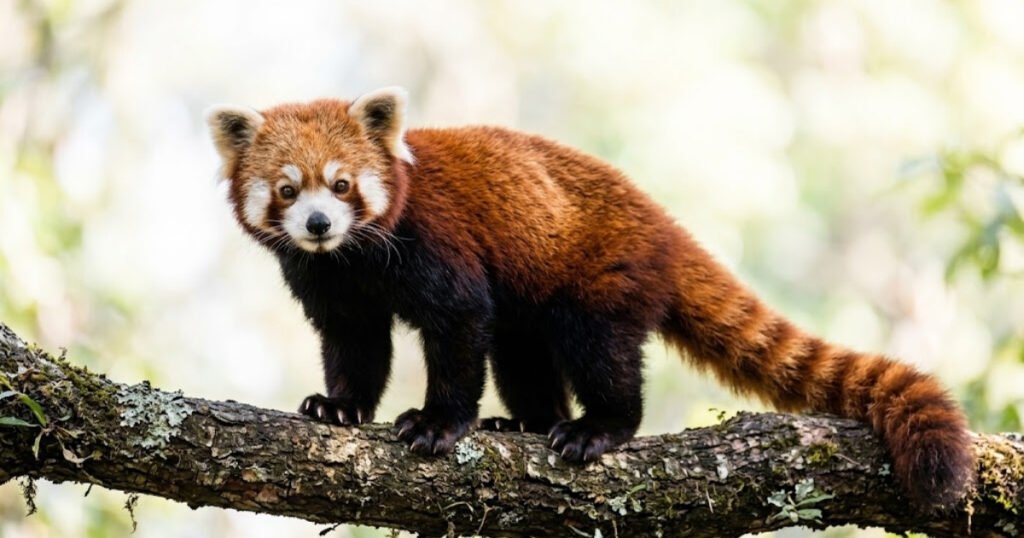
Unlike its raccoon cousins, the red panda belongs to its own family, Ailuridae, showcasing unique genetic traits separating it from the Procyonidae family that includes raccoons. At first glance, the red panda indeed resembles a raccoon, primarily due to its similar body shape and the iconic facial markings.
Significant differences set these two apart; for one, the red panda has a more rounded face and a less dexterous paw structure, designed more for grasping than for manipulating objects. A fascinating fact about the red panda is its reliance on bamboo for nourishment, despite not being a bear its digestive system is more akin to a carnivore’s, leading to an inefficient breakdown of plant matter.
Asian Palm Civet
| Feature | Details |
|---|---|
| Scientific Name | Paradoxurus hermaphroditus |
| Family | Viverridae |
| Size | 61–91 cm (24–36 in) |
| Diet | Omnivorous (fruits, insects) |
The Asian palm civet, or Paradoxurus hermaphroditus, is renowned for its striking facial features large, expressive eyes and a distinct mask-like pattern that may evoke a comparison to the masked bandit of the animal world, the raccoon.
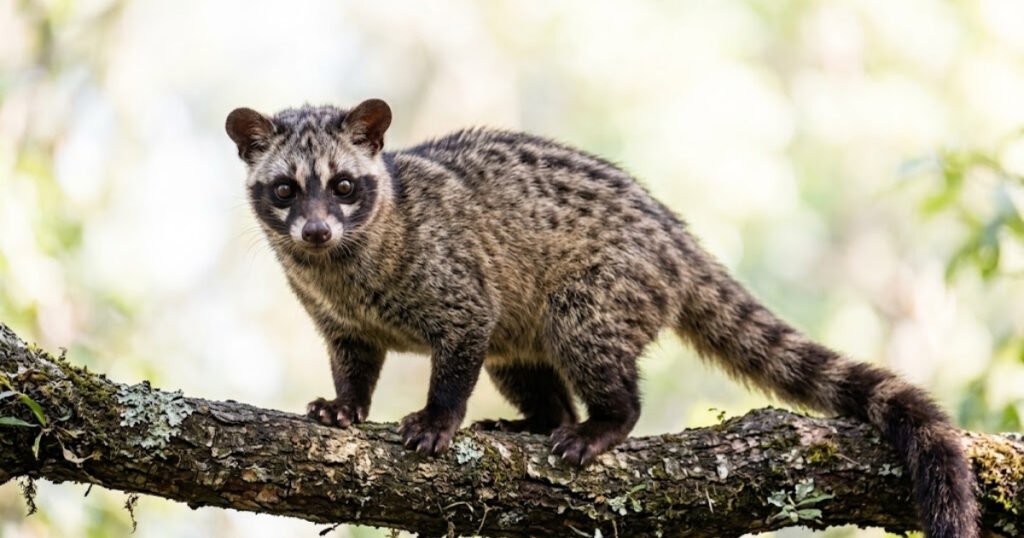
Its slender body shape, poised for agility, allows it to move seamlessly through its forested habitat. These nocturnal creatures exhibit a lifestyle perfectly adapted for nighttime activities, showcasing impressive tree-climbing skills that enable them to forage for fruits and insects high in the canopy.
Geographically, the Asian palm civet boasts a diverse range across Southeast Asia, from the lush rainforests of Malaysia to the bustling streets of urban Indonesia, where they often thrive in harmony with human environments.
While both the civet and raccoon share a similar omnivorous diet and a penchant for scavenging, their differences are evident; civets have a more feline grace and are generally solitary, whereas raccoons are chunkier and often live in social groups. An intriguing fact about the civet is its role in coffee production civet coffee, made from beans digested and excreted by these animals, is considered a delicacy around the world.
Masked Palm Civet
| Attribute | Details |
|---|---|
| Scientific Name | Paguma larvata |
| Family | Viverridae |
| Size | 50–70 cm (20–28 in) |
| Diet | Fruits, insects, small vertebrates |
The Masked Palm Civet, also known as Paguma larvata, is an intriguing creature that captivates with its dark facial markings reminiscent of a bandit’s mask, accentuating its keen, expressive eyes. Its thick, striped fur adds to the allure, blending shades of black, brown, and grey, helping it adapt to the forested landscapes it calls home.
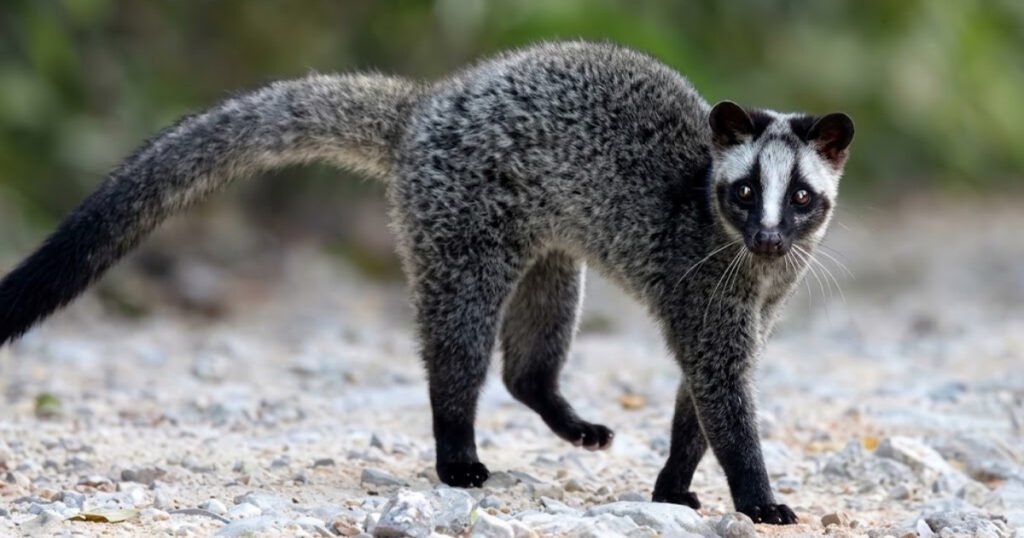
Typically found in tropical and subtropical forests across Southeast Asia, this nocturnal animal thrives in twilight, eluding many watchful eyes under the veil of darkness. Often confused with raccoons due to their similar facial patterns and size, the Masked Palm Civet possesses unique traits that set it apart.
While both animals showcase a penchant for scavenging, the civet’s slender body and elongated snout differ significantly from the raccoon’s more robust build and rounded muzzle. One interesting distinction is the civet’s diet; it primarily feeds on fruits, insects, and small vertebrates, while the raccoon is more opportunistic, often indulging in human leftovers.
Common Genet
| Attribute | Details |
|---|---|
| Scientific Name | Genetta genetta |
| Family | Viverridae |
| Size | 60–85 cm (including tail) |
| Diet | Omnivorous (insects, rodents, fruits) |
The Common Genet (Genetta genetta) captivates many with its striking spotted coat and long, ringed tail, reminiscent of a raccoon’s distinct appearance. Known for its slender body, this agile creature is predominantly nocturnal, prowling through forests and scrubland in search of insects, rodents, and fruits.
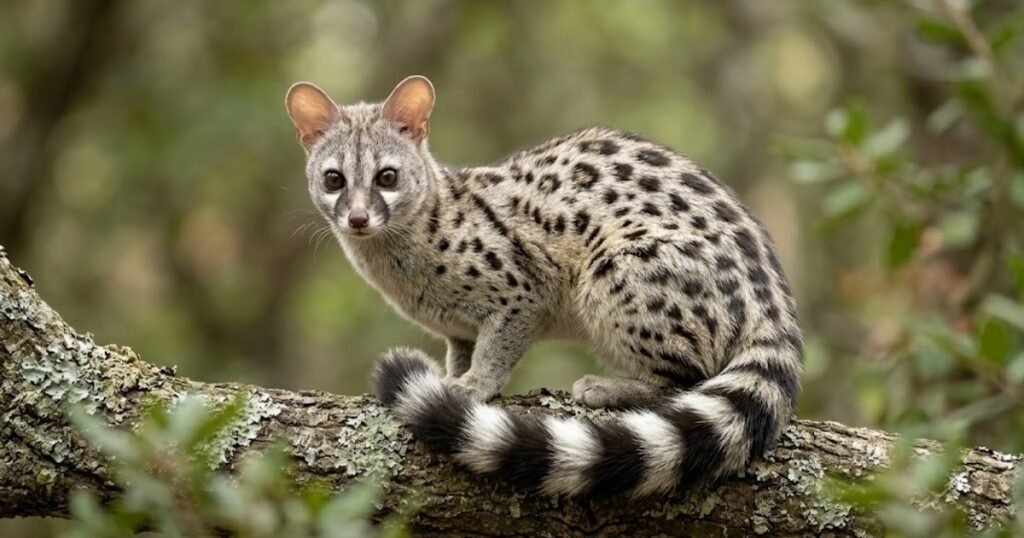
Its tail and facial structure create a raccoon-like impression, tricking the inexperienced observer into thinking they’ve seen a small, furry bandit. Despite these similarities, the Common Genet is in a different family altogether; it belongs to the Viverridae family, unlike raccoons which are part of the Procyonidae family.
While both have similar color patterns and bushy tails, the Genet is smaller and more elongated. One fascinating fact about the Common Genet is its remarkable climbing ability, allowing it to traverse both trees and rocky terrains with ease.
Binturong
| Attribute | Details |
|---|---|
| Scientific Name | Arctictis binturong |
| Family | Viverridae |
| Size | 60–95 cm (including tail) |
| Diet | Frugivorous |
The binturong, known scientifically as Arctictis binturong, boasts a striking appearance with its dark, shaggy fur and long, prehensile tail, which can often be mistaken for that of a raccoon. This remarkable tail not only aids in climbing through its forest habitat but also provides balance as it navigates through the dense vegetation.
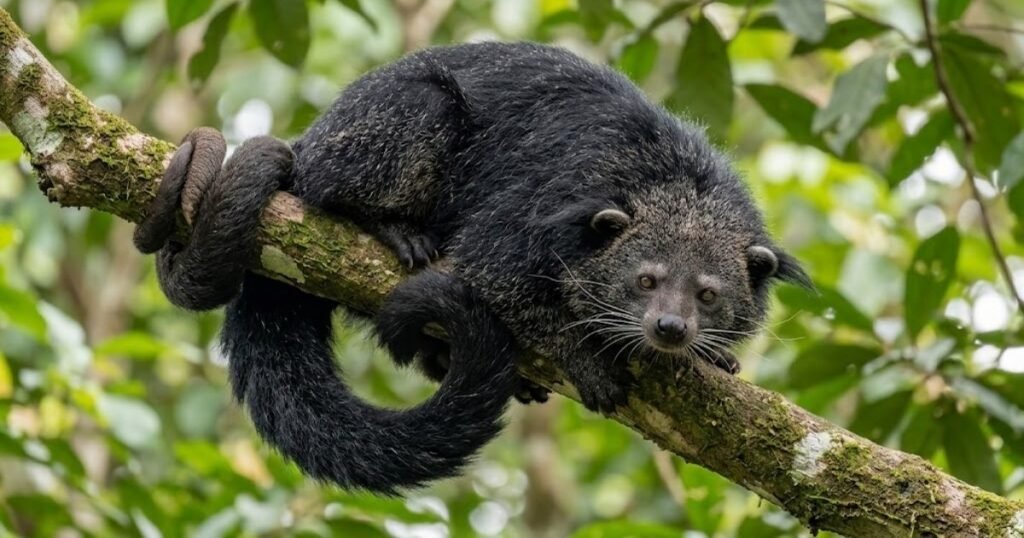
While raccoons and binturongs both exhibit dexterous climbing behavior and possess a certain charm, their similarities end there. Binturongs are larger, with a stockier build and a distinctive face marked by a more pronounced snout.
One intriguing aspect that draws comparisons to raccoons is their social behavior; both species are known for their curious nature. Binturongs lack the characteristic mask-like markings of raccoons and instead possess a more uniform facial coloration.
Another fundamental difference is in their diet: binturongs are primarily frugivorous, enjoying a diet rich in fruits like figs, while raccoons are omnivorous scavengers. An interesting fact about binturongs is that they emit a unique odor reminiscent of popcorn, a scent they use to communicate and mark their territory.
European Badger
| Attribute | Details |
|---|---|
| Scientific Name | Meles meles |
| Family | Mustelidae |
| Size | 60–90 cm (body length) |
| Diet | Omnivorous (roots, insects, small mammals) |
The European Badger, scientifically known as Meles meles, captivates with its striking black-and-white facial markings and stocky, robust body. Nocturnal by nature, these fascinating creatures are primarily active under the cover of darkness, making their burrowing behavior all the more intriguing.
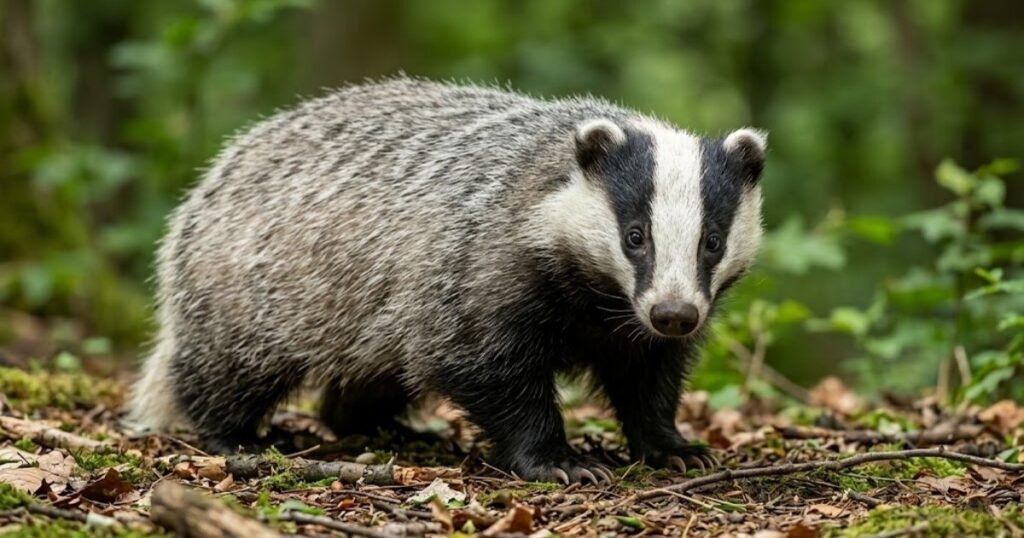
Their extensive network of tunnels and setts showcases their remarkable digging abilities, creating a labyrinthine home that serves as both refuge and nursery. While both the European Badger and raccoons share certain traits, such as a penchant for foraging and adaptable diets, significant differences set them apart.
Raccoons boast a more slender build with a bushy tail, accompanied by distinctive black “mask” markings, while badgers are shorter and sturdier. Unlike raccoons, which are more sociable and often found in urban environments, badgers prefer the solitude of their burrows, emerging mainly for solitary foraging.
An interesting fact that sets them apart is their impressive ability to defend their territory, with badgers exhibiting fierce loyalty to their homes when threatened.
American Badger
| Attribute | Details |
|---|---|
| Scientific Name | Taxidea taxus |
| Family | Mustelidae |
| Size | 24–34 inches in length |
| Diet | Omnivorous, mainly small mammals and insects |
The American badger, Taxidea taxus, stands out with its striking facial markings, reminiscent of a masked bandit, which may evoke thoughts of raccoons. With a stocky build and a body shape accentuating its strength, this nocturnal creature thrives in the vast grasslands and arid plains of North America.
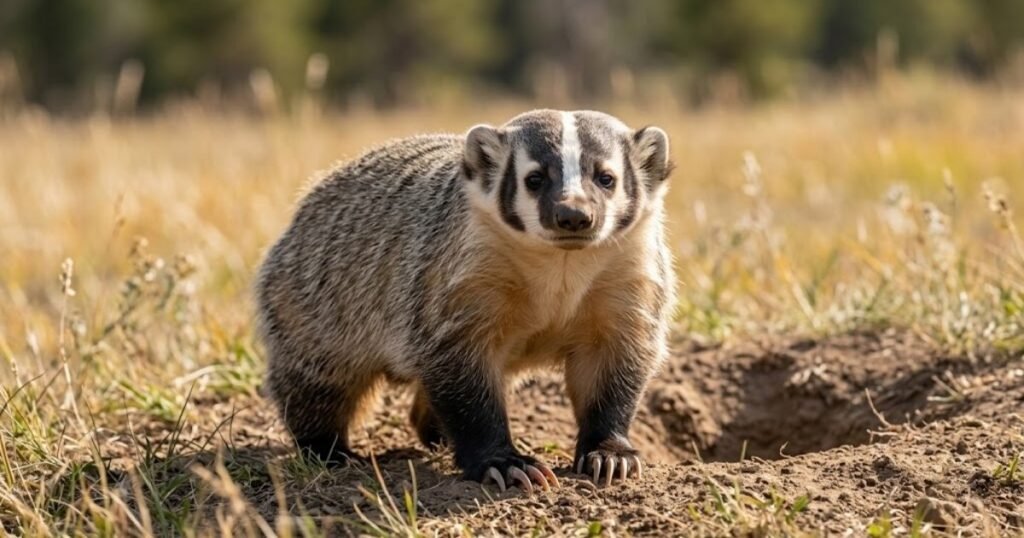
Its powerful claws can dig up to three feet in less than a minute, showcasing its expert burrowing behavior. These burrows serve as shelters from predators and extreme weather, revealing the badger’s adaptability to North American habitats where it primarily feasts on rodents, insects, and even small reptiles.
While both raccoons and badgers share a fondness for scavenging, their physical attributes tell a different story. Raccoons are generally slimmer with a more agile frame suited for climbing, while badgers possess a stocky physique built for digging and defense.
An interesting distinction lies in their facial markings while a raccoon sports a solid dark mask, the badger’s markings are more pronounced and sharply defined. One captivating fact about the American badger is its remarkable ability to coexist with other species, including the daring coyote, often foraging together without conflict.
Skunk
| Attribute | Details |
|---|---|
| Scientific Name | Mephitis mephitis |
| Family | Mephitidae |
| Size | 20–30 inches long |
| Diet | Insects, small animals, plants |
Skunks, with their striking black-and-white markings and bushy tails, often draw comparisons to raccoons, especially under the veil of night. Both creatures boast a similar size, leading to the occasional mix-up when they venture out after dark. Their nocturnal behavior adds to this confusion, as both animals scuttle through shadows, hunting for food.
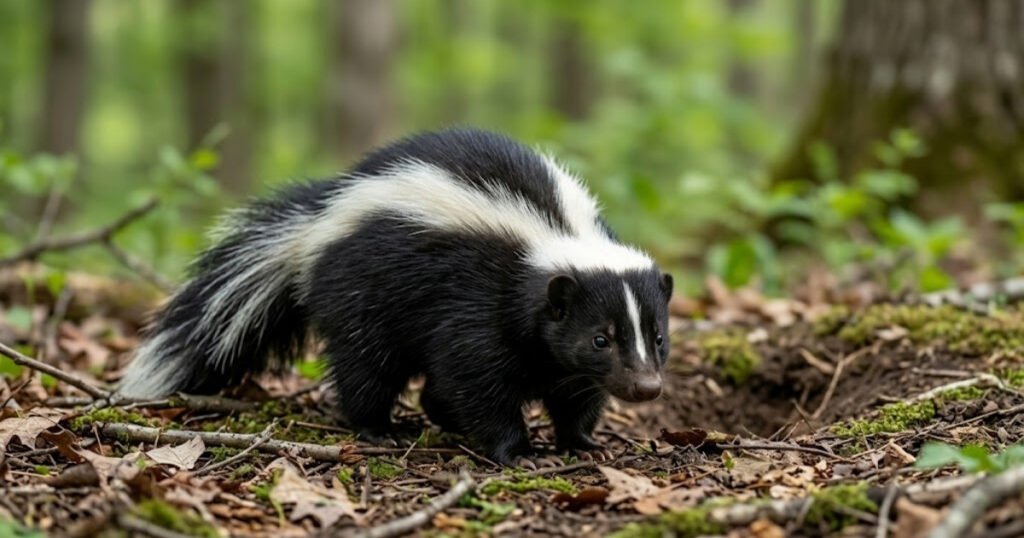
While raccoons flaunt a grey-masked face that showcases their dexterity and adaptability, skunks also sport distinctive facial marks that blend seamlessly into their black fur. Upon closer inspection, one can spot the differences: skunks have a more robust body and a larger, less nimble tail compared to the pointed snout and agile frame of a raccoon.
In essence, the skunk’s most remarkable feature is its ability to emit a foul-smelling spray as a defense mechanism, a feature that sets it apart from its masked counterpart. Raccoons are primarily scavengers with dexterous forepaws, while skunks feed mostly on insects, small animals, and plant matter.
An intriguing fact that adds to the skunk’s allure is its role in ecosystems as both predator and prey; they are skilled foragers, helping control insect populations while still being a target for larger predators.
Virginia Opossum
| Attribute | Details |
|---|---|
| Scientific Name | Didelphis virginiana |
| Family | Didelphidae |
| Size | 24–40 inches |
| Diet | Omnivorous (fruits, insects, small animals) |
The Virginia Opossum, scientifically known as Didelphis virginiana, is a fascinating creature characterized by its gray fur and long, pointed snout. As a nocturnal animal, they venture out at night, foraging for a diet that includes fruits, insects, and small animals.
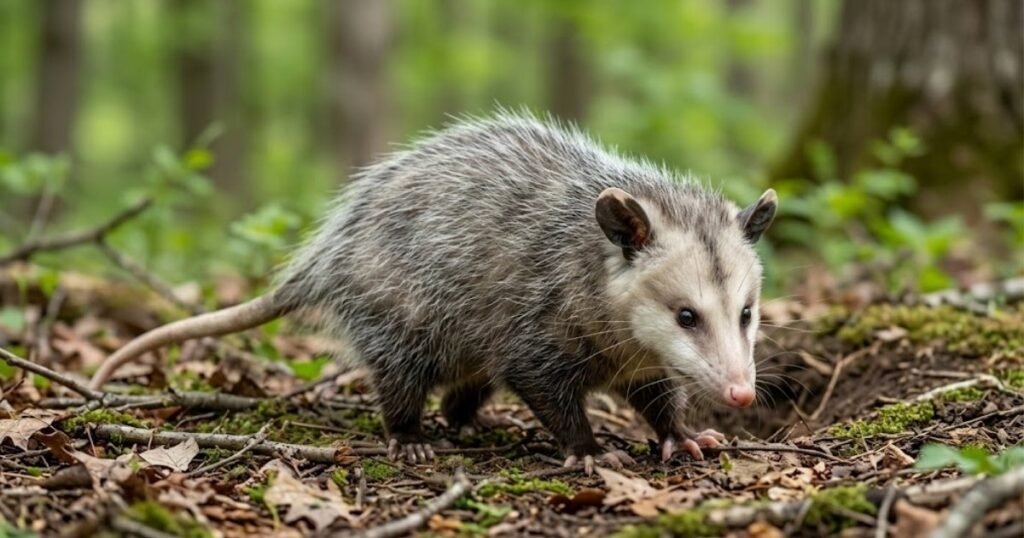
While they are about the size of a house cat, their unique adaptations allow them to thrive in various habitats, from urban areas to forests. Notably, the opossum’s face is more elongated compared to the raccoon’s rounded features, and its prehensile tail is hairless, giving it distinct advantages in climbing.
When comparing the Virginia Opossum to raccoons, one can’t overlook their shared habitats and omnivorous diets. At first glance, the opossum’s masked face and dexterous paws may evoke similarities with raccoons, but key differences emerge upon closer inspection.
Raccoons possess a stockier build, with a more pronounced “bandit” mask and bushy tail with rings. Moreover, opossums have a less robust body structure, with thin, elongated limbs and a naked tail, traits that make them adept at scavenging yet less capable of competing directly with raccoons.
One fascinating fact about the Virginia Opossum is its ability to “play dead” as a defense mechanism, a behavior that can confuse predators and buy the opossum precious time to escape. This remarkable tactic truly underscores their unique survival skills in the wild.
Pine Marten
| Attribute | Details |
|---|---|
| Scientific Name | Martes martes |
| Family | Mustelidae |
| Size | 20–30 inches (including tail) |
| Diet | Carnivorous (small mammals, fruits) |
The pine marten, with its beautiful brown fur and striking bushy tail, presents an enchanting silhouette against the backdrop of dense forests. This slender body, adept at climbing, showcases an impressive agility that allows it to navigate trees with ease, making it a master of its arboreal domain.
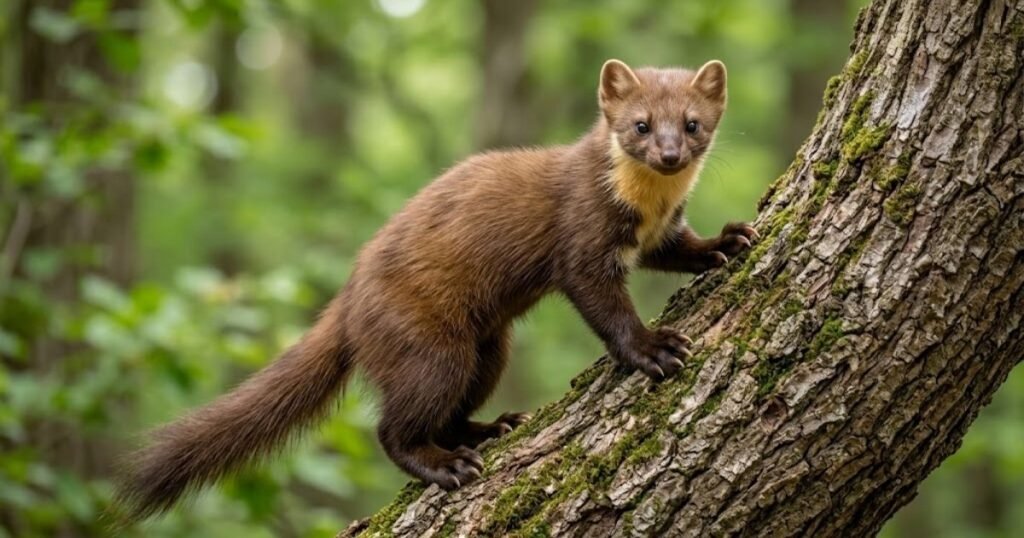
Unlike the more ubiquitous raccoon, known for its characteristic black mask and ringed tail, the pine marten’s appearance is more understated yet equally captivating. While both are mammals found in forest habitats, the pine marten offers a slimmer frame and a distinctively elegant tail, lending it a grace that sets it apart.
One fascinating point of similarity between the two is their adaptability to woodland environments; both species excel in scavenging and search for food actively. While raccoons are omnivorous and would often rummage through human refuse, pine martens primarily consume small mammals, birds, and fruits, showcasing a more specialized dietary preference.
An interesting fact about pine martens is their playful nature; they often engage in acrobatic displays as they traverse tree branches, captivating onlookers with their antics.
Fisher
| Attribute | Details |
|---|---|
| Scientific Name | Pekania pennanti |
| Family | Mustelidae |
| Size | 30–48 inches |
| Diet | Carnivorous (small mammals, birds) |
The fisher, with its dark fur and long body, scurries through the forest, often mistaken for a raccoon due to its size and bushy tail. Both creatures share a penchant for wooded habitats and display a playful nature.
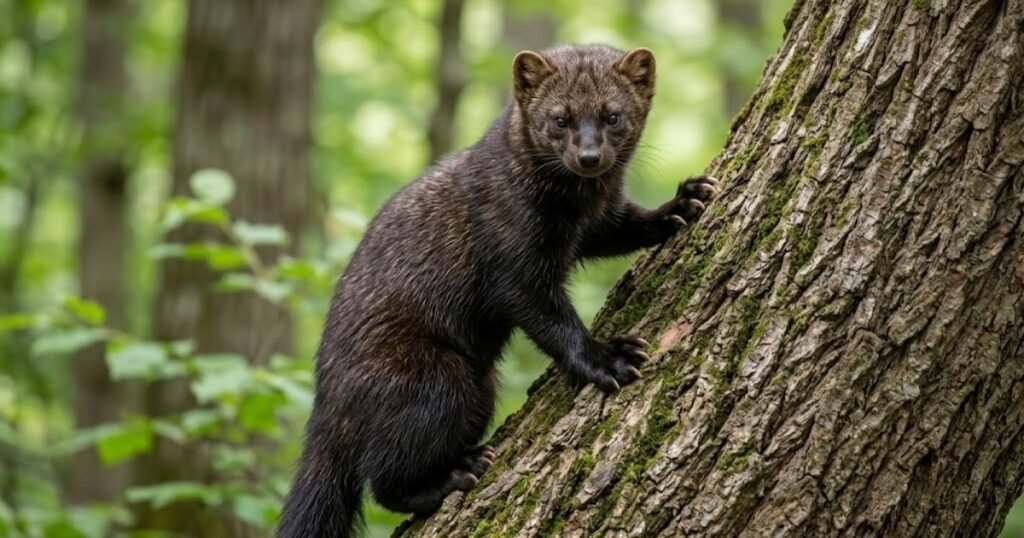
The fisher’s sleek, elongated form sets it apart, granting it agility in the tree canopies that raccoons, with their stockier frames, cannot match. In fact, fishers primarily hunt small mammals and birds, whereas raccoons are omnivorous foragers, often seen scavenging in urban areas.
What truly distinguishes the fisher from its raccoon lookalike is its membership in the family Mustelidae, branching it farther from the Procyonidae family that encompasses raccoons. Fishers have a lithe stature designed for speed and stealth, while raccoons are built for adaptability and exploration.
One intriguing aspect of the fisher’s behavior is its predilection for chasing down porcupines, a feat that few other animals dare to attempt.
Wolverine
| Category | Details |
|---|---|
| Scientific Name | Gulo gulo |
| Family | Mustelidae |
| Size | 26–34 inches long |
| Diet | Carnivorous |
Wolverines, often mistaken for raccoons due to their bushy tails and markings, are formidable creatures that boast a stocky build and dark, facial and body markings that give them a striking appearance.
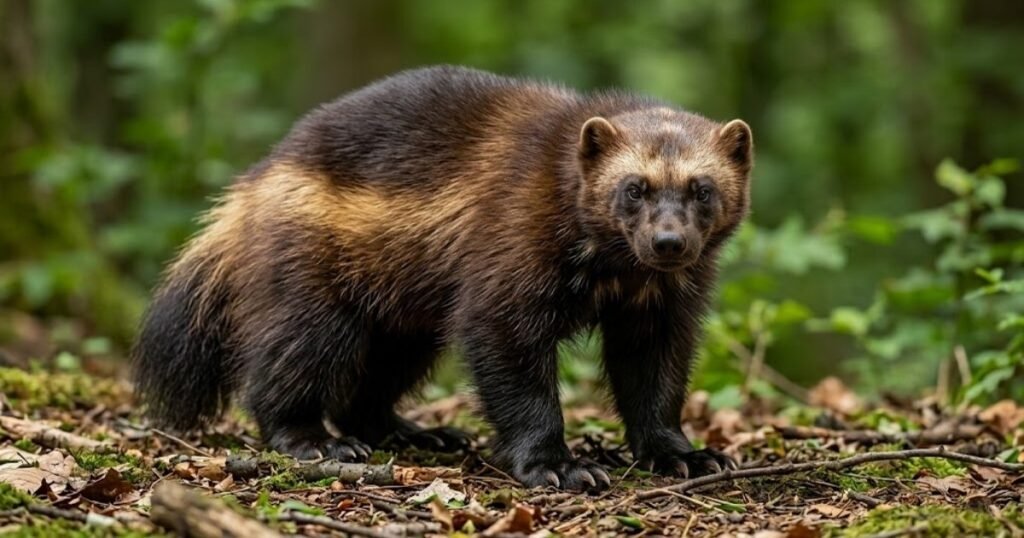
While they may share a few superficial traits with raccoons like a similar size and certain color patterns their muscular structure and robust physique reveal a creature that thrives in cold, rugged terrains. Unlike the sly scavengers they’re sometimes compared to, wolverines are tenacious hunters with a powerful bite, equipped for survival in the harshest climates.
Despite their resemblance to raccoons, wolverines belong to the weasel family, Martenidae, and their behavior and diet starkly set them apart. While raccoons are primarily omnivorous and known for their dexterous hands, wolverines are largely carnivorous, preying on smaller mammals and scavenging when necessary.
Animals That Look Like Raccoons But Aren’t
When we think of creatures that resemble raccoons, it’s easy to assume they’re somehow closely related. Appearances can be deceiving many of these animals belong to entirely different families. For instance, the raccoon dog is part of the Canidae family, making it a distant cousin of dogs and wolves, while the red panda hails from the Ailuridae family.
Even the opossum, a creature often mistaken for a raccoon, belongs to the Didelphidae family, showcasing how visual similarities can arise among unrelated species. This phenomenon can largely be explained by convergent evolution, where unrelated animals develop similar traits due to the pressures of their environments or lifestyles.
For instance, both badgers and raccoons share similar nocturnal foraging habits, leading to adaptations like masked facial markings that enhance their ability to forage in the dark. Civets and genets, members of the Viverridae family, also exhibit raccoon-like features, yet they evolved in different evolutionary paths to thrive in similar habitats.
Conclusion
The fascinating world of animals that look like raccoons showcases the diversity of nature and how similar adaptations can arise in different species. From the adorable coatis to the striking ring-tailed lemurs, these animals captivate us with their unique appearances and behaviors.
By exploring these raccoon lookalikes, we gain a deeper appreciation for the animal kingdom and the peculiar evolutionary pathways that lead to such similarities. Whether you’re an animal lover or simply curious about wildlife, there is much to discover in this eclectic lineup.
FAQs
What Animals That Look Like Racoons?
Several animals resemble raccoons, including the Australian quokka, the North American ringtail, and the South American coatis, all sharing similar facial markings and bushy tails.
What Animals Are Closest To Raccoons?
Raccoons are most closely related to animals in the Procyonidae family, particularly coatis and kinkajous. They share similarities with other order Carnivora members, including bears and weasels, due to their omnivorous diets and dexterous forelimbs.
What African Animal Resembles A Raccoon In Its Appearance?
The African animal that resembles a raccoon in its appearance is the African civet, known for its distinctive facial markings and ringed tail.
What Animal Can Be Mistaken For A Raccoon?
The Coati is often mistaken for a raccoon due to its similar features, such as a long, ringed tail, a comparable body shape, and a distinctive masked face.