Top 22 Animals With Flippers (Pictures, Facts & Amazing Adaptations)

The ocean is home to some of the most extraordinary animals on Earth, many of which rely on flippers for their survival. This article uncovers the top 22 animals with flippers, showcasing their amazing adaptations that enable them to thrive in various marine environments.
From echolocation skills to streamlined bodies, these fascinating creatures reveal the wonders of evolution and the importance of biodiversity. Prepare to be enchanted by captivating images and eye-opening facts that highlight the enchanting lives of flippered animals.
What Are Animal Flippers?
Animal flippers are specialized limbs that have evolved primarily for efficient swimming, distinguishing them from ordinary legs, feet, fins, and wings. Unlike traditional limbs that support walking or grasping, flippers are broad and flat, allowing for powerful propulsion in water. This distinction is crucial for aquatic creatures, as it enhances their ability to navigate through various marine environments.
Marine mammals like whales and dolphins showcase flippers that serve as versatile tools for swimming, steering, and maintaining stability. Their front limbs, often referred to as flippers, enable these creatures to reach impressive speeds and perform agile maneuvers.
Similarly, sea turtles possess flipper-like limbs that assist them in gliding gracefully through the ocean. The fluttering motion of these limbs is a striking adaptation that ensures their survival in diverse aquatic habitats.
Penguins offer a remarkable example of modified wings functioning as flippers. These adaptations allow penguins to “fly” underwater, using their wings to propel themselves with remarkable agility.
In this context, animals with flippers illustrate the fascinating diversity of evolution, showcasing how different species have tailored their anatomical features for life in water while overcoming unique environmental challenges.
Top 22 Animals With Flippers List
Here is a list of 22 animals with flippers, including fascinating marine mammals, sea turtles, penguins, and other aquatic animals that use flippers to swim, steer, and move through water.
| No. | Animal Name |
|---|---|
| 1 | Blue Whale |
| 2 | Humpback Whale |
| 3 | Orca (Killer Whale) |
| 4 | Beluga Whale |
| 5 | Narwhal |
| 6 | Bottlenose Dolphin |
| 7 | Harbor Porpoise |
| 8 | Harbor Seal |
| 9 | Gray Seal |
| 10 | Leopard Seal |
| 11 | Elephant Seal |
| 12 | California Sea Lion |
| 13 | Walrus |
| 14 | Dugong |
| 15 | West Indian Manatee |
| 16 | Green Sea Turtle |
| 17 | Leatherback Sea Turtle |
| 18 | Loggerhead Sea Turtle |
| 19 | Emperor Penguin |
| 20 | King Penguin |
| 21 | Marine Otter |
| 22 | Platypus |
Blue Whale
| Feature | Details |
|---|---|
| Scientific Name | Balaenoptera musculus |
| Class | Mammalia |
| Diet | Krill |
| Habitat | Open Oceans Worldwide |
The blue whale, with its impressively large pectoral flippers, reaches lengths of up to 100 feet. These elongated flippers, shaped like graceful wings, serve an essential role in swimming and steering. They help the whale maneuver through the ocean’s depths, allowing it to make fluid, agile movements despite its massive size.
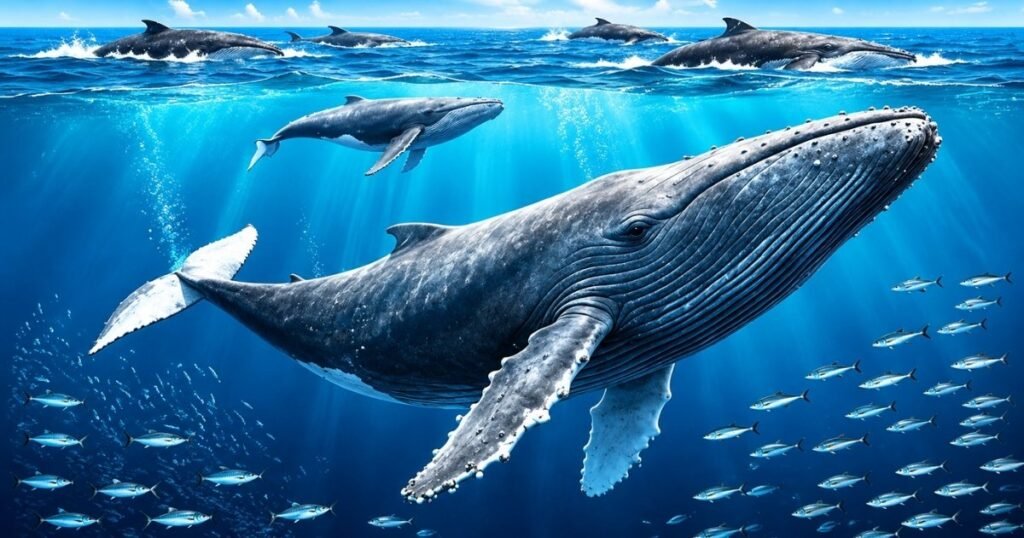
Imagine gliding through the water with such elegance these flippers are not just for propulsion; they act like rudders, guiding the whale smoothly as it hunts for krill. When considering the blue whale’s colossal tail flukes, it’s fascinating to note the distinct purpose each body part serves. While the tail propels the whale forward with tremendous force, the flippers ensure that it can pivot and navigate intricate underwater landscapes.
Despite being the largest creature on Earth, the blue whale’s diet consists almost solely of tiny krill; it can consume up to 4 tons of these minuscule crustaceans daily. Perhaps the most surprising fact is that these majestic giants, often thought to roam alone, form temporary partnerships during feeding, showcasing a level of social interaction that contrasts with their solitary image in the vast ocean. Blue whales are also among the biggest animals in the world.
Humpback Whale
| Category | Details |
|---|---|
| Scientific Name | Megaptera novaeangliae |
| Class | Mammalia |
| Diet | Krill, Small Fish |
| Habitat | Oceanic Waters, Coastal Areas |
The Humpback Whale, known for its long pectoral flippers and unique tubercles, thrives in various oceanic habitats, from the frigid Alaska waters to the warm Caribbean. These majestic creatures are not just beautiful; their remarkable maneuverability allows them to perform breathtaking acrobatics. The bubble-net feeding technique, where groups create a “net” of bubbles to trap fish, showcases their intelligence and social behaviors.
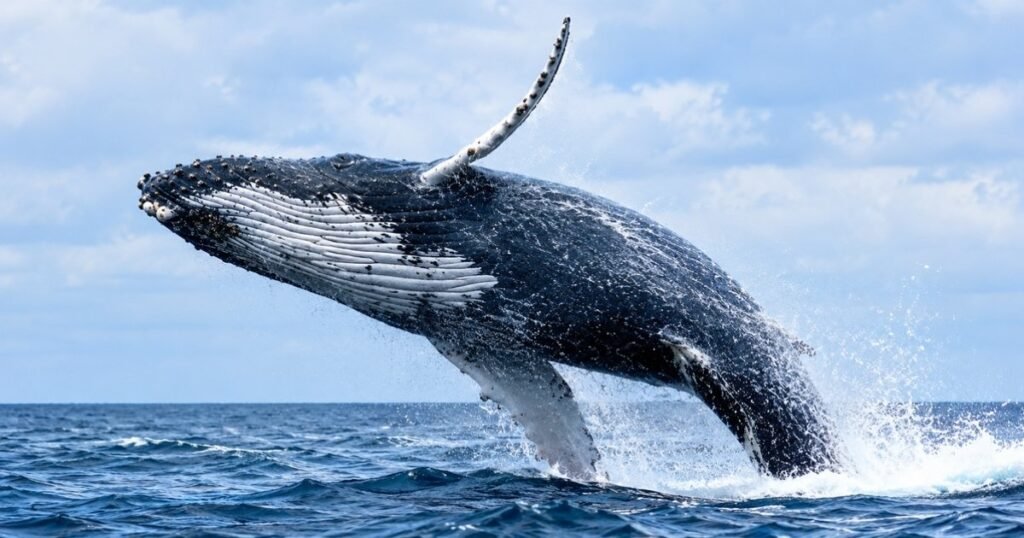
In comparison to the Blue Whale, Humpback Whales boast longer and more flexible flippers, enhancing their agility. This adaptability is vital during migration, as they traverse thousands of miles between feeding and breeding grounds.
Observing these giants in their natural habitat reveals the delicate balance of ocean ecosystems and the complex social structures within their pods, offering insights that extend beyond mere biology and into the realms of empathy and conservation.
Orca (Killer Whale)
| Feature | Details |
|---|---|
| Scientific Name | Orcinus orca |
| Class | Mammalia |
| Diet | Carnivorous |
| Habitat | Oceans Worldwide, Often Near Coasts |
Orcas, often labeled as the “wolves of the sea,” exhibit complex social structures through their sophisticated pod systems, which can consist of up to 40 individuals. Their communication methods are equally fascinating; these apex predators utilize a range of clicks, whistles, and body movements, enhancing cooperation during hunting.
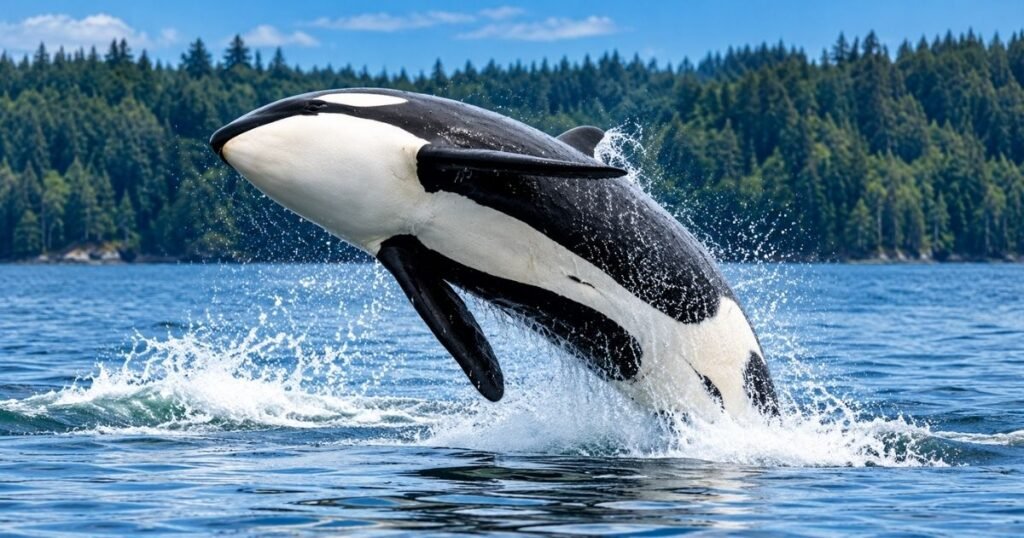
The sheer intelligence of orcas allows them to develop unique hunting strategies that are often tailored to specific prey, ranging from seals to even large whales. The distinctive dorsal fin that stands tall in males can reach up to six feet, dramatically differing from the smaller, curved fins of females.
This variance isn’t merely aesthetic; it plays a pivotal role in social interactions within pods. The strong interplay of physical attributes and social structures underscores how orcas adapt to their habitats, making these marine mammals not only essential to ocean ecosystems but also captivating subjects of ongoing research into their behaviors and social dynamics.
Beluga Whale
| Feature | Details |
|---|---|
| Scientific Name | Delphinapterus leucas |
| Class | Mammalia |
| Diet | Fish, Crustaceans, and Mollusks |
| Habitat | Arctic and Subarctic Waters |
The beluga whale, often called the “canary of the sea,” is renowned for its incredible vocalizations and social nature. Adapted to life in icy waters, these marine mammals possess flexible pectoral flippers that enhance their agility, allowing them to navigate through complex ice formations with ease.
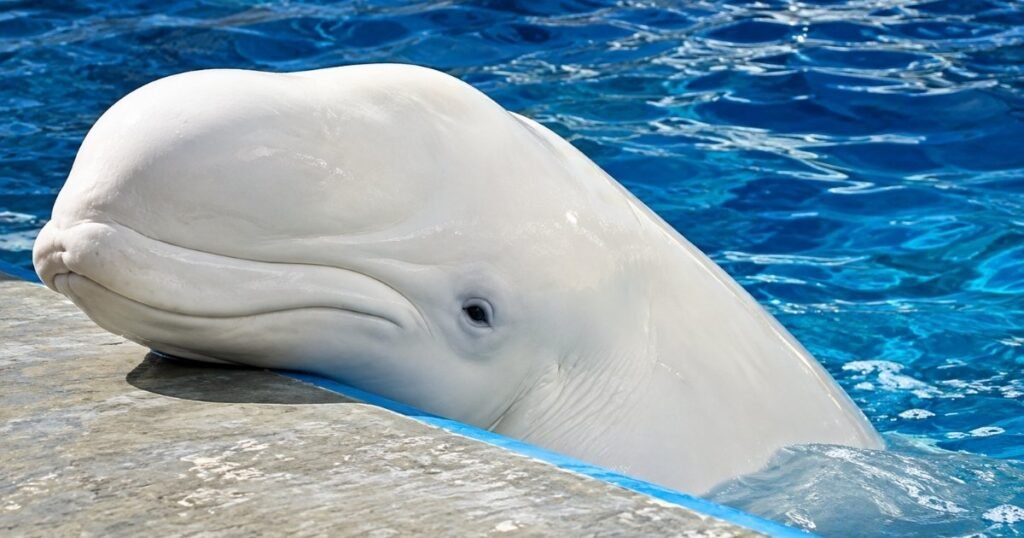
Their ability to echolocate is key to their survival, enabling them to hunt and communicate in the sprawling seascape of the Arctic. In addition to their fascinating adaptations, belugas form tight-knit pods, highlighting their social structures. These pods offer more than companionship; they serve as vital support systems, ensuring the success of foraging and navigating their harsh habitat.
Their diet, rich in a variety of marine life, showcases the delicate balance of the Arctic ecosystem, making them essential indicators of environmental health. As climate change continues to affect these icy realms, understanding the beluga’s role is more crucial than ever for marine conservationists.
Narwhal
| Aspect | Details |
|---|---|
| Scientific Name | Monodon monoceros |
| Class | Mammalia |
| Diet | Carnivorous |
| Habitat | Arctic Waters |
The narwhal, often dubbed the “unicorn of the sea,” captivates not just for its remarkable tusk, which is actually an elongated tooth, but also for its unique adaptations. With small pectoral flippers, these cetaceans glide effortlessly through icy waters, primarily inhabiting the shallow coastal areas of the Arctic.

Their sleek body allows for remarkable agility during deep dives, often reaching depths of over 1,500 meters in search of fish, squid, and other delicate marine bounties. While the tusk is a symbol of strength and mystique, it plays a crucial role in social interactions and possibly even in sensory perception. In contrast, their flippers, though small, are vital for maneuverability amidst treacherous ice and challenging currents.
The narwhal’s diet reflects its habitat’s bounty, highlighting a delicate balance between predator and prey in the fragile Arctic ecosystem, where climate change threatens to disrupt long-established feeding grounds.
Bottlenose Dolphin
| Feature | Details |
|---|---|
| Scientific Name | Tursiops truncatus |
| Class | Mammalia |
| Diet | Carnivorous (Fish, Squid) |
| Habitat | Coastal and Deeper Oceanic Waters |
Bottlenose dolphins are not just graceful swimmers, but their physical adaptations reveal a wealth of evolutionary ingenuity. Their pectoral flippers provide remarkable maneuverability, allowing them to navigate complex underwater terrains and perform acrobatic jumps.
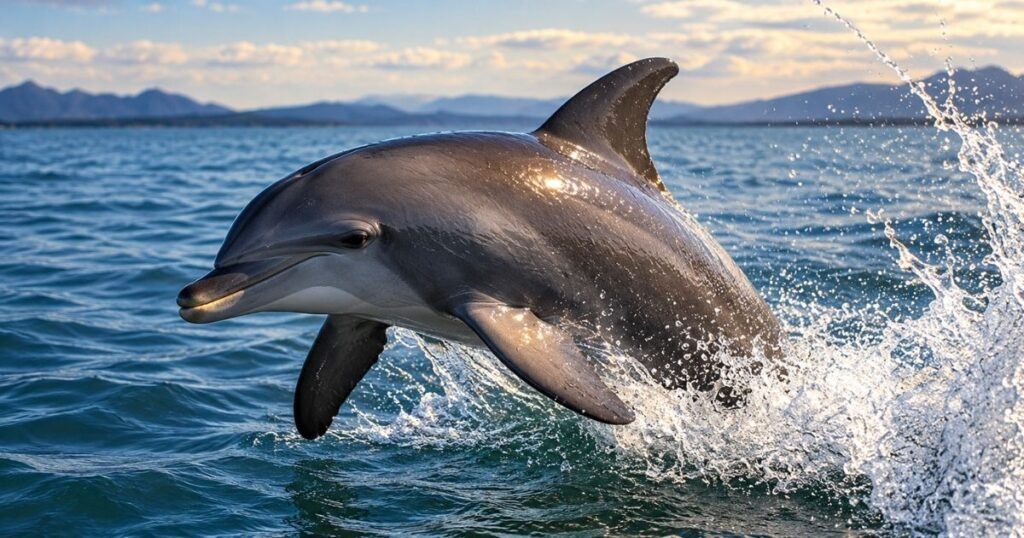
In contrast, fish use their fins primarily for propulsion and stability, showcasing a fascinating divergence in adaptations between these intelligent marine mammals and their aquatic counterparts. Echolocation is one of the most captivating aspects of a bottlenose dolphin’s lifestyle. This sophisticated sonar system allows them to locate prey and navigate murky waters with ease.
Their highly social behavior fosters complex communication, with group hunting strategies that demonstrate cooperation and intelligence. Observing these interactions offers a glimpse into a world where empathy and teamwork enhance survival, inviting us to reconsider our perceptions of intelligence in the animal kingdom. Dolphins are also among the most friendly animals in the ocean.
Harbor Porpoise
| Category | Details |
|---|---|
| Scientific Name | Phocoena phocoena |
| Class | Mammalia |
| Diet | Carnivorous (Mainly Fish) |
| Habitat | Coastal Waters and Estuaries |
The Harbor Porpoise, characterized by its small size and sleek body, is an agile swimmer often found navigating the shallow coastal waters and estuaries where fish are abundant. Unlike their more acrobatic relatives, the dolphins, porpoises are typically more reserved and elusive, often swimming quietly under the surface. This discretion aids their survival, allowing them to catch prey without drawing unnecessary attention.
Interestingly, the differences between dolphins and porpoises extend beyond their personalities. While dolphins exhibit a pronounced beak, harbor porpoises possess a rounded snout, giving them a somewhat more compact appearance.
Their social structures differ; harbor porpoises tend to be more solitary or found in smaller groups, making their behaviors subtle yet fascinating to study. Engaging with these remarkable creatures encourages a deeper appreciation for marine biodiversity and the vital ecosystems they inhabit.
Harbor Seal
| Feature | Details |
|---|---|
| Scientific Name | Phoca vitulina |
| Class | Mammalia |
| Diet | Fish, Crustaceans, Mollusks |
| Habitat | Coastal Waters and Estuaries |
Harbor seals are fascinating creatures that demonstrate remarkable adaptability in both aquatic and terrestrial environments. Their short front flippers and elongated hind flippers are designed for efficient swimming, allowing them to navigate coastal waters with ease.
In contrast to sea lions, which possess external ear flaps and are known for their agile movements on land, harbor seals display a more streamlined silhouette, making them less adept at hauling out onto rocky shores.
Feeding primarily on fish, crustaceans, and mollusks, these seals have a keen hunting instinct, often diving to impressive depths. Their diet can shift considerably with changes in food availability, showcasing their opportunistic feeding behavior.
The coastal estuaries they inhabit provide both feeding grounds and safe havens for breeding, showcasing the intricate balance of marine ecosystems and the importance of preserving these habitats for future generations.
Gray Seal
| Feature | Details |
|---|---|
| Scientific Name | Halichoerus grypus |
| Class | Mammalia |
| Diet | Fish and Marine Prey |
| Habitat | North Atlantic |
The gray seal, known for its large physique and distinctive muzzle, primarily utilizes its front flippers for propulsion, setting it apart from other marine mammals like the harbor seal, which often relies on its hind flippers. This unique swimming technique allows the gray seal to efficiently navigate through the chilly waters of the North Atlantic, where it skillfully hunts a diet rich in fish and other marine creatures.
Notably, the gray seal’s physical differences include a more robust body and a broader forehead compared to its harbor seal relatives. This variation not only aids in identification but also showcases the adaptations evolved to thrive in their specific ecological niches.
As climate change impacts marine ecosystems, understanding these intricate distinctions becomes crucial for conservation efforts, ensuring that these majestic seals continue to grace our oceans with their presence.
Leopard Seal
| Feature | Details |
|---|---|
| Scientific Name | Hydrurga leptonyx |
| Class | Mammalia |
| Diet | Carnivorous (Penguins, Fish, Krill) |
| Habitat | Antarctic Waters |
The leopard seal is an apex predator of the Antarctic, exhibiting remarkable adaptations for its icy environment. With its long front flippers and streamlined body, it swims with unmatched agility, capable of reaching impressive speeds while hunting.
Not only does the leopard seal feast on a diverse diet preying on penguins, fish, and krill but it also plays a pivotal role in maintaining the balance of marine ecosystems. By controlling the populations of its prey, it ensures that no single species becomes overly dominant, thus fostering biodiversity. Its spotted coat is also a good example of natural animal camouflage in icy waters.
As solitary hunters, leopard seals employ unique strategies reminiscent of land predators, often using stealth and surprise to ambush their prey. This behavioral trait gives them a distinct advantage in the frigid waters they inhabit, where visibility can be limited.
Their haunting vocalizations, which can be heard echoing underwater, add an eerie layer to their presence. As climate change alters the Antarctic landscape, the challenges they face highlight the interconnectedness of marine species and environmental health. Understanding their role in these shifting dynamics is crucial for conservation efforts aimed at preserving both the leopard seal and its habitat.
Elephant Seal
| Feature | Details |
|---|---|
| Scientific Name | Mirounga angustirostris |
| Class | Mammalia |
| Diet | Fish, Squid, Crustaceans |
| Habitat | Coastal Waters of the North and South Pacific |
The elephant seal, known for its impressive size and remarkable diving abilities, primarily resides in the cold, nutrient-rich waters of the Pacific. These marine mammals can dive deeper than any other pinniped, reaching depths of over 1,500 meters, making them exceptional hunters of elusive squid and fish, often surprising scientists with their ability to stay submerged for over two hours.
The sheer power behind their streamlined bodies enables them to glide effortlessly through the water, utilizing short front flippers for steering and their larger hind flippers for propulsion. True seals, including the elephant seal, lack external ear flaps, distinguishing them from their sea lion cousins.
While both share a similar marine environment, sea lions are more agile on land thanks to their rotating hind flippers, making them more socially visible. In contrast, elephant seals exhibit a more solitary lifestyle, coming ashore mainly for breeding and molting, revealing a different strategy for survival and adaptation in the wild.
California Sea Lion
| Aspect | Details |
|---|---|
| Scientific Name | Zalophus californianus |
| Class | Mammalia |
| Diet | Carnivorous (Fish, Squid) |
| Habitat | Coastal Waters of the Pacific |
The California sea lion is a master of agility, thanks to its long front flippers that power swift movements through water. These marine animals are fascinating not just for their speed but also for their remarkable ability to rotate their hind flippers, allowing them to walk gracefully on land a trait that sets them apart from other pinnipeds.
Observing a sea lion transition from sea to shore is a captivating reminder of evolution’s adaptability to both marine and terrestrial environments. Socially, California sea lions are vibrant and vocal, often seen basking in large groups along rocky cliffs or sandy beaches. Their social structures are dynamic, with complex interactions that include vocal communications and playful behaviors, essential for maintaining group cohesion.
Understanding these creatures sheds light on the delicate balance of coastal ecosystems, highlighting their role as indicators of ocean health and the challenges they face in a changing environment. It’s a reminder that these agile hunters are not just performers but critical players in their ecosystem.
Walrus
| Attribute | Details |
|---|---|
| Scientific Name | Odobenus rosmarus |
| Class | Mammalia |
| Diet | Carnivorous |
| Habitat | Arctic and Sub-Arctic Regions |
The walrus, a striking marine mammal, is not only known for its impressive tusks but also for its social behavior. They gather in large groups on ice floes, displaying a fascinating hierarchy that includes interactions of playfulness and aggression.
These social dynamics reveal insights into their communication methods, which range from vocalizations to physical displays. Walrus tusks, primarily used for dominance displays and breaking ice, also play a crucial role in their feeding habits. They use them to haul themselves onto ice and to forage for benthic invertebrates on the ocean floor.
Their diet, consisting largely of clams and other mollusks, demonstrates their adaptability and skill in foraging. As climate change affects their icy habitats, understanding these behaviors becomes vital for conservation efforts, emphasizing not just the necessity of ecosystems but the complex roles walruses play within them. Walruses also appear in our list of animals with webbed feet.
Dugong
| Characteristic | Details |
|---|---|
| Scientific Name | Dugong dugon |
| Class | Mammalia |
| Diet | Herbivorous (Primarily Seagrasses) |
| Habitat | Shallow Coastal Waters and Seagrass Beds |
Dugongs, often mistaken for their close relatives, the manatees, exhibit some fascinating distinctions that reflect their unique adaptations. Unlike manatees, which have rounded bodies and are found in freshwater and brackish habitats, dugongs possess paddle-shaped forelimbs that allow them to navigate seagrass beds with remarkable grace.
This specialized morphology not only aids in their underwater locomotion but is also an evolutionary advantage, enhancing their ability to graze on seagrasses along coastal areas. Dugongs play a crucial ecological role by maintaining healthy seagrass habitats, which are vital for coastal ecosystems.
Their herbivorous diet contributes to the growth of seagrass, while simultaneously controlling its overgrowth, making the presence of dugongs essential for the balance of marine environments. Understanding these differences and the dugong’s role in their ecosystem highlights the need for conservation efforts, as these gentle giants face threats from habitat loss and human activities.
West Indian Manatee
| Feature | Details |
|---|---|
| Scientific Name | Trichechus manatus |
| Class | Mammalia |
| Diet | Seagrass and Aquatic Vegetation |
| Habitat | Freshwater, Estuarine, Coastal |
West Indian manatees are not merely gentle giants; they are vital engineers of their aquatic environments. Their grazing habits on seagrass beds help maintain healthy ecosystems, promoting biodiversity. By cropping seagrass, they encourage new growth, creating habitats for countless marine species.
This interaction underscores the intricate balance within coastal ecosystems, where every species plays a role. These magnificent creatures also highlight the importance of water quality and habitat conservation. As they inhabit both freshwater and coastal marine environments, the health of their habitats is directly linked to broader ecological health.
For instance, pollution and habitat destruction not only threaten manatee survival but also jeopardize the intricate web of life within their ecosystems. Understanding and protecting their habitats ensures these gentle giants continue to thrive, reminding us of our interconnectedness within the natural world.
Green Sea Turtle
| Feature | Details |
|---|---|
| Scientific Name | Chelonia mydas |
| Class | Reptilia |
| Diet | Herbivorous: Seagrasses, Algae |
| Habitat | Marine Environments |
The Green Sea Turtle, with its long, paddle-like front flippers, is a master of the ocean’s currents. These flippers not only aid in propulsion but also in steering through complex underwater landscapes, showcasing an elegant blend of form and function.
As they migrate vast distances between feeding and breeding grounds, their adaptability to various marine habitats highlights their resilience. A fascinating aspect of their diet is how it shapes underwater ecosystems. By munching on seagrasses, they play a pivotal role in maintaining the health of these vital underwater gardens, which, in turn, support countless marine species.
As herbivores, they also influence the dynamic balance of marine life, serving as an important indicator species for ocean health. Understanding the ecological significance of the Green Sea Turtle enriches our knowledge of marine biodiversity and stresses the importance of conservation efforts for their continued survival.
Leatherback Sea Turtle
| Feature | Details |
|---|---|
| Scientific Name | Dermochelys coriacea |
| Class | Reptilia |
| Diet | Jellyfish |
| Habitat | Open Ocean, Deep Waters |
The Leatherback Sea Turtle, distinguished by its enormous size and unique leathery shell, showcases an extraordinary adaptability to aquatic life. Unlike other turtles, their lack of a hard shell enables them to dive deeper and longer, often reaching depths exceeding 4,000 feet in search of jellyfish, their primary sustenance. Because of threats like fishing nets and plastic, they are one of many rare animals that need protection.
This specialization not only reflects a unique evolutionary trajectory but also highlights the ecological role they play in jellyfish population control, maintaining a delicate balance in marine ecosystems.
Their long-distance migrations are awe-inspiring, with some turtles traveling thousands of miles between feeding and nesting grounds. Such journeys are not merely a feat of endurance but also a testament to their navigational prowess, guided by environmental cues like ocean currents and temperature gradients.
As climate change threatens their habitats and food sources, understanding the Leatherback’s life cycle becomes critical. Protecting these majestic creatures not only ensures their survival but also safeguards the health of our oceans.
Loggerhead Sea Turtle
| Characteristic | Details |
|---|---|
| Scientific Name | Caretta caretta |
| Class | Reptilia |
| Diet | Omnivorous; Primarily Crabs and Mollusks |
| Habitat | Coastal and Open Ocean Regions |
The Loggerhead Sea Turtle, distinguished by its robust front flippers, is built for endurance. Unlike its green and leatherback counterparts, this turtle spends significant time foraging in shallow coastal areas and venturing into the open ocean, showcasing an adaptability that enhances its survival strategy.
Crabs and mollusks dominate its diet, but it is also known to consume a variety of other prey, demonstrating a remarkable flexibility. The Loggerhead’s nesting behavior sets it apart from other species; it often returns to the same beaches year after year, which poses both challenges and exciting opportunities for conservation efforts.
This strong fidelity to their nesting sites underscores the necessity for protecting these coastal habitats not just as breeding grounds, but as critical ecosystems that support diverse marine life. Appreciating the Loggerhead’s unique traits not only enriches our understanding of marine biodiversity but also highlights the urgent need for active conservation strategies in the face of climate change and habitat destruction.
Emperor Penguin
| Category | Details |
|---|---|
| Scientific Name | Aptenodytes forsteri |
| Class | Aves |
| Diet | Carnivorous (Primarily Fish, Krill, and Squid) |
| Habitat | Coastal Regions of Antarctica |
The Emperor Penguin, the largest of all penguin species, has evolved uniquely to thrive in one of the harshest environments on Earth. Its wings, stiff and feathered, have transformed into efficient flippers, allowing it to glide seamlessly through icy waters in search of sustenance.
This adaptation is a fascinating example of nature’s ability to repurpose anatomical features; while they cannot soar through the skies, their underwater agility is nothing short of impressive. Their diet primarily consists of fish, krill, and squid, perfectly suited to the nutrient-rich waters surrounding Antarctica.
The abundance of food sources is vital for their breeding cycle, as these birds undertake remarkable journeys across the ice to reach their nesting sites. The stark contrast between their terrestrial life and their underwater prowess invites contemplation on the balance of adaptation while their inability to fly might seem like a limitation, their mastery of water allows them to navigate their icy realm with unparalleled grace.
King Penguin
| Aspect | Details |
|---|---|
| Scientific Name | Aptenodytes patagonicus |
| Class | Aves |
| Diet | Fish and Squid |
| Habitat | Subantarctic Regions |
The King Penguin, with its streamlined body and wing-shaped flippers, is an exquisite symbol of the Southern Hemisphere. Found primarily in subantarctic breeding colonies, these majestic birds exhibit striking differences from their larger relatives, the Emperor Penguin, in both size and social behavior.
While both species share a love for the icy waters, the King Penguin’s ability to dive deeper and sustain longer swims gives it a unique edge in the relentless pursuit of fish and squid. In terms of social dynamics, King Penguins exhibit fascinatingly complex interactions, often forming loose groups that facilitate foraging and caring for their young.
Their vibrant plumage, adorned with golden hues on the head and neck, provides an array of visual cues that aid in mate selection and identification within large colonies. Observing them in their natural habitat reveals not just the beauty of adaptation but also the intricate balance of life in one of the planet’s harshest environments.
Marine Otter
| Feature | Details |
|---|---|
| Scientific Name | Lontra felina |
| Class | Mammalia |
| Diet | Crabs, Mollusks, and Fish |
| Habitat | Rocky Pacific Coasts |
The marine otter (Lontra felina), though equipped with webbed feet and specialized limb adaptations, offers a fascinating case study in the evolution of adaptation versus specialization. Unlike true seals or sea lions, marine otters retain a more agile limb structure that facilitates movement on land, providing both advantage and limitation in their aquatic hunting grounds.
This hybrid design allows for swift navigation through rocky shorelines while swimming, making these creatures incredibly versatile hunters. Comparatively, true flippers found in other marine mammals promote streamlined movement through water, enabling high-speed pursuits of prey.
The marine otter’s adaptive features make it a master of its environment but underscore a significant evolutionary trade-off: while they can access diverse habitats from rocky coastlines to tidal pools their terrestrial capabilities reduce their efficiency in deep-sea hunting. This duality reflects a broader narrative of adaptability in nature, where not all creatures follow a singular path toward specialization.
Platypus
| Feature | Details |
|---|---|
| Scientific Name | Ornithorhynchus anatinus |
| Class | Mammalia |
| Diet | Aquatic Insect Larvae, Small Prey |
| Habitat | Freshwater Rivers and Streams in Australia |
The platypus is a marvel of evolution, showcasing unique anatomical features, notably its webbed feet. These aren’t true flippers like you’d find on seals; rather, they are specially adapted for agile movement in water, allowing the platypus to glide gracefully while hunting. If you want to see more species like this, explore our list of animals with webbed feet. When foraging, the webs retract, revealing sharp claws essential for digging into the riverbed to uncover hidden prey.
This fascinating creature plays a vital role in its ecosystem, primarily feeding on aquatic insect larvae and small crustaceans. Its freshwater habitat in Australia is not just a home but a rich hunting ground, teeming with life.
While many mammals possess fur and are terrestrial, the platypus defies convention, reminding us of nature’s endless creativity in adaptation and survival. As you ponder this enigmatic creature, reflect on how it symbolizes the delicate balance of aquatic ecosystems and the intricacies of evolutionary biology.
Why Do Animals Have Flippers?
Animals have flippers to swim efficiently, steer through water, maintain balance, and catch prey. These specialized body parts help aquatic animals move with less resistance and survive in their underwater environments.
Swimming and Propulsion: Flippers serve as powerful propulsion tools, allowing marine animals to glide effortlessly through water. For instance, sea turtles utilize their large, paddle-like flippers to gain significant speed while swimming long distances, demonstrating a unique rhythm that conserves energy.
Steering and Balance: In the case of dolphins and whales, pectoral flippers play a crucial role in both steering and maintaining balance during swift maneuvers. These flippers help them execute sharp turns, allowing them to navigate through complex underwater terrains. Seals and sea lions demonstrate another layer of agility with their flippers, enabling quick shifts in direction and executing impressive acrobatics.
Hunting and Catching Food: Leopard seals exhibit a fascinating predatory behavior, using their powerful flippers to maneuver quickly while pursuing agile prey like penguins. Their streamlined bodies or flippers allow them to launch surprise attacks, showcasing nature’s efficiency in the hunt.
Thermoregulation and Survival: Flippers are more than just tools for movement; they also play an essential role in thermoregulation for marine mammals. The blood vessels within the flippers facilitate heat exchange, allowing these animals to maintain their body temperature in varying ocean depths.
Different Types Of Animal Flippers
Animal flippers come in different shapes and sizes, depending on their species and aquatic lifestyle. Each type serves a unique purpose, helping animals swim, steer, maintain balance, and move efficiently through water.
Pectoral Flippers: Pectoral flippers are essential for the control and navigation of marine mammals like whales, dolphins, and porpoises. These structures allow for precise steering and balance, enabling these creatures to perform intricate maneuvers in the water. Unlike rigid fins, pectoral flippers are flexible and can adapt to changing currents, showcasing a unique blend of strength and agility.
Front and Hind Flippers: When examining true seals, sea lions, and walruses, the variation between front and hind flippers becomes particularly fascinating. Front flippers are designed primarily for swimming, providing powerful propulsion, while the hind flippers assist in both swimming and mobility on land.
Paddle-Shaped Forelimbs: Manatees and dugongs possess paddle-shaped forelimbs that exemplify the diversity of evolutionary adaptations in marine environments. These creatures may swim slowly, yet their forelimbs are highly efficient for steering and foraging among aquatic vegetation.
Flipper-Like Wings and Limbs: In the realm of flipper-like adaptations, one cannot overlook the remarkable modifications seen in penguins and sea turtles. Penguins have evolved flipper-like wings that allow for agile swimming, resembling flight in the water as they dart to catch fish. On the other hand, sea turtles possess paddle-like forelimbs that facilitate efficient long-distance travel across oceanic expanses.
Conclusion
In exploring the fascinating world of animals with flippers, we’ve discovered not only their remarkable adaptations but also their crucial roles in maintaining marine ecosystems. From playful seals to majestic whales, these creatures showcase the incredible diversity of life in our oceans.
Their unique adaptations enable them to thrive in challenging environments, demonstrating the resilience and ingenuity of nature. As we continue to learn more about these animals, it becomes clear that protecting their habitats is vital for their survival and for the health of our planet.
FAQs
What Mammal Has Flippers?
The most well-known mammals with flippers are seals, sea lions, and walruses, all of which are part of the pinniped family.
Do Penguins Have Flippers Or Wings?
Penguins have flippers, which are specialized adaptations for swimming rather than wings for flying.
Which Animal Uses Flippers To Swim?
Animals like seals, sea lions, and penguins use flippers to swim effectively in water.
What Animals Have Flippers?
Animals with flippers include seals, sea lions, penguins, and whales, all of which use these adaptations for swimming and maneuvering in aquatic environments.