13 Types of Small Monkeys: Sizes, Pictures & Facts
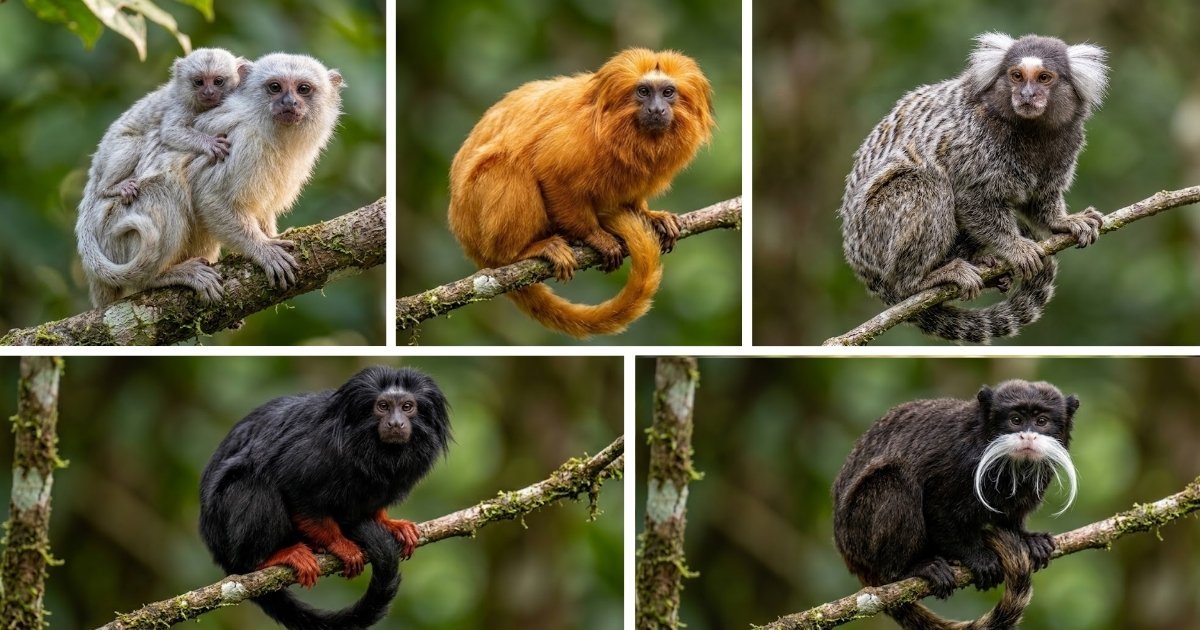
Imagine a world where monkeys are not only clever but also fit snugly in your backpack. Welcome to the world of small monkeys! Characterized by their petite body sizes and weights, these fascinating primates demonstrate incredible diversity across various species.
In this blog post, we delve into 13 specific types of small monkeys, showcasing the wonders of their behaviors and habitats. You’ll discover what makes these small primates so captivating, complemented by beautiful pictures to bring each type to life.
What Are Small Monkeys?
Small monkeys are adorable primates that generally weigh less than 25 pounds and can range from a mere foot in body length to nearly two feet, including their tails. What sets them apart from other small primates, like lemurs or lorises, is their classification within the monkey family; they are part of the New World monkeys, specifically found in Central and South America.
This distinction emphasizes their unique evolutionary background and social behaviors, which differ markedly from those of other small primate groups. The term “small” can refer not only to body length but also to weight or overall size, illustrating the diversity within this category. Take, for instance, marmosets and tamarins, which are among the tiniest, often weighing just a few ounces, or squirrel monkeys, known for their agility and playful nature.
Titi monkeys, too, grace the canopies with their charming bonds and expressive faces, showcasing the wonder of small monkeys. Each species offers a unique glimpse into the rich tapestry of primate life, reminding us of the intricate relationships and ecosystems in which these delightful creatures thrive.
Quick Table: Small Monkeys by Size, Weight And Region
| Monkey | Approximate Adult Size | Weight | Region |
|---|---|---|---|
| Pygmy Marmoset | 5–6 inches | 3–5 ounces | South America |
| Roosmalen’s Dwarf Marmoset | 6–7 inches | 5–6 ounces | South America |
| Silvery Marmoset | 10–12 inches | 11–15 ounces | South America |
| Common Marmoset | 8–14 inches | 11–18 ounces | South America |
| Cotton-Top Tamarin | 18–22 inches | 12–24 ounces | South America |
| Graells’s Tamarin | 15–18 inches | 14–22 ounces | South America |
| Golden Lion Tamarin | 18–24 inches | 17–25 ounces | South America |
| Red-Handed Tamarin | 15–19 inches | 12–22 ounces | South America |
| Squirrel Monkey | 16–24 inches | 14–25 ounces | South America |
| Talapoin Monkey | 16–22 inches | 5–8 pounds | Africa |
| Night Monkey | 14–18 inches | 12–20 ounces | Central/South America |
| Dusky Titi | 14–20 inches | 6–11 ounces | South America |
| Capuchin Monkey | 16–24 inches | 7–13 pounds | Central/South America |
Exploring the world of monkeys uncovers a tapestry of biodiversity, particularly in the rich landscapes of South America. The pygmy marmoset, one of the smallest primates, captivates with its diminutive size and vibrant agility, while the golden lion tamarin showcases the brilliant hues of the Amazon, both illustrating the fascinating adaptations that have evolved in response to their environments.
Each species carries unique traits, from vocalizations to social structures, revealing the intricate social lives these creatures maintain. The talapoin monkey of Africa offers a glimpse into an entirely different ecological niche, illustrating that the diversity of primates isn’t confined to South America. Adaptations such as nocturnality in night monkeys or the impressive arm strength of squirrel monkeys facilitate survival in varied habitats.
13 Types Of Small Monkeys
| # | Monkey Name |
|---|---|
| 1 | Pygmy Marmoset |
| 2 | Roosmalen’s Dwarf Marmoset |
| 3 | Silvery Marmoset |
| 4 | Common Marmoset |
| 5 | Cotton-Top Tamarin |
| 6 | Graells’s Tamarin |
| 7 | Golden Lion Tamarin |
| 8 | Red-Handed Tamarin |
| 9 | Squirrel Monkey |
| 10 | Talapoin Monkey |
| 11 | Night Monkey |
| 12 | Dusky Titi |
| 13 | Capuchin Monkey |
Pygmy Marmoset
| Feature | Details |
|---|---|
| Scientific Name | Cebuella pygmaea |
| Diet | Insects, fruit, sap |
| Size | 5.5–6.3 inches (14–16 cm) |
| Weight | 3.5–5.5 ounces (100–150 g) |
The Pygmy Marmoset, often deemed the smallest monkey in the world, displays a strikingly cute form, characterized by its slender limbs, large eyes, and soft, fuzzy fur. Native to the lush canopies of the Amazon rainforest, these little primates are masterful acrobats, easily navigating the dense foliage in search of their favorite snacks, including insects and tree sap. They are the complete opposite of the biggest animals in the world.
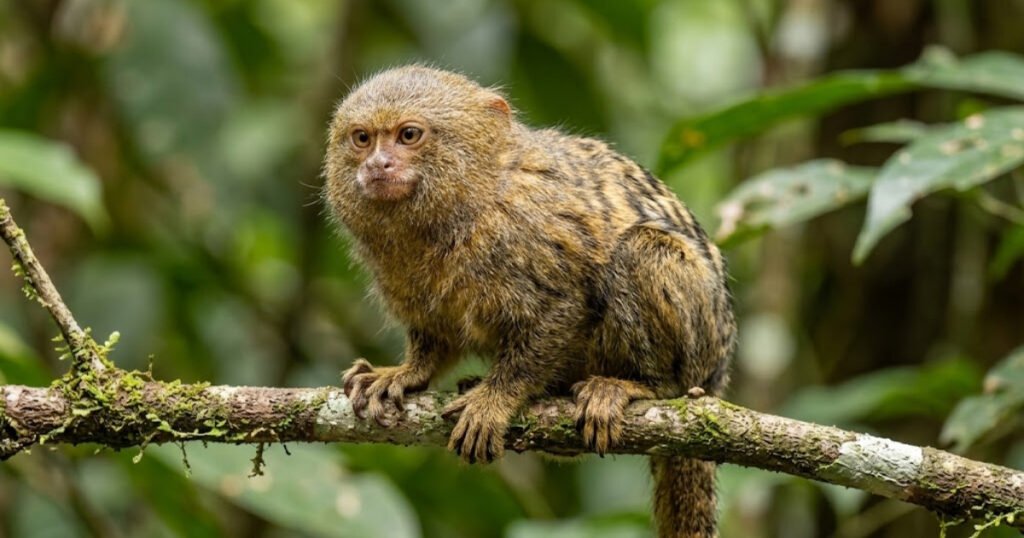
Their diminutive stature not only helps them avoid larger predators but also allows them to exploit food sources that larger monkeys might overlook. One fascinating aspect of the Pygmy Marmoset is their social structure. They typically live in small family groups, exhibiting complex social behaviors that include vocalizations and grooming.
This strong social bond is crucial for survival, as it aids in communication and reinforces their family unit. Interestingly, despite their size, these monkeys play a vital role in their ecosystem by helping in seed dispersal, which contributes to the health of their rainforest habitat.
Unfortunately, habitat loss and the illegal pet trade pose significant threats, highlighting the importance of conservation efforts to protect these enchanting creatures.
Roosmalen’s Dwarf Marmoset
| Trait | Details |
|---|---|
| Scientific Name | Mico roosmalenorum |
| Diet | Insects, fruits, and exudates |
| Size | Approximately 7–9 inches (body) |
| Weight | 3.5–4 ounces |
With its minute stature, Roosmalen’s Dwarf Marmoset, one of the world’s tiniest primates, captures attention not just for its size but also for its distinctive appearance. Sporting a striking coat with shades of brown and white, this diminutive creature navigates its sub-20-acre habitat in the dense rainforests of Brazil’s Amazon basin.
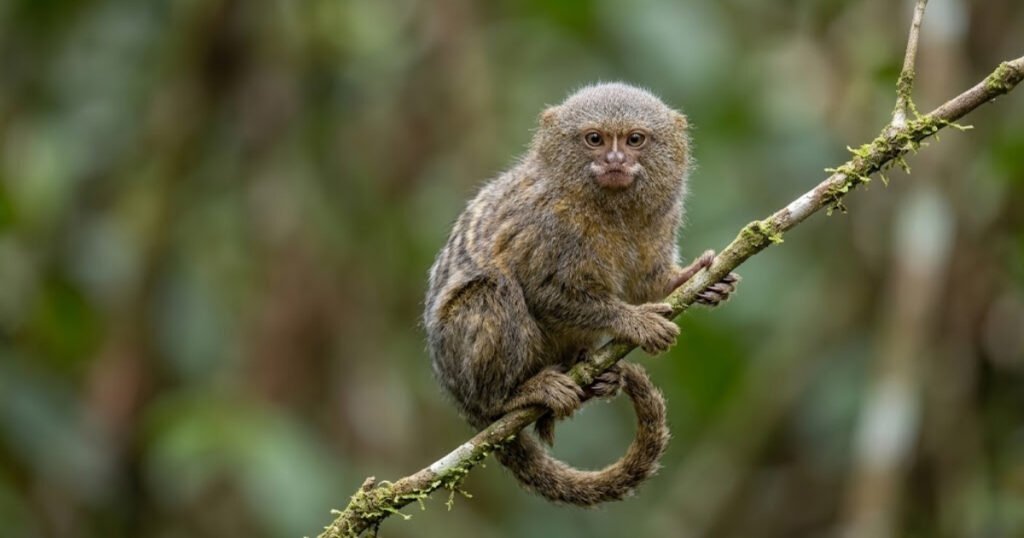
Its diet consists mainly of insects, but this tiny marvel also relishes fruits and the nutritious gum from tree barks, exhibiting an impressive ability to locate food in such a lush ecosystem. What sets the Roosmalen’s apart from its slightly larger cousin, the Pygmy Marmoset, is not just its size but also its social behavior; these monkeys often display complex vocalizations to communicate within their tight-knit family groups.
Their remarkable adaptability to this specific habitat, combined with an omnivorous diet, enhances their survival but also renders them vulnerable to habitat loss. A captivating fact about these little primates is their affectionate grooming rituals, which serve to strengthen social bonds among their family members.
Despite their charming demeanor, the destruction of their rainforest homes puts their conservation status at risk, making awareness and protection efforts crucial for their survival.
Silvery Marmoset
| Trait | Description |
|---|---|
| Scientific Name | Mico argentatus |
| Diet | Fruits, insects, small vertebrates |
| Size | 22–25 cm (8.7–9.8 in) |
| Weight | 450–800 grams (1–1.8 lbs) |
The silvery marmoset, with its striking silver fur and diminutive stature, is a stunning example of adaptation in the lush Amazonian landscape. Typically measuring just over 24 centimeters, these small monkeys possess the remarkable ability to navigate their dense forest habitat in search of fruits and insects, showcasing not just their physical agility but also their role as vital seed dispersers for various plant species.
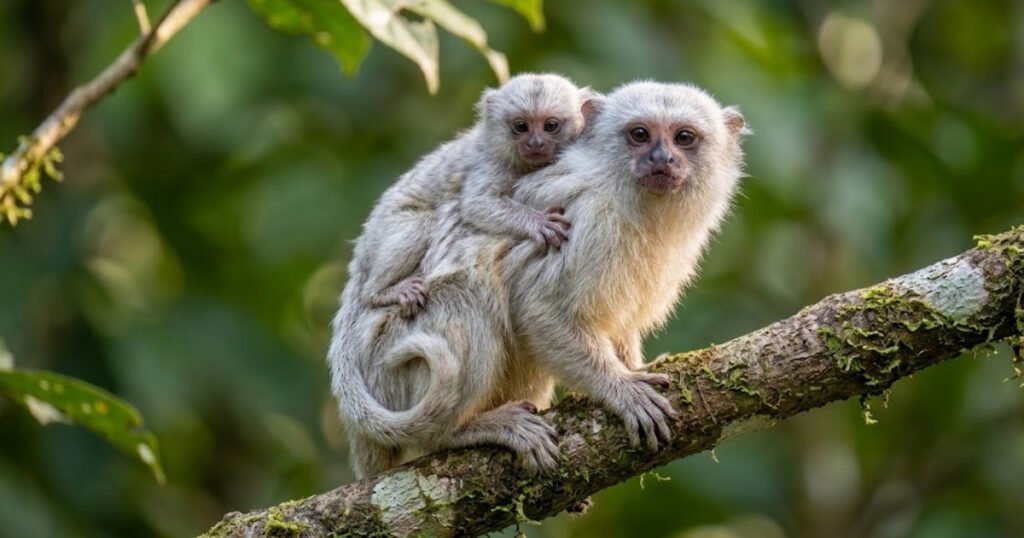
What truly sets the silvery marmoset apart is its intricate social behavior, often seen engaging in grooming and vocal communication to maintain group cohesion. This small primate thrives in family units, using its size to deftly access food sources that larger species might overlook.
One interesting fact is their unique grooming habits; they often engage in communal care practices, ensuring the health and well-being of their young, which emanates a deeper sense of kinship among the group. Unfortunately, habitat loss poses a significant threat to their population, prompting conservation efforts to preserve their rich Amazonian home.
Common Marmoset
| Feature | Details |
|---|---|
| Common Name | Common Marmoset |
| Scientific Name | Callithrix jacchus |
| Diet | Fruits, insects, and small vertebrates |
| Size (Length) | 7–9 inches |
| Weight | 5–8 ounces |
The Common Marmoset, with its striking ear tufts and diminutive size, thrives in the lush canopies of Brazil’s Atlantic Forest. This small monkey’s uniquely vibrant personality shines through in its dynamic social groups, which often include extended family units where grooming serves both as a hygiene practice and a bonding ritual, crucial for their social cohesion.
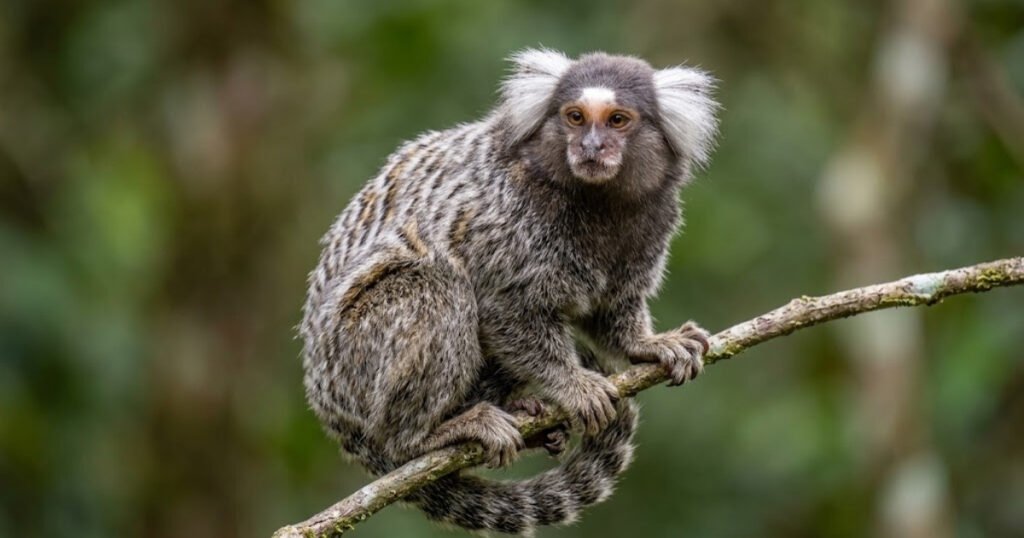
Their diet, primarily consisting of fruits and insects, showcases their adaptability in an ever-changing environment, as they skillfully navigate through the treetops searching for sustenance. What truly sets the Common Marmoset apart is its remarkably small stature, making it one of the tiniest primates on Earth. While they measure just 7-9 inches in length, their intelligence and curiosity pack a mighty punch.
These agile creatures possess a unique vocalization repertoire, often signaling danger or coordinating activities within their social groups. Conservation efforts remain essential, as deforestation threatens their habitats, yet their resilience and adaptability continue to inspire researchers and wildlife enthusiasts alike.
Cotton-Top Tamarin
| Trait | Detail |
|---|---|
| Scientific Name | Saguinus oedipus |
| Diet | Fruits, insects, and seeds |
| Size | About 24–28 cm (9–11 in) |
| Weight | 0.3–0.5 kg (0.66–1.1 lbs) |
The cotton-top tamarin is easily identifiable by its striking white crest, resembling a tiny, fluffy crown. These diminutive primates inhabit the tropical forests of Colombia, where their small size averaging just 24-28 cm enables them to skillfully navigate the dense foliage in search of fruit, insects, and seeds.
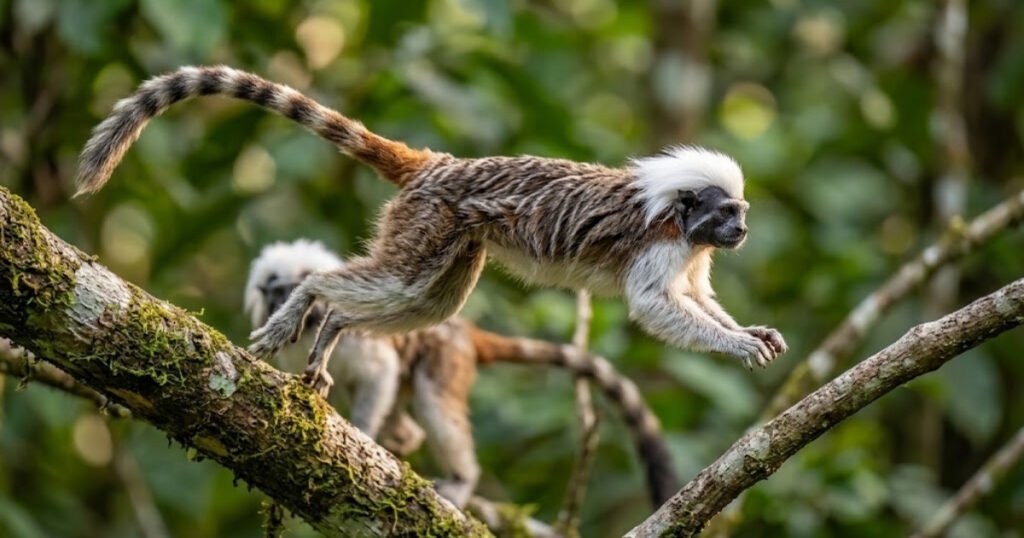
Socially, they are known for their affectionate dynamics, often seen huddling together or grooming one another, which strengthens their community bonds. Their reliance on specific habitats has made them increasingly vulnerable to deforestation and illegal pet trade.
Interestingly, the cotton-top tamarin is a prime example of how size can influence survival. Their petite stature allows them to thrive in niches unexplored by larger species, making them agile foragers in their forest homes.
One captivating fact is that these monkeys communicate using a range of vocalizations that can hold different meanings, showcasing their complex social interactions. As a result of habitat loss and poaching, the cotton-top tamarin is listed as Critically Endangered, underscoring the urgent need for conservation efforts to protect these charming creatures and their ecosystems. It is one of many rare animals that need our protection.
Graells’s Tamarin
| Characteristic | Detail |
|---|---|
| Scientific Name | Saguinus graellsi |
| Diet | Insects, fruits, nectar |
| Size | 10–12 inches (25–30 cm) |
| Weight | 1–1.5 pounds (0.45–0.68 kg) |
Graells’s Tamarin, with its striking golden-brown fur and expressive face, embodies the charm of small monkeys. These adorable primates, measuring only 10 to 12 inches in length, are agile inhabitants of the cloud forests of Peru and Bolivia.
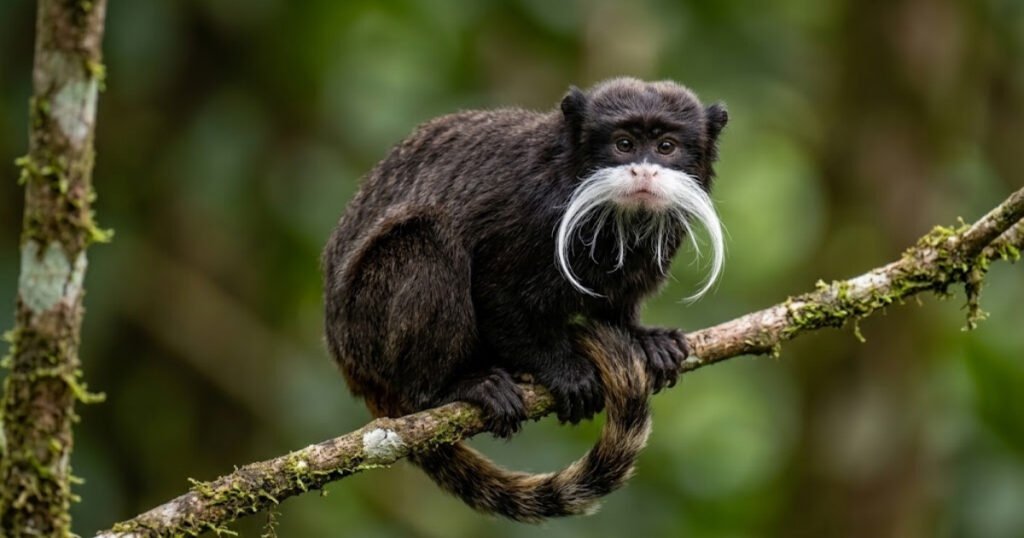
Their diet, primarily consisting of fruits, insects, and nectar, reflects their ecological role as both foragers and pollinators, showcasing the intricate web of life in their mountainous habitats. Unlike their larger relatives, they have evolved intricate social structures, often seen in family groups led by a dominant female, which highlights the importance of cooperation in their survival.
What makes Graells’s Tamarin exceptionally intriguing is their innovative foraging behavior. These monkeys exhibit remarkable dexterity, often employing tools to extract insects from crevices. This cognitive ability sets them apart from other tamarins, which may rely more on instinctual foraging.
One fascinating fact about Graells’s Tamarin is their vocal communication; they use a variety of calls to maintain group cohesion, reflecting a deeply social nature. Unfortunately, their status is classified as “Vulnerable” due to habitat loss and fragmentation, underscoring the urgent need for conservation efforts to protect these lively little primates and their rich ecosystems.
Golden Lion Tamarin
| Feature | Details |
|---|---|
| Species | Golden Lion Tamarin |
| Scientific Name | Leontopithecus rosalia |
| Diet | Fruits, insects, small vertebrates |
| Size | 24–26 cm (9.5–10 in) |
| Weight | 500–700 g (1.1–1.5 lbs) |
The Golden Lion Tamarin, with its striking golden-orange mane, stands out among small monkeys for its vibrant coloration and social intelligence. Found predominantly in the Brazilian Atlantic Forest, these tamarins thrive in the lush canopies, foraging for fruits, insects, and even small vertebrates, showcasing a diverse diet that reflects their adaptability.
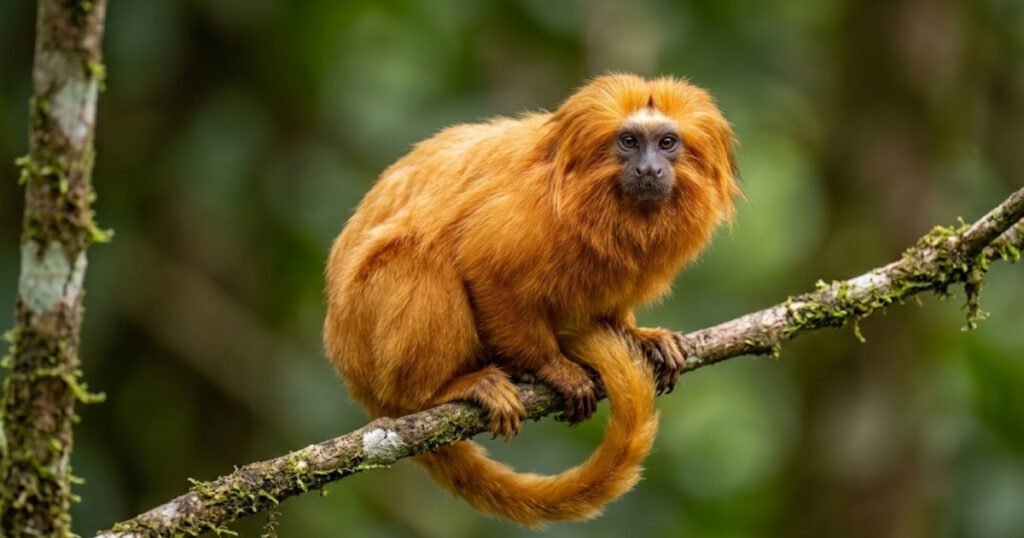
Their small size, coupled with a highly social nature, fosters complex group dynamics where communication and cooperation are essential for survival. What sets the Golden Lion Tamarin apart is not just its appearance but its role as a vital part of the ecosystem.
These primates exhibit an intriguing behavior of movement between trees, helping with seed dispersal, which can aid in forest regeneration. Despite their enchanting presence, they are classified as Critically Endangered due to habitat loss from deforestation and urban development.
One fascinating fact is that they were once close to extinction; however, conservation efforts, including habitat restoration and breeding programs, have led to a slow population recovery. The story of the Golden Lion Tamarin is not just one of survival, but of hope highlighting the importance of collective action in conservation efforts.
Red-Handed Tamarin
| Attribute | Details |
|---|---|
| Scientific Name | Saguinus midas |
| Diet | Fruits, insects, small vertebrates |
| Size | 10–15 inches (25–38 cm) |
| Weight | 1–1.5 pounds (0.45–0.68 kg) |
The Red-Handed Tamarin, known for its striking red-orange hands and feet, is a delightful visual marvel in the treetops of Central and South America. With a body length of just 10 to 15 inches, this small monkey emphasizes agility and adaptability. Their lush, tropical habitat stretches across the Amazon rainforest, where these tamarins exhibit a diverse diet, ranging from fruits to insects, demonstrating their omnivorous nature.
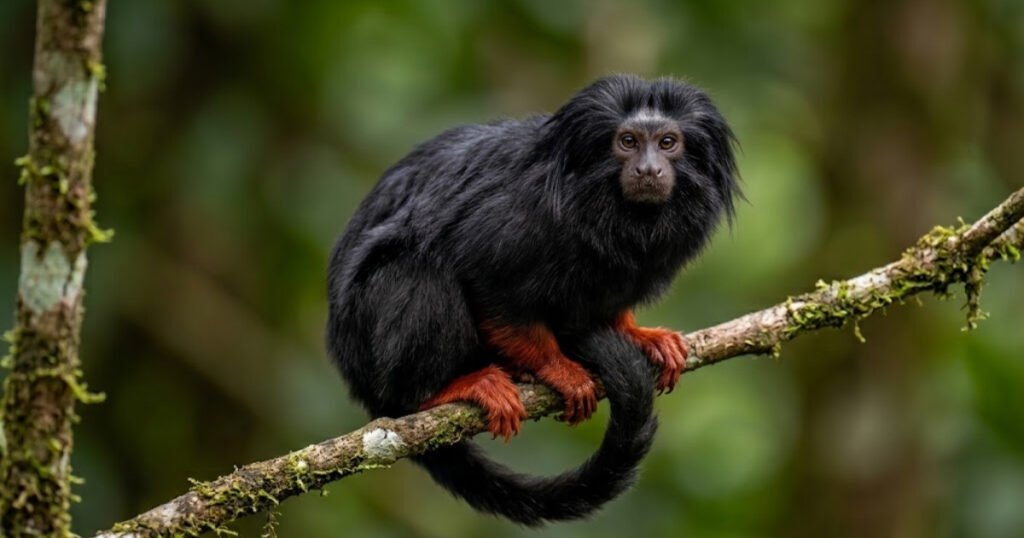
In social contexts, Red-Handed Tamarins exhibit fascinating group behaviors, often traveling in family units that enhance their chances of survival. Their vocal communication includes a range of chirps and whistles, forming a complex social network. Uniquely compact, their size allows for swift navigation through dense tree canopies, enabling them to evade predators effectively.
An intriguing fact about these little creatures is their ability to mirror each other’s movements, a behavior that fosters strong social bonds. While conservation efforts are essential due to habitat loss, their adaptability shows promise for survival in changing environments.
Squirrel Monkey
| Characteristic | Details |
|---|---|
| Common Name | Squirrel Monkey |
| Scientific Name | Saimiri sciureus |
| Diet | Fruits, insects, small vertebrates |
| Size | 25–30 cm (10–12 in.) |
| Weight | 750–1,200 g (1.5–2.6 lbs) |
Squirrel monkeys are enchanting little creatures with distinct facial markings like a natural mask that give them a curious and attentive appearance. Typically found in the tropical forests of Central and South America, their size allows them to deftly navigate the branches, where their diet consists mainly of fruits, insects, and even small vertebrates.
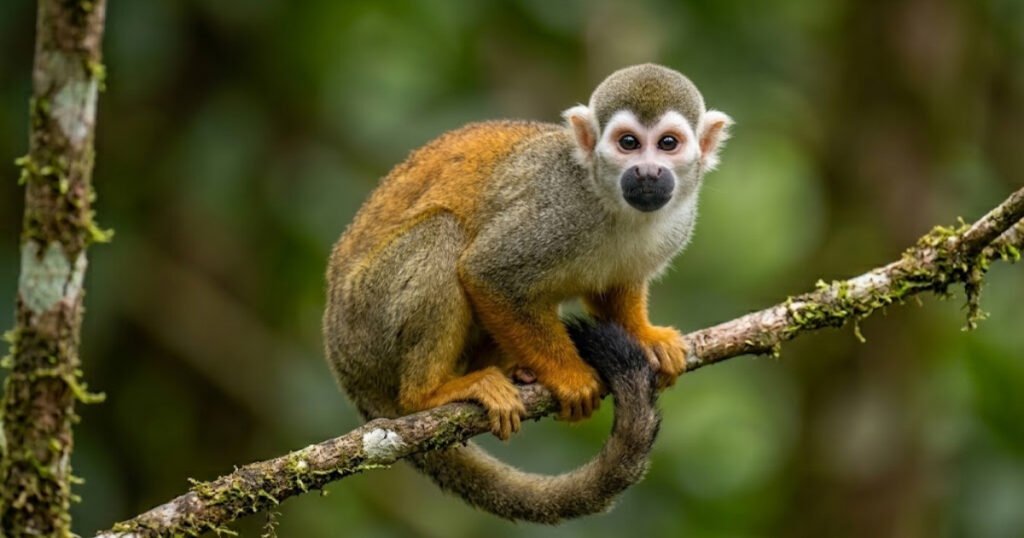
These small primates typically weigh around 750 to 1,200 grams, showcasing that their petite stature doesn’t hinder their lively and energetic behavior. Their playful nature often captivates observers, making them a delightful presence in both the wild and zoos. For more high-octane species, see our list of the most energetic animals.
Their geographic range spans from Costa Rica to Brazil, where they thrive in the dense canopies of rainforests. Squirrel monkeys exhibit fascinating social behaviors, often living in large troops that contribute to their dynamic interaction. What truly underscores their “smallness” is not just their physical dimensions but also their nimble agility, which enables them to access food sources that larger animals cannot.
These monkeys have strong maternal bonds; mothers often carry their infants on their backs, ensuring protection and warmth. While the IUCN lists them as Least Concern, habitat loss remains a significant threat, underscoring the need for conservation efforts to preserve their tropical homes.
Talapoin Monkey
| Feature | Details |
|---|---|
| Common Name | Talapoin Monkey |
| Scientific Name | Miopithecus talapoin |
| Diet | Fruits, seeds, insects |
| Size (Length) | 12–17 in (30–43 cm) |
| Weight | 1.5–3.5 lbs (0.7–1.6 kg) |
The Talapoin monkey, a gem of West Africa, stands out with its petite stature. With a body length ranging from just 12 to 17 inches, this small primate thrives in the dense swamps and forests of the region. Its diet is a fascinating mix of fruits, seeds, and insects, showcasing its adaptation to both arboreal and terrestrial environments.
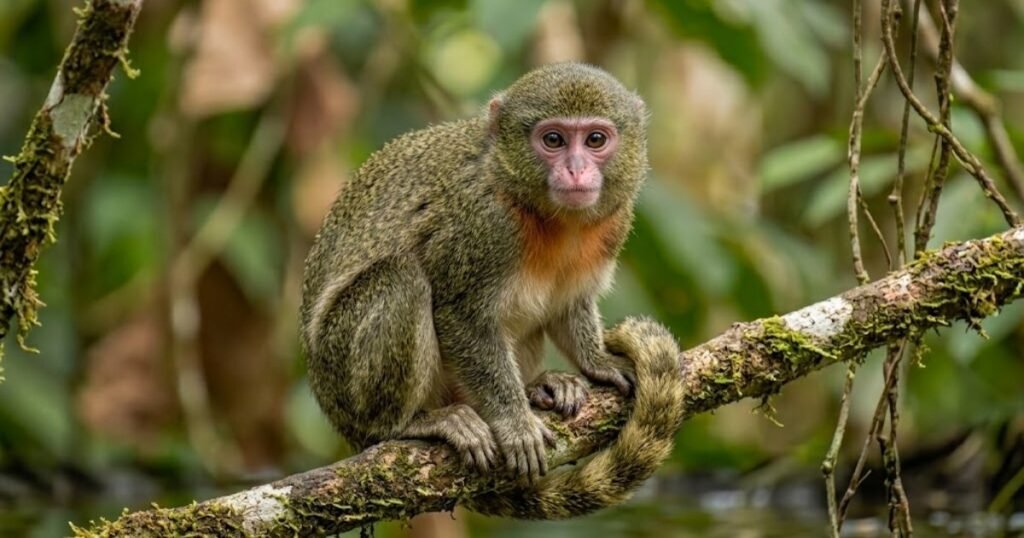
Notably, Talapoin monkeys live in social groups, which facilitates intricate grooming behaviors and vocal communications essential for their survival. Their striking physical features include a slender frame, large expressive eyes, and a unique dark coat tinged with lighter shades around the face.
This diminutive size not only makes them charming but also serves an adaptive purpose; being small allows them to navigate through dense undergrowth and elude larger predators more effectively. One interesting fact about Talapoin monkeys is their distinct ability to leap between trees with remarkable agility a behavior that enhances foraging efficiency and strengthens social bonds.
Night Monkey
| Feature | Details |
|---|---|
| Species | Night Monkey |
| Scientific Name | Aotus spp. |
| Diet | Fruits, insects, and small vertebrates |
| Size | 15–18 inches |
| Weight | 1.5–2.5 lbs |
The Night Monkey, also known as the owl monkey, captivates with its striking large eyes, perfectly adapted for nocturnal life. These small primates dwell in the rainforests of Central and South America, where their secretive lifestyle sets them apart from other small monkey species.
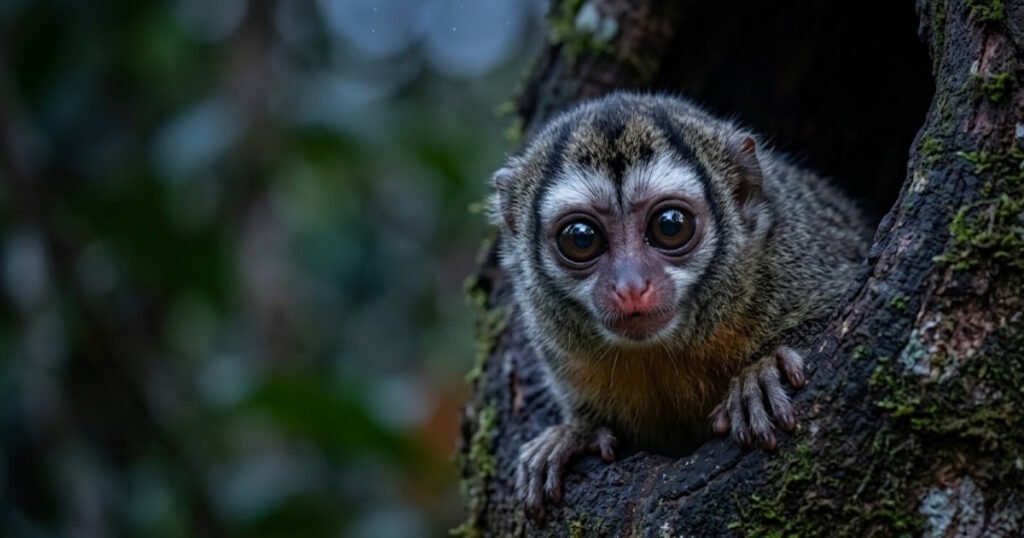
Unlike their more gregarious daytime counterparts, Night Monkeys have developed a solitary and silent approach to foraging, thriving on a diet rich in fruits, insects, and even small vertebrates. This unique nocturnal behavior not only minimizes competition for resources but also allows them to avoid daytime predators. If you enjoy secretive, low-key creatures, you may also like these quiet animals.
Physically, these monkeys measure between 15 to 18 inches, with an additional tail that can be as long as their body, making them agile climbers in the dense canopies they inhabit. Despite their small size, Night Monkeys exhibit fascinating social structures, often living in pairs or small family groups. Their captivating social lives challenge the notion that smaller animals must always be more vulnerable in the wild.
An interesting tidbit: Night Monkeys are among the few primates that are truly nocturnal, making their adaptations to low-light conditions remarkable. As their habitats face encroachment and deforestation, understanding their role in the ecosystem becomes critical for conservation efforts.
Dusky Titi
| Feature | Details |
|---|---|
| Scientific Name | Callicebus moloch |
| Diet | Fruits, leaves |
| Size | 30–50 cm (12–20 in) |
| Weight | 1.5–2.5 kg (3.3–5.5 lbs) |
Dusky titis, with their soft fur and expressive faces, inhabit the dense forests of South America, primarily in regions of Brazil. Their small size makes them adept at maneuvering through the canopy, where they forage for fruits and leaves, forming a crucial part of the rainforest ecosystem.
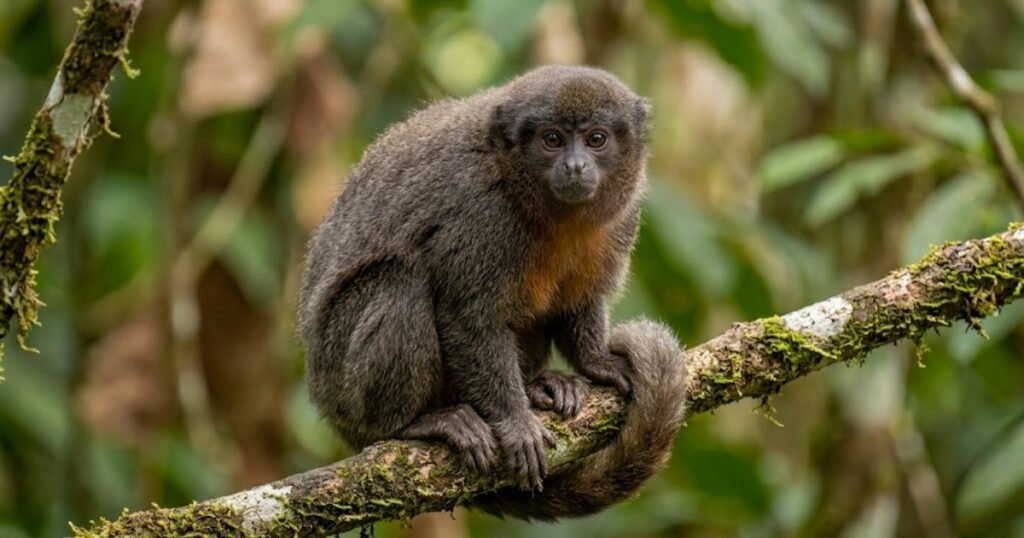
The dusky titi showcases remarkable pair-bonding behavior, often seen cuddling with their mates, which reinforces their strong social ties and protects their young from predators. These monkeys are distinguished by their striking coloration; their ruffled dark fur contrasts beautifully against the lush green backdrop of their environment.
Their small stature not only allows them to evade larger predators but also positions them within the intricate web of forest life, playing vital roles as seed dispersers. Dusky titis communicate through a series of soft calls that echo through their habitat, reflecting their social cohesion. While they face threats from habitat destruction, conservation efforts are underway to protect these charming primates and their vibrant rainforest homes.
Capuchin Monkey
| Feature | Details |
|---|---|
| Monkey | Capuchin Monkey |
| Scientific Name | Cebus capucinus |
| Diet | Fruits, nuts, insects |
| Size | 16–25 inches |
| Weight | 4–9 pounds |
The Capuchin monkey, widely recognized for its striking intelligence and dexterous hands, stands out in the small monkey category. Compared to larger primates, it possesses a relatively petite size, typically measuring between 16 to 25 inches in length, yet it’s distinctly larger than the marmosets and tamarins, which are considered the smallest primates.
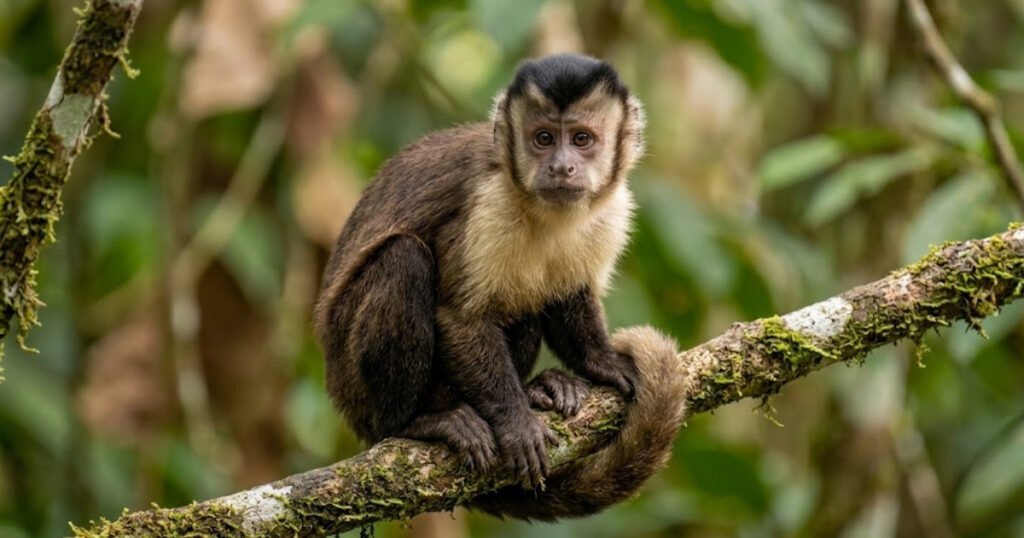
Found predominantly in Central and South America, these monkeys thrive in diverse habitats, from rainforests to savannas, demonstrating their adaptability and resourcefulness. Socially, Capuchins are dynamic and engaging, often seen in groups where they exhibit cooperative behaviors such as grooming and food sharing, enhancing their community bonds.
It’s interesting to note their remarkable cognitive abilities; they are known to use tools, showcasing a level of problem-solving skills that rivals some primates. Despite their classification as ‘small’ monkeys, their intelligence and engaging behaviors grant them a significant presence within their ecosystems and human interactions, making them a captivating species worthy of conservation efforts.
Small Monkeys Vs Other Small Primates
When we think of small primates, it’s easy to lump them all together as “monkeys,” but this designation overlooks the rich diversity of primate taxonomy. Not every tiny primate belongs to the monkey family; in fact, the term “primate” encompasses a broader range of species, including lemurs, tarsiers, and lorises.
While monkeys typically belong to two subgroups Old World and New World monkeys other small primates like tarsiers and galagos fall under the prosimians classification, marking significant differences in their anatomy and behavior.
Tarsiers, often mistakenly labeled as monkeys due to their small size and primate status, have distinct traits that set them apart. These nocturnal creatures possess unique adaptations, such as their enormous eyes, specialized limb structure, and a diet focused mainly on insects. This divergence from typical monkey morphology and lifestyle highlights an evolutionary pathway shaped by different environmental pressures.
| Feature | Monkeys | Tarsiers |
|---|---|---|
| Classification | Anthropoids | Prosimians |
| Eyes | Smaller, typically forward-facing | Large, round, adapted for nocturnal vision |
| Diet | Omnivorous | Insectivorous |
| Social Structure | Often live in social groups | Usually solitary or live in pairs |
| Limb Structure | Varied, often prehensile | Specially adapted for leaping |
Small Monkeys For Pets: Can You Keep Them?
The allure of small monkeys for pets often stems from their playful demeanor and social nature, drawing potential owners in with visions of cute antics. The reality of caring for these creatures is far more complex than one might think. Despite their small size, monkeys require intricate social structures, specialized diets, and tailored environments that mimic their natural habitats.
They thrive in social groups, and keeping a solitary monkey can lead to severe behavioral issues, reflecting the crucial need for companionship often overlooked by prospective owners. The legal landscape surrounding small monkeys for pets varies dramatically by region, with many areas imposing strict regulations or outright bans on keeping primates as pets.
This adds another layer of complexity, as potential owners must navigate not only legality but also ethical considerations surrounding animal welfare. The specialized care required ranging from dietary needs to mental stimulation cannot be understated, as monkeys are incredibly intelligent and can develop problems without proper social interaction and environmental enrichment.
Ultimately, while small monkeys may seem like delightful household companions, they demand a level of commitment and understanding that far exceeds typical pet ownership. If you want a companion that is naturally sociable and easier to care for, explore our list of friendly animals.
Where Do Small Monkeys Live?
South American Rainforests: Small monkeys such as tamarins and marmosets thrive in the lush, dense rainforests of South America. These environments provide ample foliage and fruit, which are essential for their foraging lifestyle.
Amazon Basin: The Amazon Basin is particularly vibrant for small monkeys due to its vast biodiversity and rich food sources. Species like the golden lion tamarin flourish here, showcasing adaptations that enable them to navigate the complex structure of the forest.
Tropical Forests: Tropical forests across Central and South America serve as important habitats for a variety of small monkey species. These forests, characterized by their warm temperatures and high rainfall, nurture a wealth of food resources.
African Forests for Species Such as Talapoins: In the dense African forests, species like talapoins make their homes where the underbrush is rich with food and cover. Their habitat allows them to engage in complex social behaviors while staying hidden from larger predators.
How Do Small Monkeys Survive In The Wild?
Group Living: Small monkeys thrive in the wild by forming strong social bonds within their groups, which can consist of a few to several dozen members. This social structure provides safety in numbers, allowing them to deter predators and share responsibilities like foraging and child-rearing.
Communication: These primates utilize a rich tapestry of vocalizations, body language, and facial expressions to convey information among their peers. Specific calls alert others to danger or the presence of food, while grooming rituals strengthen social bonds and reduce stress.
Climbing and Jumping: Small monkeys are natural acrobats, expertly navigating their arboreal habitats through impressive climbing and jumping skills. Their adaptations, such as lightweight bodies and strong limbs, enable them to leap between branches in pursuit of food and to escape from predators.
Camouflage: Many species exhibit colors and patterns that blend seamlessly with their surroundings, offering an advantage in evading both predators and prey. To see how other species do this, read our guide on animal camouflage. By utilizing foliage and natural textures, they make themselves less visible, allowing for safer foraging and resting.
Feeding Strategies: Small monkeys employ varied feeding strategies to optimize their food intake, ranging from foraging in groups to exploiting seasonal food sources. Their diet often includes fruits, leaves, and insects, with some species exhibiting tool use to access difficult-to-reach foods.
Predator Avoidance: To evade predators, small monkeys have developed sharp instincts and strategies, such as staying alert during foraging and relying on their strong social structure for warning signals. They often use vocal alarms and quick movements to navigate danger and seek refuge in the canopy.
Social Cooperation: The essence of their survival lies in social cooperation, where individuals work together to nurture young, share food, and defend their territory. This collaboration fosters resilience within the group, enabling them to face challenges, such as food shortages or predator threats.
Conclusion
The world of small monkeys is both diverse and fascinating, showcasing a variety of species that range in body size and weight. When we refer to these charming small primates, we often highlight their intricate behaviors and vibrant habitats.
The 13 types of small monkeys introduced here each possess unique traits that make them captivating subjects of study and admiration. These nimble creatures not only enrich our understanding of biodiversity but also remind us of the importance of conservation efforts.
FAQs
What Are Little Monkey Breeds?
Little monkey breeds, often referred to as “pet monkeys,” include species like the Marmoset and Pygmy Marmoset, which are known for their small size and playful nature. These monkeys require specialized care and socialization, making them a significant commitment for potential owners.
What Is A Small Monkey Called?
A small monkey is commonly referred to as a “marmoset” or “tamarin.” These primates are known for their diminutive size and playful behavior, making them popular in both the wild and as pets.
What Is The Smallest Monkey?
The smallest monkey is the pygmy marmoset, weighing only about 4 to 5 ounces and measuring around 5 to 6 inches long. Native to the rainforests of South America, they are known for their incredible agility and tiny size.
What Is The Full Grown Smallest Monkey In The World?
The world’s smallest fully grown monkey is the pygmy marmoset, measuring just about 5.2 to 6.3 inches in length. These tiny primates weigh approximately 4 to 5 ounces and are native to the rainforests of South America.
What Are Some Tiny Monkey Breeds?
Some tiny monkey breeds include the Pygmy Marmoset, the world’s smallest monkey, and the Finger Monkey, known for its small size and playful nature. These adorable primates typically weigh less than a pound and are found in the rainforests of South America.
What Are The Different Types Of Small Monkeys?
Small monkeys typically include species like marmosets, tamarins, and squirrel monkeys. These primates are known for their playful behavior, social structures, and diverse habitats across Central and South America.
What Are the Types of Small Monkeys for Pets?
Some popular small monkey breeds for pets include the marmoset, capuchin, and squirrel monkey. It’s crucial to note that keeping monkeys requires significant commitment and specialized care, making them suitable only for experienced owners.