Fluke Vs Flounder: All You Need To Know About These Flatfish
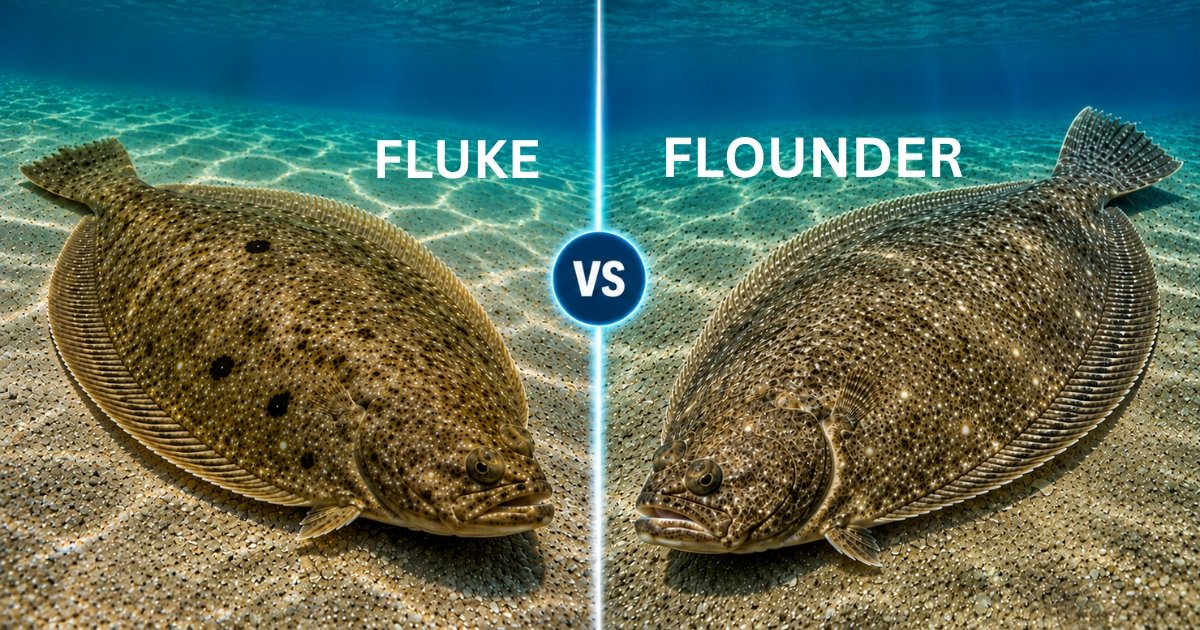
Many seafood lovers often get fluke and flounder mixed up, leading to questions about the difference between these two popular species. Fluke fish, commonly referred to as summer flounder in the Atlantic, are an intriguing catch with distinct characteristics.
In this blog post, we’ll dive into the appearance, habitat, distribution, taste, and cooking techniques for these flatfish. By the end, you’ll be equipped with a comprehensive understanding of fluke vs flounder, making your next seafood experience more flavorful and informed.
What Is Fluke Fish?
Fluke fish, also known as Paralichthys dentatus, is a type of flatfish that has captured the fascination of anglers and marine enthusiasts alike. These remarkable creatures are characterized by their distinctly flattened bodies, with both eyes situated on one side, allowing them to blend seamlessly into the ocean floor.
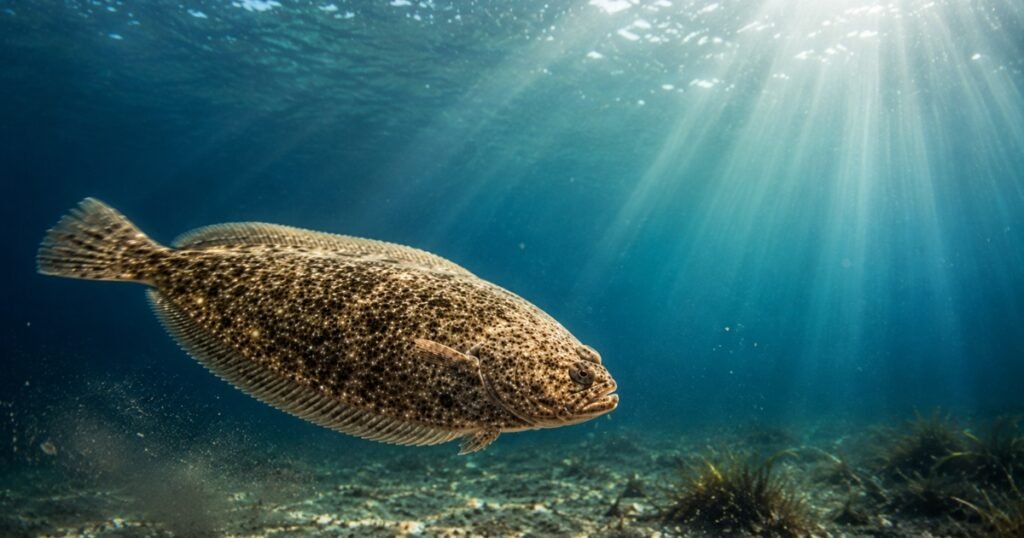
This adaptation is not just for camouflage; it also makes them efficient hunters as they lie in wait for unsuspecting prey. Flukes are often found in coastal waters, particularly over sandy and muddy bottoms, ensuring that they remain well-hidden from potential threats as they ambush small fish and invertebrates.
In terms of appearance, fluke fish stand out with their oval-shaped, compressed bodies that can reach lengths of up to 30 inches. Their coloration typically includes tones of brown and green, speckled with lighter hues to enhance camouflage against the seabed.
A fluke’s mouth is filled with small teeth, adequate for capturing slippery prey, while their streamlined shape contributes to agile movement. The term “fluke” may cause confusion because it can refer to various things, it is unequivocally a fish within its specific marine context.
Understanding these attributes not only enriches our appreciation for this unique species but also aids in distinguishing fluke from other flatfish family members in the diverse underwater ecosystem.
What Is Flounder Fish?
Flounder fish, a flatfish belonging to the family Paralichthyidae, is renowned for its unique morphology and adaptive coloration. Found primarily in the coastal waters of the North Atlantic and North Pacific, these fascinating creatures exhibit a remarkable ability to blend seamlessly into sandy or muddy seabeds, a strategy crucial for both ambush predation and evasion from larger predators.
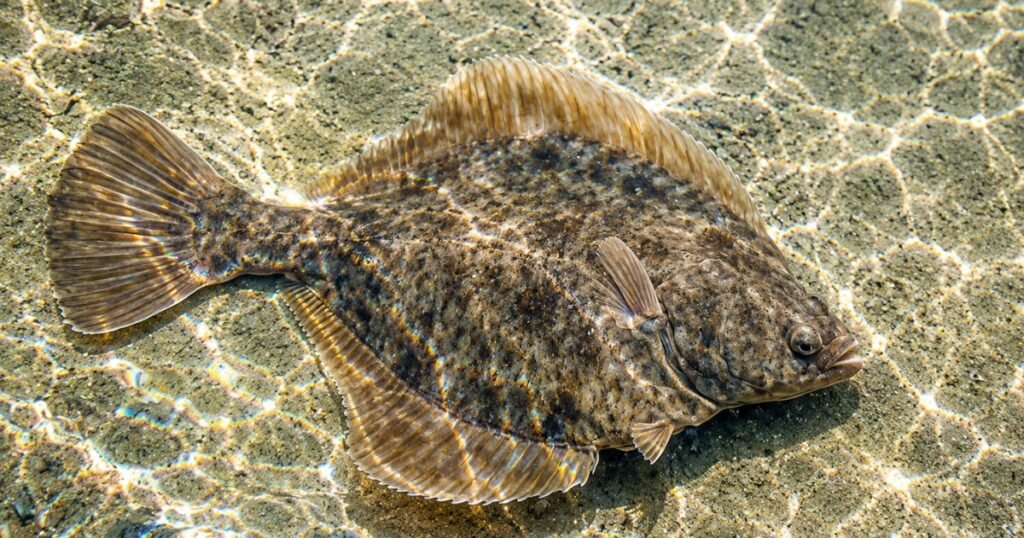
Their flattened bodies, with both eyes positioned on one side, evolve as a response to their benthic lifestyle, allowing them to lie nearly invisibly among marine substrates. Nutritionally, flounder is a treasure trove, packed with high-quality protein and low in fat, making it a popular choice among health-conscious diners.
Beyond its culinary appeal, flounder’s life cycle presents a fascinating cusp of transformation; larvae swim upright before gradually adapting to their distinctive flat shape as they mature.
Engaging with flounder in both culinary and ecological contexts can deepen our appreciation for this unique species, reminding us of the intricate balance of marine ecosystems and the roles even the most unassuming fish play in preserving biodiversity.
What’s the Difference Between Fluke and Flounder?
Flounder is a broad common name that encompasses various species of flatfish, while fluke specifically refers to the summer flounder, a type of flounder prized by anglers and chefs alike.
Both fish exhibit a distinctive flattened body shape, but fluke often has a more robust silhouette and a slightly asymmetrical appearance due to the positioning of its eyes typically, flounder may have differing orientations depending on the species, while fluke generally maintains a consistent left-eyed position.
When it comes to color, fluke flaunts a striking pattern with a dark brown or olive top and a lighter underside, often with distinctive spots, while many flounders present themselves in more muted shades suited to their environments.
In terms of habitat, fluke thrive in the warm waters of the Atlantic Coast, primarily from Maine down to North Carolina, whereas other flounders can be found across a wider range of coastal waters worldwide.
Fluke can grow larger than many flounder species, often reaching sizes of up to 25 inches, and they mainly feast on smaller fish and crustaceans. The fishing techniques used to catch fluke contrast with those for other flounders, often involving specialized rigs that entice them to bite.
When it comes to culinary uses, fluke is favored for its delicate, flaky texture and mild flavor, making it a popular choice for grilling or pan-searing, while other flounder varieties may be more commonly found in classic dishes like fish tacos or rich stews.
Fluke VS Flounder: Side-by-Side Comparison
Fluke and flounder are two of the most commonly confused flatfish in the ocean. While they look almost identical at first glance, there are key differences that set them apart. From fluke vs flounder eyes to fluke vs flounder taste, understanding these differences can help you identify, catch, and cook them like a pro. Let’s dive into a complete side-by-side comparison of these two fascinating flatfish.
| Feature | Fluke | Flounder |
| Fish type | Flatfish | Flatfish |
| Common name | Fluke / Summer Flounder | Several species |
| Body shape | Flat and oval | Varies by species |
| Eye position | Both eyes on one side | Both eyes on one side |
| Habitat | Coastal marine waters | Marine/coastal habitats |
| Diet | Fish, squid, crustaceans | Depends on species |
| Taste | Mild and delicate | Mild, varies by species |
| Cooking | Frying, baking, broiling | Frying, baking, broiling |
Fluke VS Flounder: Key Differences At A Glance
One of the biggest misconceptions in the fishing community is that fluke and flounder are interchangeable terms for the same fish. While all fluke (specifically the summer flounder) belong to the flatfish family, not every flounder falls into the fluke category.
Flounder is a broader term that encompasses various species, including the well-known winter flounder. This distinction is crucial for both fishermen looking to catch specific types and chefs eager to showcase the unique flavors and textures of each.
Common names can often mislead both amateur anglers and culinary enthusiasts. For instance, the scientific classifications of these fish reveal a more complex relationship than the vernacular implies. Fishermen are likely to adopt regional dialects that can sow confusion; for example, one area may refer to flatfish as flounder, while another uses fluke.
This nuance is also reflected in the culinary world, where a chef might reserve the title “fluke” for its distinctive taste and presentation, while categorizing other flatfish under the umbrella of flounder.
Fluke VS Flounder: How To Tell Them Apart
Fluke and flounder look nearly identical, but small physical differences set them apart. From eye placement and body shape to color and mouth structure, knowing what to look for makes identification easy. Location alone is not always enough, so here is everything you need to tell them apart.
This kind of subtle physical detective work isn’t limited to fish either, even distinguishing between individuals of the same species can require a keen eye, as shown in our guide on male vs female axolotl identification.
Physical Identification: Differentiating fluke from flounder can start with their distinct physical attributes. Fluke, also known as summer flounder, typically presents a larger, more triangular shape. Their bodies are broader and more flattened compared to the flatter, oval shape of flounders.
Eye Placement: The most telling signs is eye placement. Fluke have both eyes on the right side of their bodies, while many flounder species, such as the left-eye flounder, have their eyes on the left side.
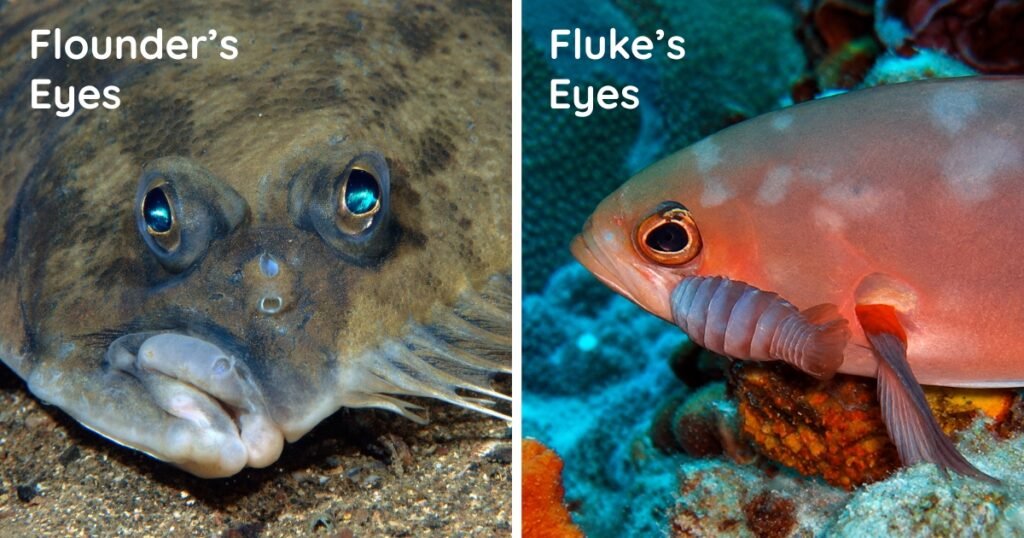
Body Proportions: Fluke generally exhibit more elongated bodies with a deeper torso, giving them a sleek and streamlined appearance. In contrast, flounders tend to have a more robust and squat silhouette. When you examine the fish up close, these proportions become apparent and are essential for anglers wanting to identify their catch accurately.
Color: Coloration further distinguishes these two species. Fluke usually display a mottled brown or olive hue that blends well with the sandy seafloor, providing excellent camouflage. Flounders may exhibit more varied and vivid patterns, including spots and stripes, often making them visually striking.
Mouth Structure: The mouth structure of these species also differs markedly; fluke have a more pronounced jaw that extends past the eyes, allowing for a bigger bite. Flounders, however, have smaller mouths that may not extend as far, which can help identify them when observed closely.
Location Caught: Location plays a significant role in identification, as certain areas are more likely to house either fish. Fluke are typically found in deeper waters, particularly off the coast, while flounders prefer shallower, coastal bays and estuaries.
Species Identification Tips: When trying to identify your catch, keeping a mental checklist can be invaluable. Note not only the physical characteristics mentioned but also consider the time of year and local species habits. It’s helpful to refer to a field guide or app for quick references.
Is Fluke a Fish?
Yes, fluke is a fish. It is a marine flatfish commonly known as summer flounder.
Fish Classification: Fluke belongs to the family Paralichthyidae and is classified under the order Pleuronectiformes, which includes various species of flatfish. These fish are primarily characterized by their asymmetry, where one side becomes the “working” side while the other is adapted for camouflage. As a marine fish, fluke thrives in saltwater environments, showcasing the rich biodiversity of coastal ecosystems.
Flatfish Characteristics: What sets fluke apart is its distinctive flat body, allowing it to blend seamlessly with sandy or muddy seabeds. This body shape not only makes it an efficient predator but also a master of disguise against potential threats. A remarkable feature of flatfish like fluke is their coloration, which often mimics the surrounding substrate to evade detection from both prey and predators.
Adaptations for Bottom-Dwelling Life: Fluke are quintessential bottom dwellers, possessing adaptations that facilitate their lifestyle. Their flattened bodies enable them to lie nearly flush against the ocean floor, where they wait patiently for unsuspecting prey such as small fish and invertebrates.
Is Flounder A Fish?
Yes, flounder is indeed a fish. This unique creature belongs to the order Pleuronectiformes, commonly referred to as flatfish, characterized by their distinctive flattened bodies.
Fish Classification: Flounder falls under the class Actinopterygii, which encompasses ray-finned fishes. Within this classification, flounders are part of several families, including Paralichthyidae and Bothidae, highlighting the remarkable diversity in this group.
Flatfish Characteristics: Flounders possess an unmistakable asymmetrical body; both eyes are located on one side, which allows them to lie flat against the ocean floor. This unique adaptation sets them apart from most fish, giving them an unparalleled camouflage ability against predators.
Adaptations for Bottom-Dwelling Life: To thrive on the ocean floor, flounders have evolved several specialized features. Their flattened shape reduces resistance as they glide along the seabed, while their ability to burrow into sand provides excellent protection from threats.
Winter Flounder VS Summer Flounder
Winter flounder and summer flounder are closely related flatfish with distinct differences in appearance, habitat, and seasonal behavior. Understanding these differences can help you easily identify each species and know what makes them unique.
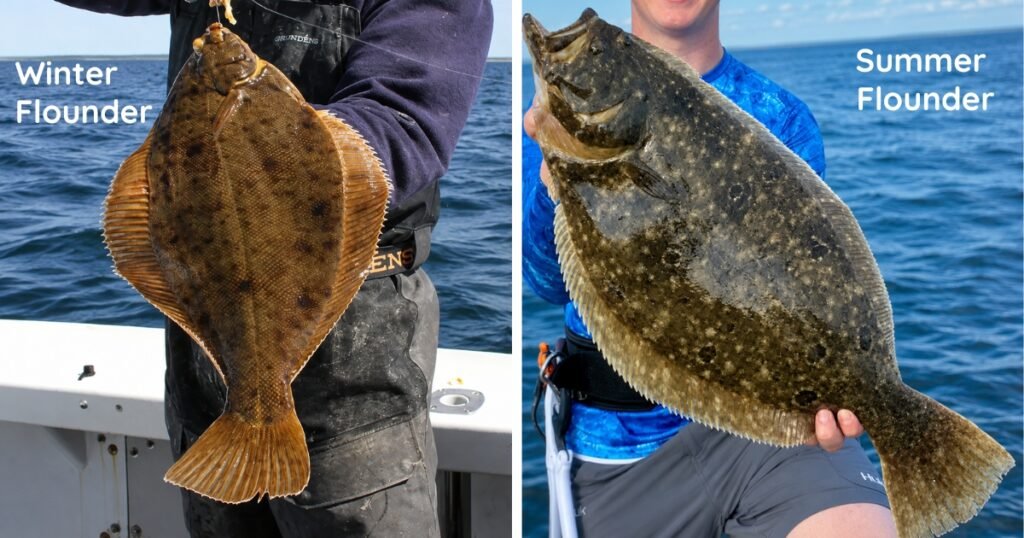
Species Names: Winter flounder is scientifically known as Pseudopleuronectes americanus, while summer flounder is referred to as Paralichthys dentatus. Their names reflect their peak activity periods, with winter flounder often caught in colder months and summer flounder available during warmer seasons.
Appearance: At first glance, winter and summer flounders may seem similar, but subtle differences set them apart. The winter flounder has a more oval body shape, while the summer flounder exhibits a more elongated and flattened appearance.
Eye Orientation: The most distinctive features is the orientation of their eyes. Winter flounder have their eyes located more on the upper side of their body, giving them a less protruded appearance compared to the more prominent eyes of the summer flounder, which are better adapted for ambushing prey.
Body Shape: Winter flounder’s slightly rounder shape allows it to maneuver effectively in muddy substrates, while the elongated body of the summer flounder aids in swift movements through sandy bottoms where it typically hides.
Color: Color plays a crucial role in their camouflage. Winter flounders sport a darker, mottled brown coloration, perfect for blending into mud. In contrast, summer flounders exhibit a more vibrant pattern, often ranging from light brown to olive green, which mimics the sandy ocean floor, enhancing their ability to ambush unsuspecting prey.
Preferred Water Temperature: Winter flounders thrive in cooler waters ranging from 34°F to 50°F, making them more active during the colder months. Summer flounders, however, prefer warmer waters, typically between 60°F and 75°F, aligning their breeding and feeding behaviors accordingly.
Habitat: Geographically, winter flounders are often found in the northeastern coastal waters, preferring estuaries and deeper bays. Summer flounders, on the other hand, inhabit inshore and offshore waters from Maine to Florida, occupying sandy or muddy bottoms and open waters.
Geographic Range: Winter flounders are predominantly located in the North Atlantic, while summer flounders extend from the Gulf of Maine down to southeastern Florida. This difference in range significantly affects their ecological interactions and availability in fisheries.
Seasonal Behavior: Seasonal behavior varies greatly; winter flounders spawn in early spring, remaining relatively dormant during colder periods, while summer flounders are actively feeding and spawning during the warmer months, showcasing behavioral adaptability to seasonal changes.
Average Size: In terms of size, winter flounders generally reach an average of 1-3 pounds, with some specimens hitting 8 pounds. In contrast, summer flounders frequently exceed 5 pounds, with larger individuals showcasing muscular builds that appeal to anglers seeking hearty catches.
Fishing Differences: Fishing techniques vary notably as well: winter flounder fishing often involves using baited hooks on the ocean floor, while summer flounder enthusiasts might use jigs or live bait to entice bites as they lie in wait.
Taste Differences: When it comes to culinary profiles, winter flounder offers a delicate, slightly sweet flavor, making it a favorite for lighter dishes. Summer flounder, often described as meatier with a firmer texture, is celebrated for its robust taste, lending itself well to grilling or frying, making both species delightful yet distinct choices for seafood lovers.
Winter Flounder vs Summer Flounder: Side-by-Side Comparison
| Feature | Summer Flounder / Fluke | Winter Flounder |
| Common name | Fluke | Winter flounder |
| Body | Oval and flat | Rounded/flat |
| Habitat | Coastal waters | Shallow coastal waters |
| Temperature preference | Warmer-season movement | Cooler water |
| Diet | Fish and invertebrates | Bottom-dwelling prey |
| Culinary use | Popular food fish | Popular food fish |
Fluke Taste: What Does Fluke Taste Like?
Fluke offers a mild flavor that appeals to both seafood novices and aficionados alike. Its subtle taste can be described as more delicate than some other white fish, allowing it to beautifully absorb the flavors of accompanying seasonings and sauces.
The texture is flaky yet firm, providing a satisfying mouthfeel that holds up well in a variety of cooking methods, from sautéing to grilling. When it comes to moisture content, fresh fluke is succulent and juicy, lending a pleasing contrast to its tender flakes, while frozen options can sometimes lose that vital moisture, making the fish seem drier.
While fluke is often compared to other white fish like cod or haddock, it stands out for its slight sweetness, a quality that elevates it in dishes where this nuance is highlighted. Wild-caught fluke, in particular, tends to display a richer flavor profile than farmed varieties, which can sometimes be milder due to diet and living conditions.
This distinction is crucial for chefs and home cooks alike, as preparation methods significantly impact flavor simple, light cooking techniques can emphasize its natural sweetness, while more robust methods may enhance its texture and overall appeal.
Flounder Taste: What Does Flounder Taste Like?
Flounder is celebrated for its mild flavor, making it a versatile choice for a variety of dishes. Its delicate texture allows it to be easily paired with a range of ingredients, with the fish prepped to maintain a low fishiness when it is fresh.
The tender meat melts in your mouth, making flounder a preferred option for those who shy away from stronger seafood flavors. While there are slight differences found in various species of flounder, they generally share this pleasant mildness, making them all suitable for lighter preparations.
The cooking method chosen can dramatically influence the flounder’s taste profile. For instance, pan-searing brings out a delightful crispness on the outside while preserving tenderness within. Conversely, steaming can accentuate the natural flavors but may leave the fish a tad bland if not seasoned appropriately.
Ultimately, freshness is paramount; the fresher the flounder, the more vibrant the flavor, while older fish can manifest off-putting notes. When experiencing flounder, being informed on these factors can enhance your culinary adventure, making for a satisfying dish that stands on its own or complements various cuisines.
Fluke Fish Early Life
Spawning: Fluke fish, or flatfish, embark on their fascinating life cycle through a dramatic spawning ritual, typically occurring in the spring months. Female flukes can release thousands of eggs into the water, strategically choosing shallow coastal areas to enhance the likelihood of survival.
Eggs: After the spawning event, the fertilized eggs drift in the currents, clinging to the phytoplankton around them. Each egg is a tiny capsule of potential, equipped with a yolk sac that nurtures the developing embryo. These eggs hatch in about a week, marking the beginning of a remarkable journey through the marine ecosystem.
Larval Development: Once hatched, the larval fluke resembles a small fish but is largely unrecognizable as a flatfish. During this stage, it maintains a free-swimming lifestyle, thriving on plankton in the open ocean. As they grow, they undergo significant developmental changes, characterized by rapid growth rates fueled by abundant food sources.
Transformation into Flatfish: The metamorphosis into a flatfish is both captivating and complex. As the larval fluke matures, it undergoes profound anatomical changes, where one side of its body begins to flatten.
This transformation not only alters its physical appearance but also prepares it for a benthic lifestyle, allowing it to navigate the seafloor with unprecedented efficiency.
Eye Migration: Most striking features of the fluke’s development is eye migration. As the fish flattens on one side, its right eye gradually shifts to the left, culminating in a unique asymmetrical appearance.
Juvenile Habitat: Juvenile flukes typically seek refuge in sheltered, shallow habitats such as estuaries and lagoons. These environments provide abundant food sources and protection from larger predators, allowing them to grow without constant threat. The nutrient-rich surroundings enable them to hone their hunting skills and develop the adaptations necessary for survival.
Growth into Adult Fluke: As they mature, flukes gradually venture into deeper waters, where they continue to grow into formidable predators. This transition from juvenile to adult fluke is marked by increased size and the development of distinctive coloration patterns that enhance their camouflage.
Flounder Fish Early Life
Spawning: Flounder fish exhibit a fascinating spawning ritual that predominantly occurs in the spring months when water temperatures begin to rise. They typically migrate to offshore waters to release their eggs; this strategic timing ensures optimal conditions for survival.
During spawning, a single female can produce millions of eggs, which are released in a gelatinous mass, allowing for widespread dispersal across the ocean’s surface.
Eggs: Flounder eggs are buoyant and free-floating, resembling tiny pearls scattered across the water. These eggs are subject to various environmental factors, including salinity and temperature, which significantly influence their development.
Fertilization occurs externally, with male flounders often clustering around females to maximize success. After about two weeks, depending on conditions, the eggs hatch into larval fish, setting the stage for their complex metamorphosis.
Larval Development: Upon hatching, flounder larvae are small and resemble their more typical fish relatives, with a symmetrical body and a prominent dorsal fin. During this initial phase, they drift with ocean currents, feeding on microscopic organisms such as plankton.
This is a critical growth period; the survival of larvae is contingent on their ability to find adequate food sources while evading predators. The larval stage lasts several weeks, during which their development lays the foundation for the remarkable changes to come.
Transformation into Flatfish: As flounder larvae grow, they begin a profound transformation that marks their journey into adulthood. During this metamorphosis, their bodies shift from a symmetrical form to one that is bilaterally compressed, a hallmark of flatfish.
This transformation is not merely physical; it also necessitates significant changes in their lifestyle and behavior as they prepare for a bottom-dwelling existence.
Eye Migration: The most striking aspects of flounder development is eye migration, a unique phenomenon where one eye moves to the other side of their flattened body. As the fish becomes more adapted to its bottom-dwelling habitat, this shift allows for improved visibility while staying concealed.
By having both eyes on the top side, flounders can better monitor their surroundings for threats and opportunities, showcasing nature’s intricate design in ensuring their survival.
Juvenile Habitat: Juvenile flounders often inhabit estuaries and shallow coastal waters, rich with vegetation and organic material. This habitat provides a bounty of food, including small crustaceans and mollusks, while also offering protection from larger predators.
The rich biodiversity in these environments allows juvenile flounders to grow rapidly, benefiting from the safety and nourishment they find in these nursery areas.
Growth into Adult Fluke: As flounder continue to grow, they undergo profound physiological and behavioral changes, signaling their transition into adulthood. Typically reaching sexual maturity by their second year, adult flounders can weigh up to 20 pounds and boast impressive sizes. They become highly skilled predators, often leveraging their camouflage to ambush prey from beneath the sediment.
Fluke VS Flounder VS Halibut
Fluke, flounder, and halibut are all flatfish, but they differ in size, appearance, habitat, flavor, texture, and culinary uses. Comparing these three fish side by side makes it easier to understand their key characteristics and choose the right one.
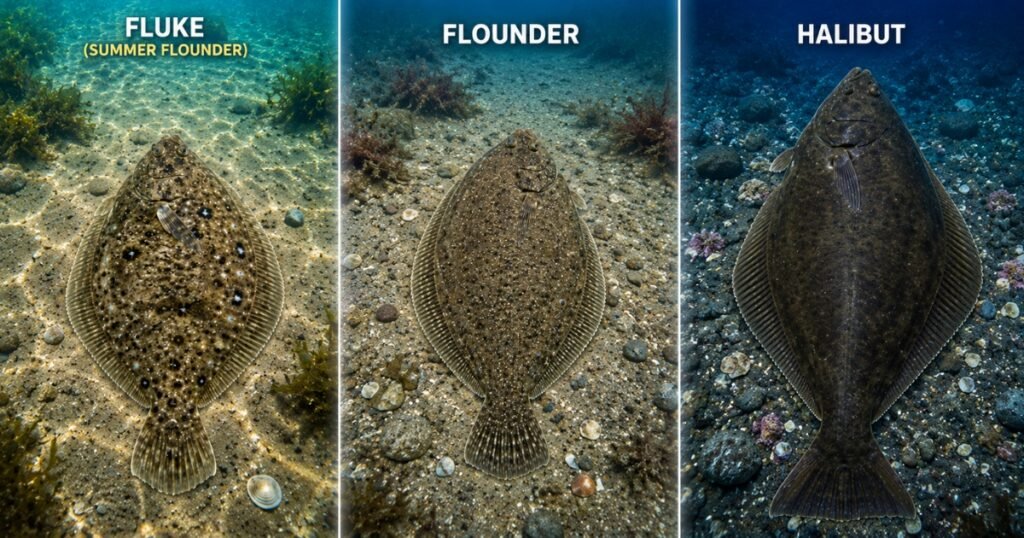
Basic Classification: Fluke, flounder, and halibut are all members of the flatfish family, known for their unique adaptation of lying on the seafloor. Fluke and flounder typically belong to the Pleuronectidae family, while halibut belongs to the larger family, Paralichthyidae.
Appearance: Visually, these flatfish are strikingly different. Fluke often has a more oval body shape, with a light top and white underside adaptable to various environments. Flounder tends to have a broader, more rounded body, and its coloration can range from browns to greens, aiding in camouflage.
In comparison, halibut is the largest of the three with a more elongated body, dark brown on top and white underneath. Their eyes are positioned asymmetrically on the upper side, while the mouth varies, with halibut having a notably larger, somewhat wider mouth than its smaller cousins.
Size: When it comes to size, halibut dominates the others, commonly reaching weights of up to 500 pounds and lengths beyond 8 feet, while typical fluke and flounder sizes range from 1 to 30 pounds. Fluke can grow to around 25 pounds, while flounder are generally smaller, rarely exceeding 10 pounds. This stark size difference impacts not just the fishing techniques used to catch them, but also the culinary applications where each can shine.
Habitat: These fish prefer different habitats along the seafloor. Fluke typically inhabit shallow waters and sandy bottoms along the Atlantic coast, while flounder enjoy similar conditions but can often be found in brackish waters and estuaries.
Halibut, on the other hand, favor deeper waters in the North Pacific, dwelling at depths exceeding 1,000 feet, which reflects their size and feeding patterns. Each species has developed unique adaptations to thrive in these varied environments. Whichever flatfish you choose, it’s worth checking sustainable seafood sourcing guidelines before your next purchase.
Fluke VS Flounder VS Halibut: Side-by-Side Comparison
| Feature | Fluke | Flounder | Halibut |
| Fish type | Flatfish | Flatfish | Flatfish |
| Body shape | Thin, oval, flat | Thin, oval, flat | Large, wide, flat |
| Eye position | Both eyes on left side | Both eyes on right side | Both eyes on right side |
| Average size | 1–5 lbs | 1–5 lbs | 10–100+ lbs |
| Habitat | Atlantic Ocean, coastal waters | Atlantic and Pacific Ocean, sandy bottoms | North Pacific and Atlantic Ocean, deep cold waters |
| Taste | Mild, slightly sweet | Mild, delicate | Mild, slightly sweet |
| Texture | Tender, flaky | Soft, delicate, flaky | Firm, dense, flaky |
| Best cooking methods | Frying, baking, sautéing | Baking, steaming, frying | Grilling, baking, broiling |
Fluke VS Flounder VS Sole
Fluke, flounder, and sole are closely related flatfish, but they have noticeable differences in appearance, habitat, flavor, texture, and size. Knowing these differences can help you identify each fish and understand which one is best suited for different culinary uses.
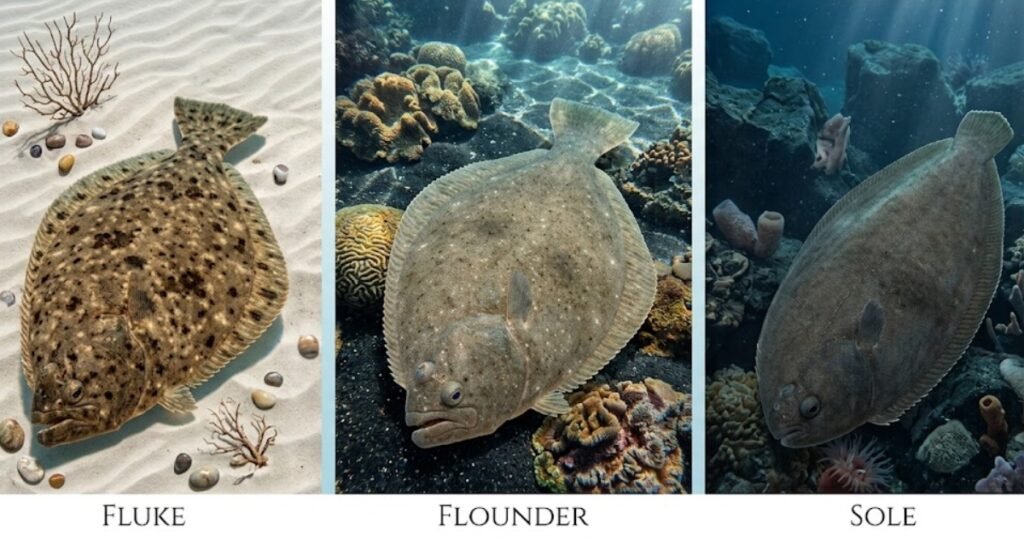
Taxonomy/Family: While fluke is classified under the family Paralichthyidae, flounder encompasses various families, making it a diverse group. True sole, on the other hand, specifically falls under the Soleidae family, highlighting a more specialized classification. Each family reflects unique evolutionary adaptations suited to their habitats and lifestyles.
Body Shape: All three fish display a flattened body shape, making them particularly adept at lying against the ocean floor. Fluke tends to be more elongated and streamlined, while flounder presents various shapes depending on the species. The true sole exhibits a more oval form, with a slightly wider body, providing an elegant appearance.
Eye Position: A striking feature of these fish is their eye position, which has adapted to their bottom-dwelling lifestyle. Fluke and flounder have both eyes on the top side, facilitating better vision when camouflaged against the substrate. Sole often retains a more centralized eye placement, enhancing its ability to search for prey beneath the sand.
Size: Size can vary across species. Fluke can grow up to 25 inches long, while flounder sizes range widely, with some species reaching up to 30 inches. True sole grows smaller, generally maxing out at around 24 inches, making it more limited in size compared to its counterparts.
Fluke VS Flounder VS Sole: Side-by-Side Comparison
| Feature | Fluke | Flounder | Sole |
| Common name | Summer Flounder | Winter Flounder | Dover Sole / Lemon Sole |
| Body shape | Thin, oval, flat | Thin, oval, flat | Narrow, elongated, flat |
| Eye position | Both eyes on left side | Both eyes on right side | Both eyes on right side |
| Size | 1–5 lbs, up to 26 inches | 1–5 lbs, up to 24 inches | 1–3 lbs, up to 20 inches |
| Habitat | Atlantic Ocean, coastal sandy bottoms | Atlantic and Pacific Ocean, shallow waters | Eastern Atlantic Ocean, Mediterranean Sea |
| Flavor | Mild, slightly sweet | Mild, delicate | Mild, buttery, delicate |
| Texture | Tender, flaky | Soft, delicate, flaky | Fine, firm, smooth |
| Culinary uses | Frying, baking, sautéing | Baking, steaming, poaching | Pan frying, meunière, grilling |
Conclusion
The debate of fluke vs flounder is more than just a matter of semantics; it reflects the diverse culinary and fishing landscape that these species inhabit. Both fish offer unique tastes and experiences, making them valuable additions to any seafood lover’s repertoire.
By recognizing their key differences, you can improve your fishing techniques and elevate your dining experiences. As we continue to explore the world of flatfish in 2026, take the time to appreciate what each has to offer.
FAQs
Is Fluke A Fish?
Yes, fluke is a type of fish, specifically a species of flatfish known scientifically as Paralichthys dentatus.
What Is the Difference Between Fluke And Flounder?
Flounder encompasses various species, while fluke is often used to describe one particular species known for its distinct shape and flavor. The common names can sometimes create confusion, but they reflect the diversity within the flatfish family.
What Does Flounder Taste Like?
Flounder has a mild, slightly sweet flavor with a delicate, flaky texture, making it a versatile choice for various dishes.
What Tastes Better, Fluke or Flounder?
Fluke generally has a sweeter, milder flavor compared to flounder, making many people prefer it for its delicate taste. Both fish are versatile in cooking and can be enjoyed in various dishes.
Is Fluke Fish Healthy To Eat?
Yes, fluke is a healthy option, high in protein and low in fat, making it a nutritious addition to any diet.
Are Fluke And Flounder The Same?
Fluke and flounder are not exactly the same; they belong to the same family (Paralichthyidae) but are different species, with fluke being a type of flounder.