13 Heaviest Animals in the World (With Pictures and Facts)
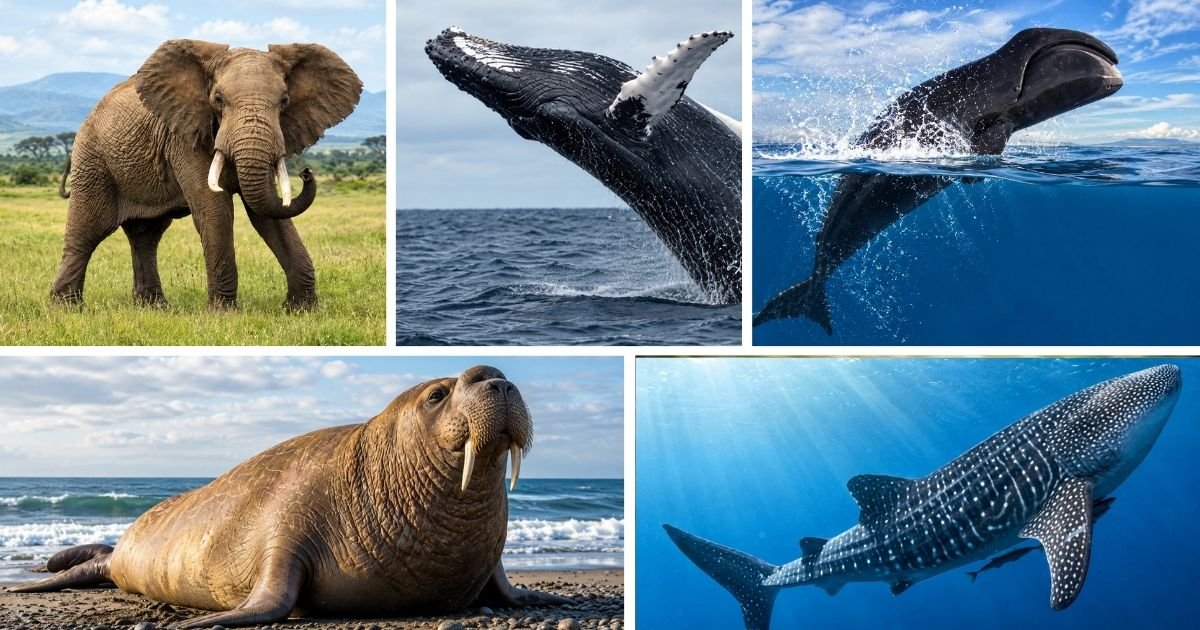
Imagine a creature so colossal that its weight can easily reach up to 200 tons. Welcome to the world of the blue whale, the heaviest animal in existence. This blog post delves into the heaviest animals in the world, including a diverse array of marine mammals, land mammals, and reptiles.
We will guide you through 13 remarkable species, sharing their weight ranges, habitats, diets, and extraordinary facts that highlight their uniqueness. Keep in mind that weights differ significantly among species, sexes, and individuals, adding another layer of intrigue to these magnificent animals.
What Is The Heaviest Animal In The World?
The blue whale holds the title for the heaviest animal in the world, with an average weight ranging from 100,000 to 150,000 pounds. Some individuals have been recorded at a staggering 400,000 pounds, showcasing a remarkable difference in potential weight that underscores their colossal nature.
These magnificent creatures can grow up to 100 feet in length and primarily inhabit the colder waters of the North Atlantic and North Pacific Oceans, making them a fascinating subject for marine enthusiasts.
When you compare the blue whale’s weight to that of land animals, the scale is extraordinary. A fully grown African elephant, the largest land animal, weighs about 12,000 pounds, meaning a blue whale can be over 33 times heavier!
This weight disparity highlights not only the blue whale’s incredible adaptations to life in the ocean but also its vital role in marine ecosystems. Understanding such drastic differences in weight propels our appreciation for these ocean giants and emphasizes the importance of preserving their habitats for future generations.
Comparison Table Of The 13 Heaviest Animals
| Animal | Approximate Adult Weight | Animal Group |
| Blue Whale | 100–150+ tonnes | Marine mammal |
| Fin Whale | 40–80+ tonnes | Marine mammal |
| North Pacific Right Whale | Around 50–80 tonnes | Marine mammal |
| Bowhead Whale | Around 50–75 tonnes | Marine mammal |
| Southern Right Whale | Around 40–80 tonnes | Marine mammal |
| Sperm Whale | Around 20–50 tonnes | Marine mammal |
| Humpback Whale | Around 25–40 tonnes | Marine mammal |
| Sei Whale | Around 15–30 tonnes | Marine mammal |
| Gray Whale | Around 15–35 tonnes | Marine mammal |
| Whale Shark | Several tonnes; exceptionally heavier | Fish |
| African Bush Elephant | Around 4–7 tonnes | Land mammal |
| Asian Elephant | Around 2–5 tonnes | Land mammal |
| Southern Elephant Seal | Large adult males can exceed 3 tonnes | Marine mammal |
Top 13 Heaviest Animals In The World
When it comes to sheer size and mass, the heaviest animals on earth are truly in a league of their own, dwarfing almost every other creature on the planet. From the ocean’s mighty blue whale to the land-dominating African elephant, these record-breaking giants have evolved to carry incredible weight while still thriving in their natural habitats. Here is the list of heaviest animals:
| No. | Animal Name |
|---|---|
| 1 | Blue Whale |
| 2 | Fin Whale |
| 3 | North Pacific Right Whale |
| 4 | Bowhead Whale |
| 5 | Southern Right Whale |
| 6 | Sperm Whale |
| 7 | Humpback Whale |
| 8 | Sei Whale |
| 9 | Gray Whale |
| 10 | Whale Shark |
| 11 | African Bush Elephant |
| 12 | Asian Elephant |
| 13 | Southern Elephant Seal |
Blue Whale
| Feature | Details |
|---|---|
| Scientific Name | Balaenoptera musculus |
| Class | Mammalia |
| Average Weight | 100–150 tonnes |
| Maximum Documented Weight | Up to 200 tonnes |
| Diet | Primarily krill |
The blue whale, recognized as the heaviest animal in the world, can loom up to 100 feet in length, making it not just massive but also one of the longest animals alive. With a sleek, elongated body painted in shades of blue and gray, its striking appearance is often complemented by unique mottled patterns that allow researchers to identify individual whales.

These gentle giants roam the vast oceans, favoring colder waters during feeding seasons before migrating to warmer climates for breeding. In terms of diet, the blue whale is a filter feeder, consuming up to four tons of tiny shrimp-like creatures called krill each day. Its unique method of feeding involves gulping enormous amounts of seawater before pushing it out through baleen plates, trapping its prey inside.
Considered the heaviest animal on Earth, the blue whale’s astonishing weight not only sets the stage for its massive size but also underscores its evolutionary adaptations for life in the deep. Interestingly, blue whales can also produce sounds that reach up to 188 decibels, making their calls one of the loudest natural noises, echoing across ocean distances.
Fin Whale
| Feature | Details |
|---|---|
| Scientific Name | Balaenoptera physalus |
| Class | Mammalia |
| Weight | 50–80 tons (22,000–36,000 kg) |
| Diet | Krill, small fish, and plankton |
The fin whale, reaching lengths of up to 88 feet (27 meters), is dwarfed only by its larger cousin, the blue whale, which can grow over 100 feet (30 meters). Weighing between 50 to 80 tons, the fin whale is remarkable for its streamlined body, allowing for efficient movement through the ocean’s depths.

This extraordinary adaptation not only enables more agile foraging during migration across the world’s oceans but also plays a crucial role in maintaining the balance of marine ecosystems. What truly sets the fin whale apart is its unique feeding behavior, utilizing a method called lunge feeding. This technique allows it to consume vast quantities of krill and small fish while simultaneously swimming at high speeds, showcasing a blend of power and grace.
Their capacity to thrive in diverse ocean habitats from temperate to polar waters illustrates their adaptability, solidifying their position as one of the largest and heaviest animals. The fin whale’s massive size is not just a mere statistic; it signifies evolutionary success in harnessing the riches of oceanic food webs, underlining a fascinating interplay between size and survival in the marine realm.
North Pacific Right Whale
| Feature | Details |
|---|---|
| Scientific Name | Eubalaena japonica |
| Class | Mammalia |
| Weight | 30–50 tons |
| Diet | Plankton |
The North Pacific Right Whale, a member of the baleen whale family, is an awe-inspiring marine mammal reaching lengths of up to 50 feet. This majestic creature thrives in the cold waters of the North Pacific, primarily found in areas off the coasts of Alaska and British Columbia.

With a diet centered around copepods and krill, these whales exhibit fascinating filtering behavior; they swim with their mouths agape to capture vast quantities of plankton.
Despite their size and unique feeding habits, the North Pacific Right Whale is critically endangered, with fewer than 30 individuals estimated to remain. Major threats include entanglement in fishing gear and ship strikes, which disrupt their already fragile population.
Their robust bodies and hefty weight classify them among the heaviest whale species, reminding us of the delicate balance between marine ecosystems and human activities. Protecting this rare whale species not only enriches biodiversity but also underscores our responsibility as stewards of the ocean. To learn about other threatened species, explore our list of rare animals.
Bowhead Whale
| Feature | Details |
|---|---|
| Scientific Name | Balaena mysticetus |
| Class | Mammalia |
| Weight | 75–100 tons |
| Diet | Zooplankton, small fish |
The Bowhead whale, known for its impressive size, can reach lengths of up to 60 feet and weights that can exceed 100 tons. Inhabiting the Arctic and subarctic regions, this massive creature has developed a thick skull that allows it to break through challenging sea ice, showcasing nature’s ingenuity in adapting to harsh environments.
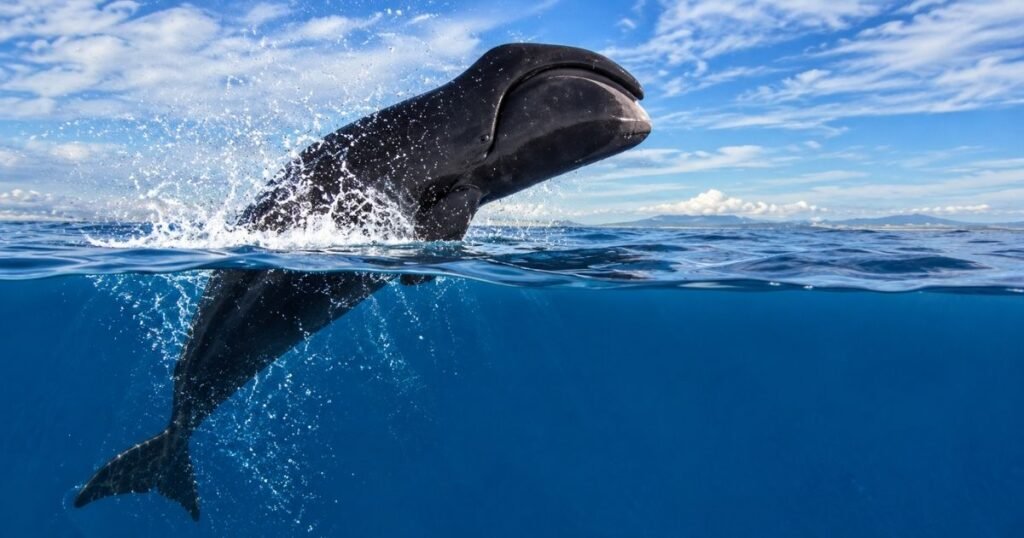
This remarkable adaptation not only enables it to create breathing holes but also signifies its evolutionary journey through frigid waters. Its diet consists primarily of zooplankton and small fish, filtered through its unique baleen feeding system, which acts like a sieve to capture prey while allowing the water to flow out.
What sets the Bowhead whale apart is its astounding lifespan, with some individuals estimated to live over 200 years. This longevity, coupled with its remarkable ability to thrive in extreme conditions, makes it a compelling subject for study within marine biology and conservation, prompting ongoing research into the secrets of its survival in a rapidly changing Arctic habitat.
Southern Right Whale
| Feature | Details |
|---|---|
| Scientific Name | Eubalaena australis |
| Class | Mammalia |
| Adult Weight | 40–80 tons (36,000–72,000 kg) |
| Diet | Primarily krill and small crustaceans |
The Southern Right Whale, a majestic giant of the Southern Ocean, can weigh between 40 to 80 tons and measure up to 16 meters in length. This species thrives in nutrient-rich waters, feeding on swarms of krill and other tiny prey, which are abundant as they migrate seasonally.
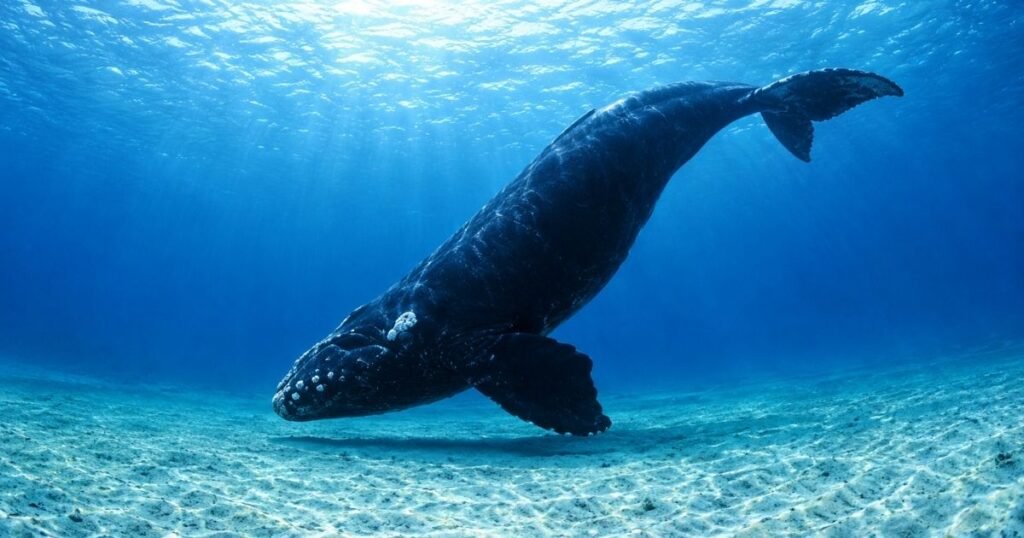
Breeding occurs along the coasts of South Africa, Australia, and South America, where mothers nurture their calves in sheltered bays. The migration patterns are fascinating; as the waters warm, these whales journey to nutrient-rich feeding grounds, demonstrating a remarkable connection between their reproductive habits and the ocean’s seasonal cycles.
What sets the Southern Right Whale apart from other right whale species is not only its characteristic callosity-covered head but also its unique social structure. While other species may engage in solitary behaviors, Southern Right Whales often exhibit a more communal life, with mothers and calves seen interacting closely.
Observing their nurturing behavior in the wild offers an inspiring insight into the emotional lives of these intelligent creatures. Furthermore, their conservation status highlights a resilient comeback from near extinction, marking them as symbols of hope in marine conservation efforts.
Sperm Whale
| Feature | Details |
|---|---|
| Scientific Name | Physeter macrocephalus |
| Class | Mammalia |
| Weight | 35–45 tons |
| Diet | Primarily squid |
Sperm whales stand out not only for their remarkable weight, reaching up to 45 tons, but also for their iconic elongated heads, which can account for nearly one-third of their body length. These creatures, among the largest toothed whales, are also known for their astonishing deep-diving capabilities, capable of plunging over 3,000 feet in search of their primary food source: squid.

This impressive depth and duration of dives allow them to exploit a niche that few marine predators can, showcasing their unique adaptation to an underwater world. In the realm of echolocation, sperm whales demonstrate a sophisticated hunting behavior, using clicks and clicks to navigate their environment and locate prey.
Unlike baleen whales that filter feed on small organisms, the sperm whale’s tapered teeth and echolocation provide distinct advantages in hunting larger and more elusive squid. This apex predator plays a vital role in marine ecosystems, exemplifying the balance of nature and the complex interactions between species in oceanic depths.
Humpback Whale
| Feature | Details |
|---|---|
| Scientific Name | Megaptera novaeangliae |
| Class | Mammalia |
| Adult Weight | 25,000–40,000 lbs |
| Length | 40–60 feet |
| Diet | Krill, small fish, plankton |
The humpback whale, a mesmerizing ambassador of the ocean, boasts adult weights that can reach up to 40,000 pounds and lengths of over 50 feet. These gentle giants are famous for their epic long-distance migrations, traveling up to 16,000 miles annually between feeding grounds in polar waters and breeding grounds in tropical regions.

This remarkable journey is not just a trek; it’s a testament to their resilience and adaptability to changing oceanic conditions. Their most fascinating behaviors includes bubble-net feeding, where they create a stunning display of bubbles to trap shoals of fish, making feeding an art form.
Humpbacks are also renowned for their complex songs, which can carry across vast distances underwater, serving as a means of communication and possibly courtship during mating seasons. Unlike the blue whale, which sings a more subdued tone, humpbacks produce intricate melodies that highlight their social structures.
These differences not only showcase the variety within cetacean communication but also reflect the unique evolutionary paths each species has undertaken in the vast tapestry of marine life. Their haunting songs also place them among the more vocal species, unlike the quiet animals that rarely make a sound.
Sei Whale
| Feature | Details |
|---|---|
| Scientific Name | Balaenoptera borealis |
| Class | Mammalia |
| Typical Weight | 30–50 tons |
| Body Length | 65–110 feet |
| Diet | Copepods, krill |
Residing in the deep, cold waters of the world’s oceans, the Sei Whale is often overshadowed by its larger relatives, like the blue whale, despite being a remarkable marine mammal in its own right. Weighing between 30 to 50 tons and reaching lengths of up to 110 feet, they possess a streamlined body that allows them to glide gracefully through the water at impressive speeds, sometimes exceeding 30 miles per hour.
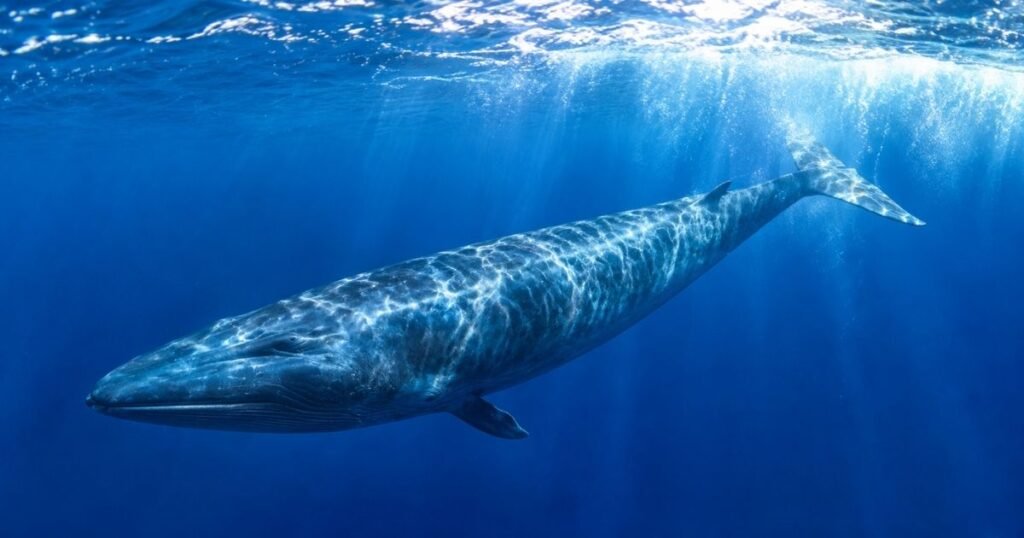
Their seasonal migrations are dictated by the availability of prey, primarily consisting of copepods and krill, making them masters of the ocean’s food web. While the Sei Whale is a magnificent creature, its elusive nature contributes to its lesser fame among whale watchers and marine enthusiasts.
Unlike some whales that breach dramatically or are known for their melodious songs, Sei Whales often remain submerged, making them harder to study and track. This mystique adds a layer of intrigue to their existence, prompting scientists to explore the depths of their behaviors and migration patterns further.
As habitats change and migration routes adapt due to climate impacts, understanding the Sei Whale becomes crucial not only for its conservation but also for the rich tapestry of life that thrives in our oceans.
Gray Whale
| Feature | Details |
|---|---|
| Scientific Name | Eschrichtius robustus |
| Class | Mammalia |
| Weight | 40 tons (average) |
| Diet | Benthos (small invertebrates) |
Gray whales, remarkable for their extensive coastal migrations, travel up to 10,000 miles annually between their feeding grounds in the Bering and Chukchi Seas and the warm lagoons of Baja California. This journey not only showcases their endurance but highlights the intricate relationships they maintain with their environment as they traverse dynamic ecosystems.
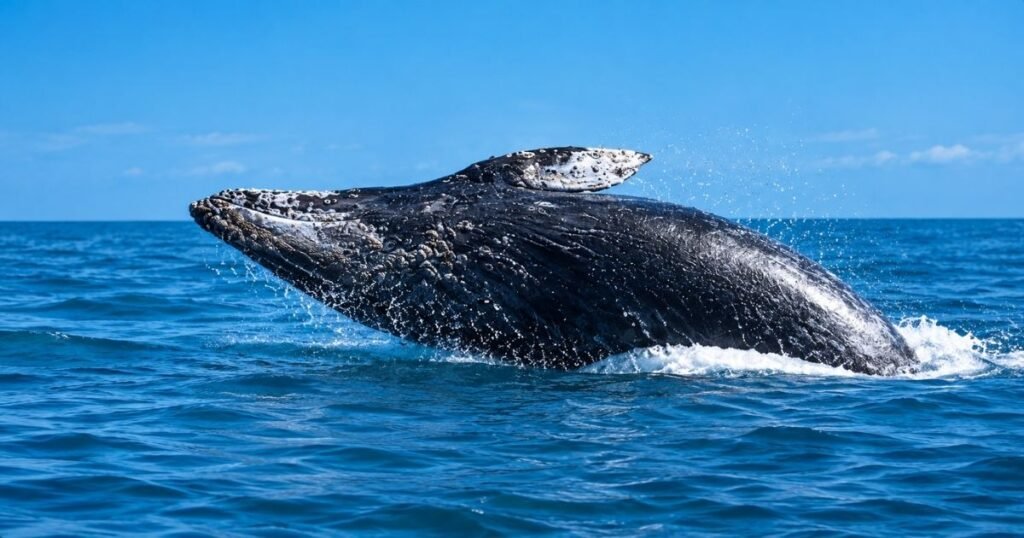
Their unique bottom-feeding behavior distinguishes them among baleen whales; they scoop up sediment and filter out tiny crustaceans and amphipods, demonstrating a critical role in shaping marine habitats. In breeding lagoons, mothers provide attentive care to their calves, ensuring the next generation is equipped to undertake their own monumental migrations.
Gray whales face significant threats from climate change, ship strikes, and habitat loss, prompting conservation efforts aimed at preserving both their migratory pathways and breeding grounds, thereby preserving an essential part of our oceanic legacy.
Whale Shark
| Feature | Details |
|---|---|
| Scientific Name | Rhincodon typus |
| Class | Chondrichthyes |
| Weight | Up to 20 tons |
| Diet | Plankton and small fish |
The whale shark, Rhincodon typus, can reach impressive lengths of up to 40 feet and weigh as much as 20 tons, making it the largest fish in the ocean. These gentle giants inhabit tropical and warm-temperate waters, often migrating to areas where nutrient-rich waters promote plankton blooms.

Their unique plankton-filtering feeding mechanism, with specialized gill rakers, allows them to consume vast amounts of microscopic organisms without harming larger life forms. Despite their impressive size, whale sharks are harmless to most humans, often curiously approaching divers and snorkelers.
Unlike actual whales, which are mammals and breathe air through blowholes, whale sharks are fish and possess gills for underwater respiration. This distinction emphasizes the whale shark’s unique place in marine biodiversity, highlighting its essential role in the oceanic ecosystem as a filter feeder and a gentle giant of the seas. Discover more ocean species in our guide to the types of fishes.
African Bush Elephant
| Feature | Details |
|---|---|
| Scientific Name | Loxodonta africana |
| Class | Mammalia |
| Weight | 4,500–6,800 kg (10,000–15,000 lbs) |
| Diet | Herbivore; grasses, fruits, bark |
The African Bush Elephant, known as the heaviest land animal, embodies majesty and strength, weighing between 4,500 to 6,800 kg, with exceptional individuals reaching staggering weights up to 12,000 kg. These colossal mammals roam the expansive African savannas and woodlands, utilizing their impressive trunks to forage and manipulate foliage.
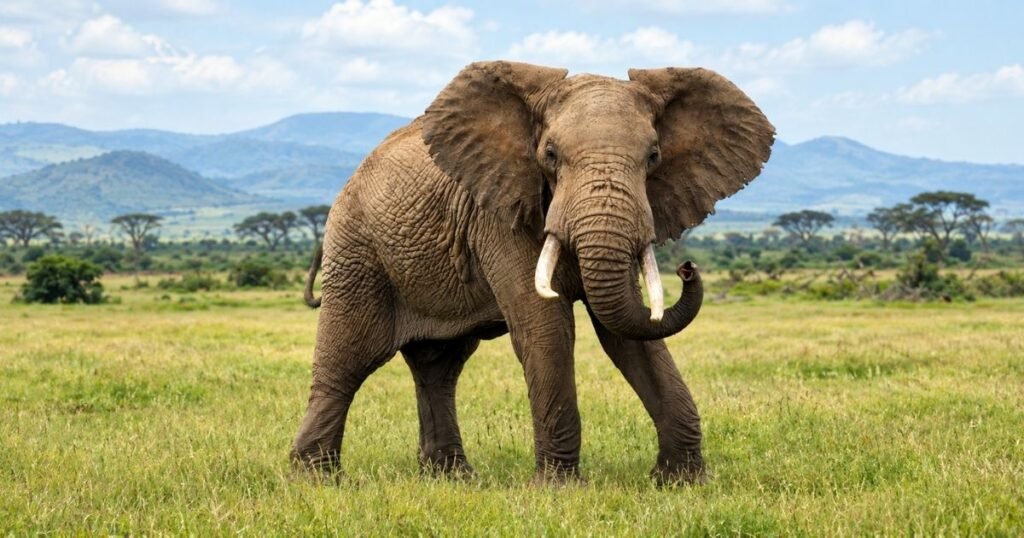
Their large ears not only serve to regulate body temperature but also enhance their hearing, allowing them to detect distant sounds an essential skill for survival in their diverse habitats. Beyond their physical attributes, the social structures of these elephants exhibit remarkable intelligence and emotional depth.
They travel in matriarch-led herds, demonstrating intricate social bonds and cooperative behaviors, such as caring for young and mourning lost members. This blend of size, intelligence, and social dynamics underscores why the African Bush Elephant holds the title of the heaviest living land animal. Their gentle nature also makes them one of the most friendly animals in the wild.
Asian Elephant
| Feature | Details |
|---|---|
| Scientific Name | Elephas maximus |
| Class | Mammalia |
| Weight | 2,200–6,600 kg |
| Diet | Herbivore (grasses, fruits, bark) |
Asian elephants typically weigh between 2,200 and 6,600 kg and can range from 2 to 3.5 meters in height, making them smaller than their African counterparts. They primarily inhabit forests and grasslands across Southeast Asia, thriving in regions that offer both rich foliage and ample space to roam.

An Asian elephant’s diet can consist of 150 kg of food daily, highlighting their role as essential ecosystem engineers as they help maintain vegetation through their feeding habits. These majestic animals differ significantly from African bush elephants, particularly in size and ear shape; Asian elephants have smaller ears and a more rounded body.
Conservation efforts are paramount, as they face threats from habitat loss, human-wildlife conflict, and poaching. Protecting their natural habitats and implementing community-based conservation strategies are crucial to ensure their survival in a rapidly changing world.
Southern Elephant Seal
| Feature | Details |
|---|---|
| Scientific Name | Mirounga leonina |
| Class | Mammalia |
| Adult Male Weight | Up to 4,500 lbs (2,000 kg) |
| Adult Female Weight | Up to 1,100 lbs (500 kg) |
| Diet | Primarily squid, fish, and crustaceans |
The Southern Elephant Seal is a marvel of ecological adaptation, primarily found in Antarctic and subantarctic regions. Males can weigh a staggering 4,500 pounds, making them the heaviest living marine mammals after whales, a feat that gives them a considerable advantage during breeding season.

These seals dive to impressive depths often exceeding 5,000 feet to hunt for squid and fish, showcasing their remarkable physiology and metabolic adaptations. Breeding colonies, typically located on remote islands, present intense competition among males. Dominant males can control large harems, engaging in fierce battles to secure mating rights.
This struggle for supremacy not only influences their reproductive success but also shapes the social dynamics within colonies, where size and strength often dictate hierarchy. The Southern Elephant Seal’s life cycle highlights the intricate balances of marine ecosystems, with each dive, call, and rumble echoing nature’s design.
Conclusion
The heaviest animals in the world are a testament to the wonders of evolution and the adaptability of life on Earth. These impressive beings remind us of the delicate balance of nature and the need for conservation to ensure their survival.
From massive whales swimming in the ocean to the powerful bears roaming the land, each species plays an essential role in its ecosystem. Increased awareness and education about these animals can inspire action towards their protection. For more giants of the past, read about the biggest extinct animals.
FAQs
How Much Animals Are In The World?
Estimating the total number of animals in the world is incredibly challenging, but scientists believe there could be over 8.7 million species, with trillions of individual animals overall. From the vast oceans to dense forests, the diversity of life is immense, with insects alone making up the bulk of the animal population.
What Are The Top 10 Heaviest Animals?
The top 10 heaviest animals on Earth include a fascinating mix of land and marine creatures, showcasing the diversity of life in our ecosystems. Here’s a list of the heaviest animals:
Blue Whale
African Elephant
Asian Elephant
sperm whale
Hippopotamus
Giraffe
Saltwater Crocodile
White Rhinoceros
Walrus
Brown Bear