17 Birds With Long Necks (With Pictures)
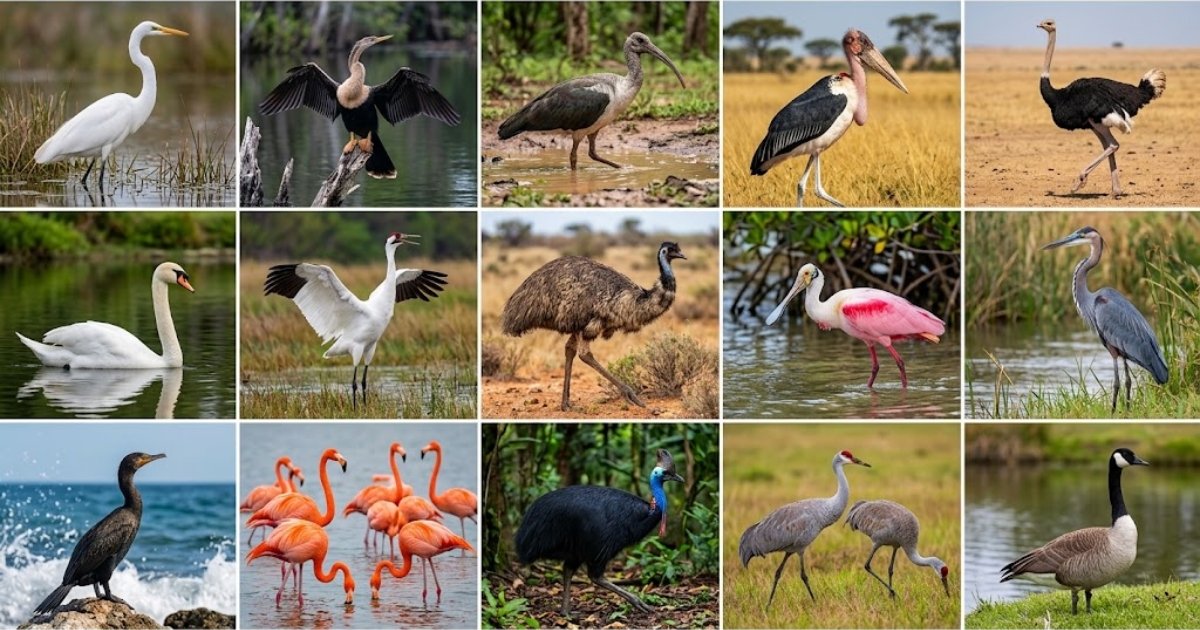
Birds with long necks, or long-necked birds, offer not only a unique appearance but also remarkable adaptations for survival. These adaptations allow them to reach food sources that other birds can’t, providing a vital advantage in their habitats.
In this blog post, we’ll explore 17 striking long neck birds, highlighting their names, captivating pictures, and interesting facts. Dive in to discover the remarkable variety and functionality behind these extraordinary birds with long necks.
List of Birds With Long Necks
In the diverse world of avian species, birds with long necks stand out for their remarkable adaptations and functionalities. These long necked birds encompass a range of categories, including wading birds, waterbirds, and even large flightless birds.
Their elongated necks serve vital roles in their foraging methods, enabling them to reach food sources that are otherwise inaccessible. For instance, wading birds like herons and storks use their extended necks to probe shallow waters for fish and amphibians, showcasing a perfect marriage between form and function.
When we think of the long neck bird, the graceful swan often comes to mind, a symbol of elegance that thrives on still waters. The ostrich, one of the most famous large flightless birds demonstrates how a long neck can also aid in spotting predators across vast stretches of land.
This diversity among long neck bird highlights the myriad ecological niches they occupy, underscoring the evolutionary innovations that have allowed them to thrive in different environments.
From the serene lakes occupied by herons to the arid savannas where ostriches roam, birds with long neck present a fascinating study into nature’s adaptability. Here is the list of long neck birds names:
Great Egret
| Feature | Details |
|---|---|
| Scientific Name | Ardea alba |
| Wingspan | 55 in |
| Length | 32 in |
| Weight | 2.2 lbs |
The Great Egret is a stunning tall white bird with long neck and delicate white feathers that glisten in the sunlight. Its long, pointed beak is designed for precision, allowing it to catch fish and other small prey with remarkable skill.
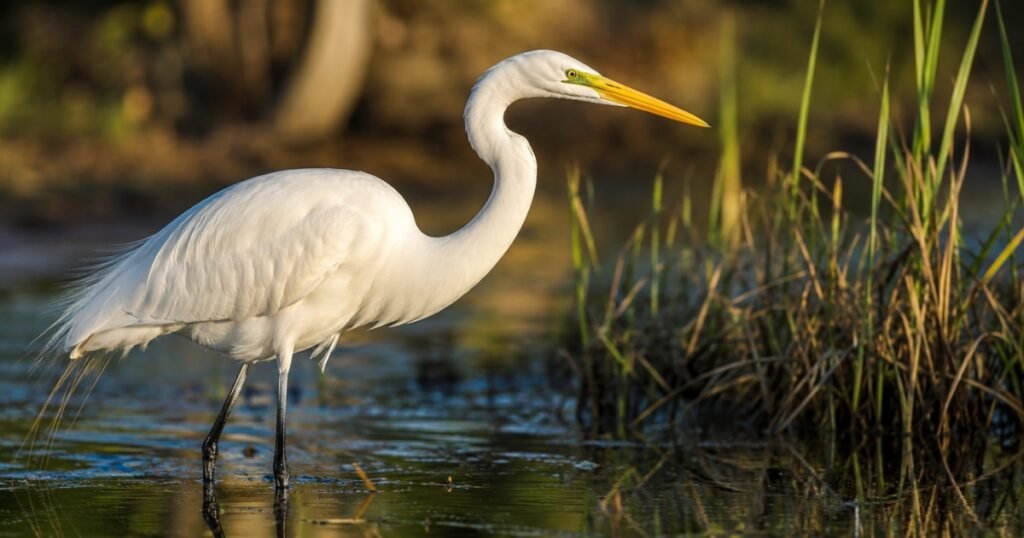
These elegant birds inhabit wetlands, marshes, and shallow waters, where they find ample food while showcasing their striking plumage. When hunting, the Great Egret employs a unique style of stealth and patience.
Standing motionless, its long neck becomes an invaluable asset, enabling it to strike at lightning speed. This combination of grace and function makes the Great Egret a fascinating subject for birdwatchers and photographers alike, showcasing the artistry of nature in action.
Anhinga
| Feature | Details |
|---|---|
| Scientific Name | Anhinga anhinga |
| Wingspan | 44.4 in |
| Length | 35 in |
| Weight | 38.8 oz |
The Anhinga stands out as a remarkable bird with long neck, boasting an extremely elongated and slender silhouette that is both agile and dynamic. Its long pointed bill serves as a perfect tool for spearing fish while swimming.
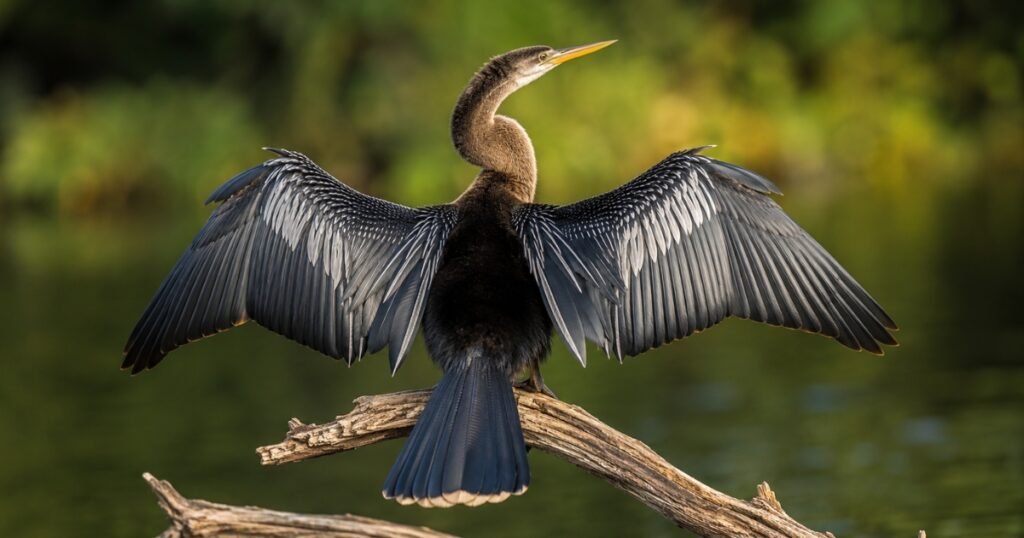
Often found in freshwater lakes and marshes, this bird is renowned for its exceptional swimming and diving capabilities. The Anhinga’s hunting technique is captivating; it dives underwater to chase fish, using its adaptable neck to navigate tight spaces and snatch prey with precision.
With its ability to swim submerged while holding its wings out for balance, this bird achieves an impressive balance between beauty and function in its underwater pursuits.
Giant Ibis
| Feature | Details |
|---|---|
| Scientific Name | Thaumatibis gigantea |
| Length | 102–106 cm (40–41.5 inches) |
| Weight | 4.2 kg (9.3 lbs) |
| Wingspan | Wing chord 52.3–57 cm (20.6–22.4 inches) |
The Giant Ibis, a formidable long necked bird, is characterized by its substantial size standing tall with elongated legs and a commanding presence. This bird’s habitat primarily consists of wetlands and grasslands, where it forages for an omnivorous diet including insects, frogs, and small vertebrates.
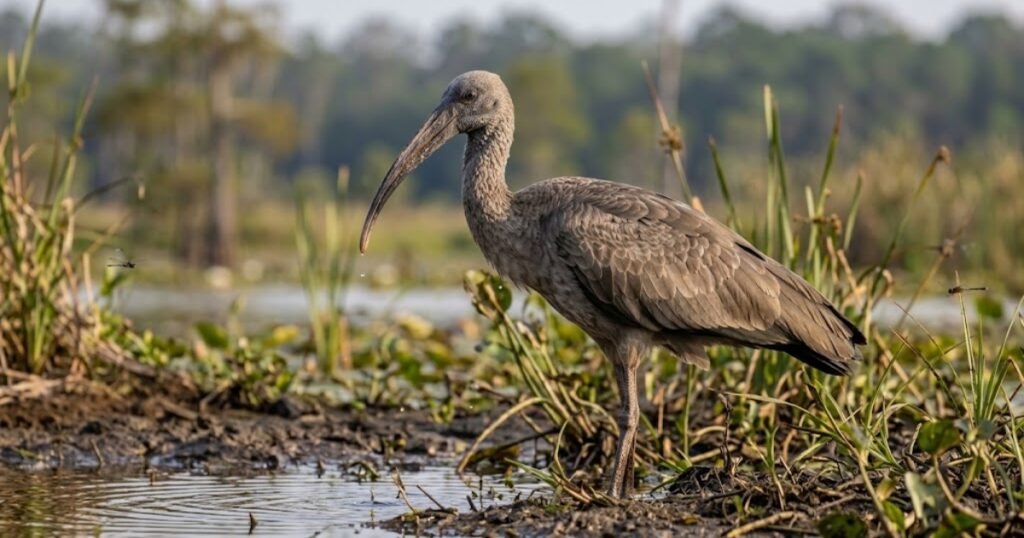
Behaviorally, the Giant Ibis is known for its social nature, often seen foraging in pairs or small groups. Unfortunately, its conservation status is precarious, with habitat loss significantly threatening its population.
Understanding the lifestyle and vulnerabilities of this majestic bird not only highlights the wonders of wildlife but also emphasizes the importance of conservation efforts in maintaining ecological balance.
Marabou Stork
| Feature | Details |
|---|---|
| Scientific Name | Leptoptilos crumeniferus |
| Wingspan | 86–110 in |
| Length | 47–51 in |
| Weight | 10–17 lbs |
The Marabou Stork is a striking long neck bird known for its impressive size, often exceeding four feet in height. With its elongated neck and distinctive bare head, it exudes an unusual charm that some might find unsettling.
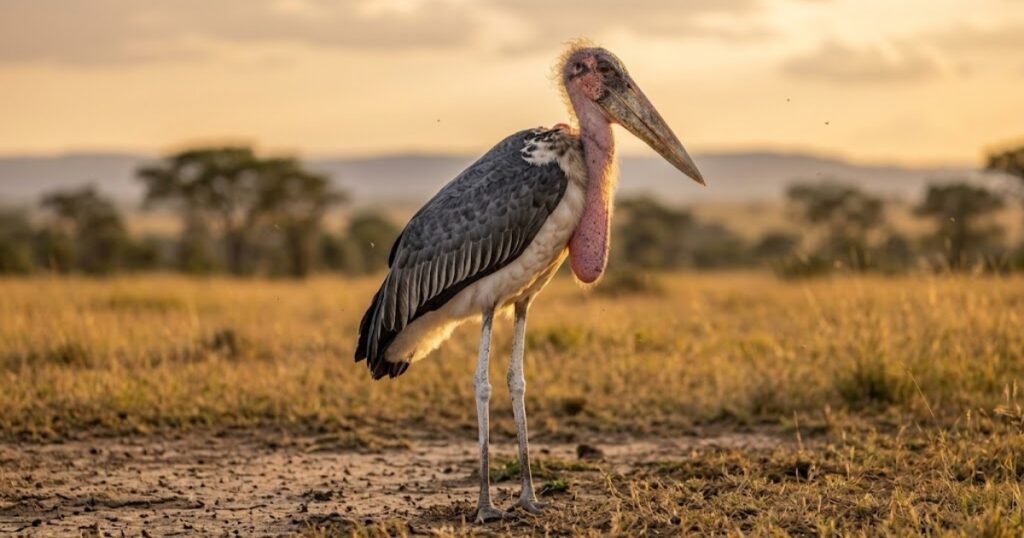
This scavenger roams the African savannas and wetlands, where its broad wingspan allows it to soar gracefully above the landscape. Its large beak is perfectly adapted for rummaging through carrion, which comprises a substantial part of its diet.
What makes the Marabou Stork particularly fascinating is its scavenging behavior. Often spotted around landfills and rivers, it plays a key role in the ecosystem by cleaning up waste, making it an unsung hero in the food web.
Unlike many birds, it thrives in urban areas, showcasing how adaptability can turn even the most unusual characteristics into survival advantages. Its strong presence alongside Africa’s sprawling landscapes serves as a reminder of nature’s diverse adaptations.
Common Ostrich
| Feature | Details |
|---|---|
| Scientific Name | Struthio camelus |
| Wingspan | 79 in |
| Length | 82–110 in |
| Weight | 245 lbs |
As the world’s largest living bird, the Common Ostrich stands tall with its impressive long neck and legs, reaching heights of up to nine feet. This flightless marvel is not just a sight to behold; it embodies the evolution of avian species in unique ways.
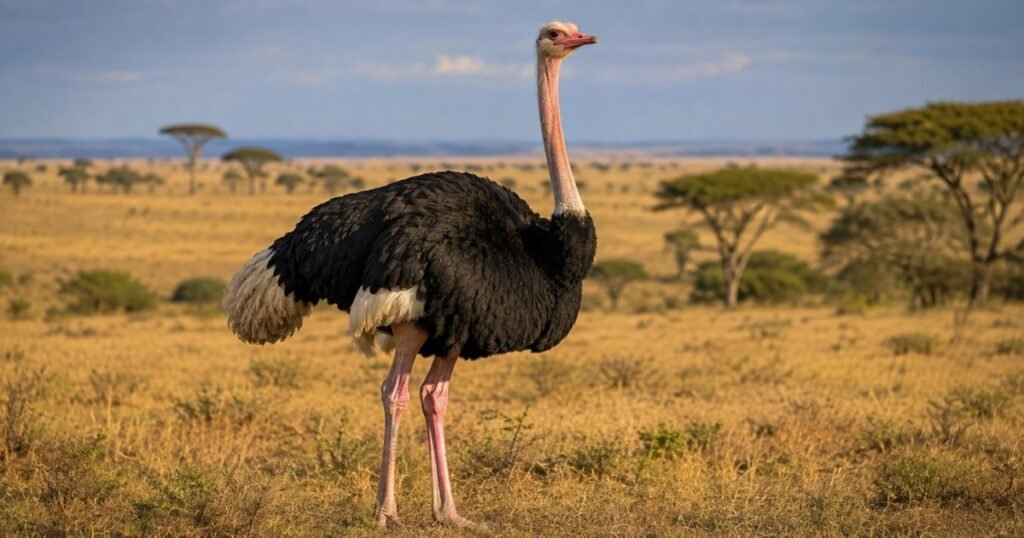
With a powerful build, it relies not on flight, but on speed, capable of running up to 45 miles per hour, making it one of the fastest birds on land. The ostrich’s long neck serves a vital function; it allows for better visibility to spot distant predators, enhancing its survival skills.
With keen eyesight and a panoramic view of its surroundings, this extraordinary bird can detect danger from afar, ensuring that it remains one step ahead. Additionally, its diet consists mainly of seeds and plants, making it an herbivore well-suited for life in the savanna.
Swan
| Feature | Details |
|---|---|
| Scientific Name | Cygnus olor |
| Wingspan | 2.1–2.4 meters (6.9–7.9 feet) |
| Length | 140–160 centimeters (55–63 inches) |
| Weight | 8.6–11.8 kilograms (19–26 pounds); males average ~12 kg, females ~9 kg |
With their long curved necks, swans are often considered the epitome of grace in the avian world. The big white bird with long neck, like the mute and trumpeter swans, captivates onlookers with their beauty and serene presence. Swans inhabit various freshwater environments, from serene lakes to winding rivers, where they gracefully glide across the water’s surface, often accompanied by their cygnets.
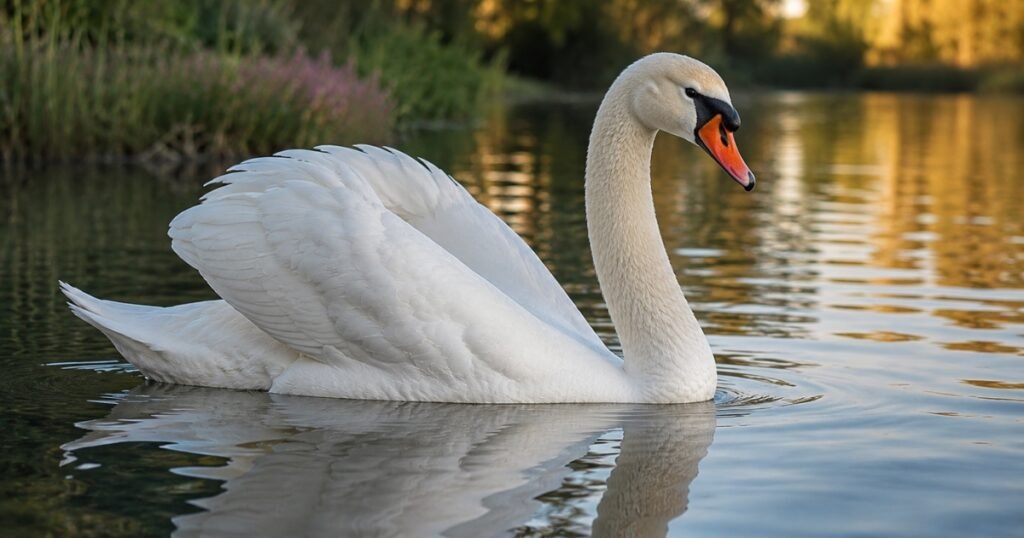
Their diet primarily consists of aquatic plants and grasses, which they expertly forage for by dipping their long necks beneath the water. The length of their necks is not merely for aesthetic appeal; it also provides them with a significant advantage, enabling them to reach vegetation that other birds cannot access.
Swans are known for their social behavior, often forming lifelong bonds and showcasing elaborate courtship displays, which further enriches their captivating nature.
Whooping Crane
| Feature | Details |
|---|---|
| Scientific Name | Grus americana |
| Wingspan | 7.5–7.8 feet (2.0–2.3 meters) |
| Length | 4.3–5.3 feet (130–160 cm) |
| Weight (Male) | Average 16 lbs (7.3 kg) |
| Weight (Female) | Average 14 lbs (6.2 kg) |
The whooping crane, a tall white bird with long neck and legs, stands as a symbol of elegance and resilience in the avian world. With its striking black wing tips contrasting against the pure white plumage, it is not just visually captivating but also a key player in its ecosystem.
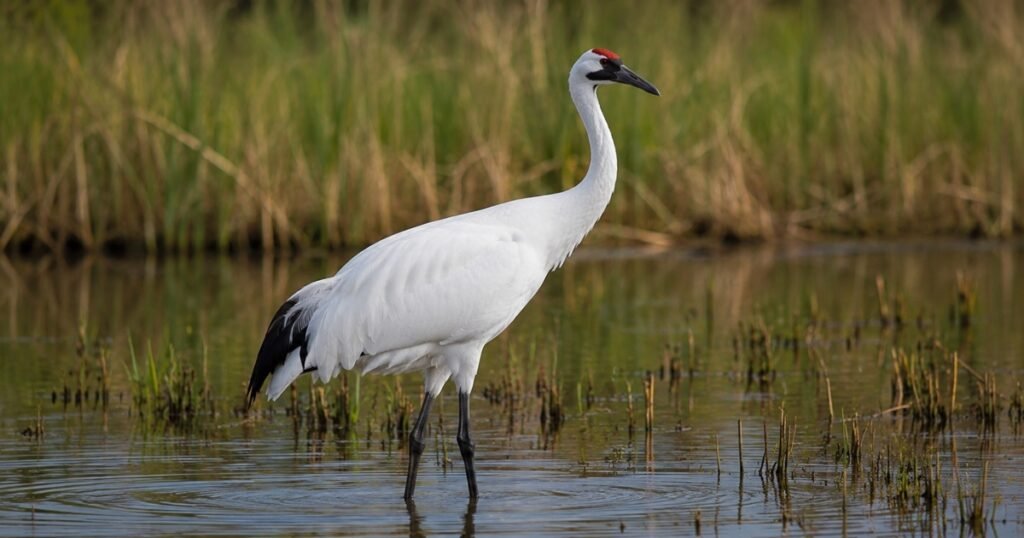
These cranes inhabit shallow wetlands and marshes, where they find their primary diet of crustaceans, amphibians, and plant matter. Their migration route, stretching from Canada to Texas, showcases an incredible journey of unity and survival, as they navigate thousands of miles in search of breeding grounds.
The whooping crane’s numbers have dwindled due to habitat loss and poaching, making concerted conservation efforts crucial. Organizations have implemented breeding programs and habitat restoration initiatives, fostering hope for the future of these majestic birds.
Emu
| Feature | Details |
|---|---|
| Scientific Name | Dromaius novaehollandiae |
| Wingspan | Flightless; vestigial wings ~20 cm (less than 8 inches) |
| Length | 139–164 cm (55–65 inches); standing height 150–190 cm (59–75 inches) |
| Weight | 18–60 kg (40–132 lbs); males average 31.5–37 kg (69–82 lbs) |
Originating from Australia, the emu is a long-necked, flightless bird that commands attention with its large body and distinctive appearance. Unlike its taller relatives, the ostrich, the emu’s adaptability shines in its ability to thrive in a variety of habitats, from forests to grasslands.
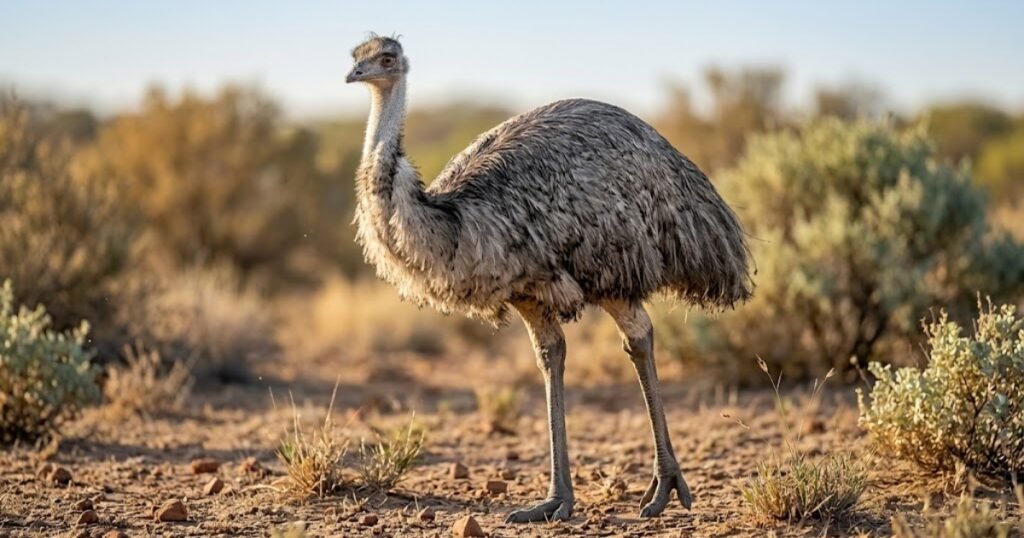
Their diet is predominantly herbivorous, consisting of fruits, seeds, and insects, enabling them to play a critical role in their ecosystem’s seed dispersal. What’s particularly fascinating is their running speed; emus can reach up to 30 miles per hour, showcasing an unexpected agility for such large birds.
This characteristic not only aids them in escaping predators but also highlights the incredible evolutionary traits that these unique birds possess, making them a remarkable example of resilience and adaptability in a changing world.
Roseate Spoonbill
| Feature | Details |
|---|---|
| Scientific Name | Platalea ajaja |
| Wingspan | 120–133 cm (47–52 inches) |
| Length | 71–86 cm (28–34 inches) |
| Weight | 1.2–1.8 kg (2.6–4.0 lbs) |
The roseate spoonbill, adorned in stunning pink plumage, captivates with its long neck and unique spoon-shaped bill, designed for efficient foraging. Dwelling primarily in wetlands and marshes, these birds have a diet that includes crustaceans, small fish, and insects, with their feeding technique employing a graceful sweeping motion through shallow waters.
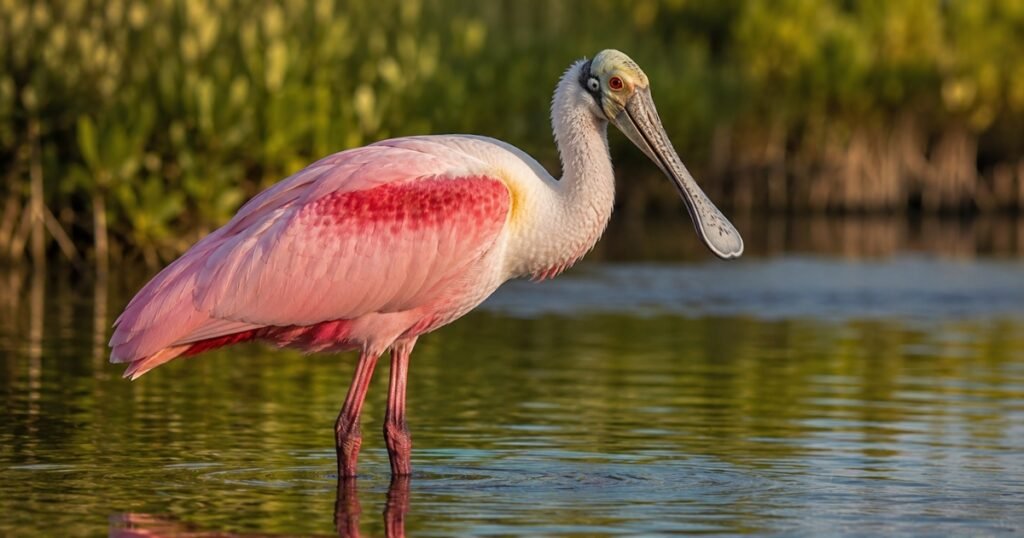
This method not only makes them efficient hunters but also serves as an illustration of nature’s ingenuity in adaptation. The bill’s shape is instrumental in sifting through mud and water an evolutionary advantage that enhances their foraging success.
The long neck allows for greater reach, enabling them to hunt in spaces inaccessible to other species. Together, these features exemplify how the roseate spoonbill has perfectly evolved to exploit its wetland habitat, embodying the intricate balance of nature.
Goliath Heron
| Feature | Details |
|---|---|
| Scientific Name | Ardea goliath |
| Wingspan | 185–230 cm (6 ft 1 in to 7 ft 7 in) |
| Length | 120–152 cm (3 ft 11 in to 5 ft 0 in) |
| Weight | 4–5 kg (8.8–11.0 lbs) |
Standing as one of the tallest herons, the Goliath Heron commands attention with its striking long neck and slender legs, making it a magnificent sight in various wetland habitats. Its large pointed beak is perfectly adapted for spearing fish, forming the cornerstone of its fish-based diet.
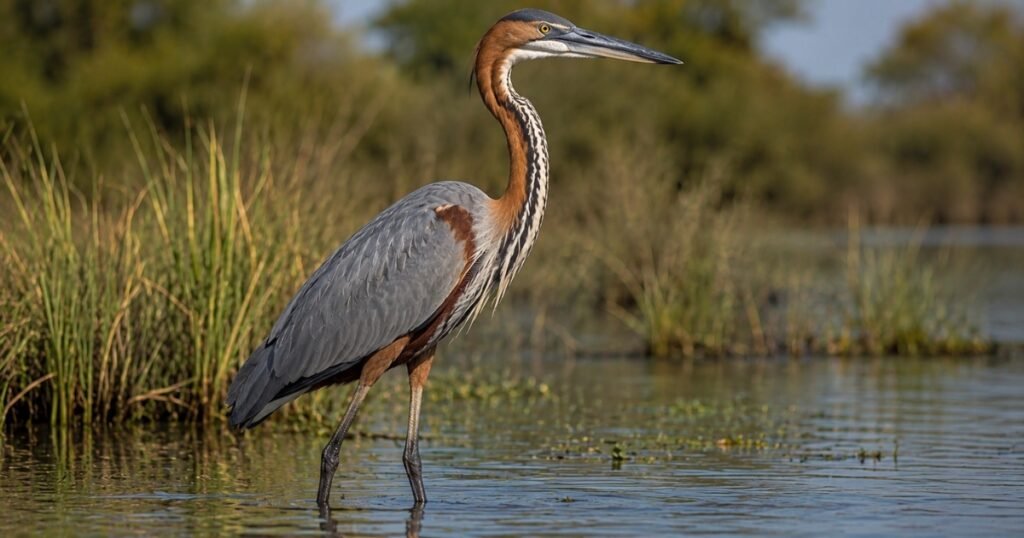
Unique among long-necked birds, this heron employs a stealthy hunting technique, patiently wading through shallow waters before launching a lightning-fast strike on unsuspecting aquatic prey.
The Goliath Heron’s size and hunting prowess not only highlight its role in the ecosystem but also underscore the grace found in such an imposing figure.
Cormorant
| Feature | Details |
|---|---|
| Scientific Name | Phalacrocorax carbo |
| Wingspan | 130–160 cm (51–63 inches) |
| Length | 80–100 cm (31–39 inches) |
| Weight | 2–3.7 kg (4.4–8.2 lbs) |
The Cormorant, a quintessential black bird with a long neck, showcases a striking contrast against azure waters, attracting admirers with its dark plumage. Adapted for an aquatic lifestyle, this bird is renowned for its impressive diving abilities, often plunging underwater to snatch fish with its long bill.
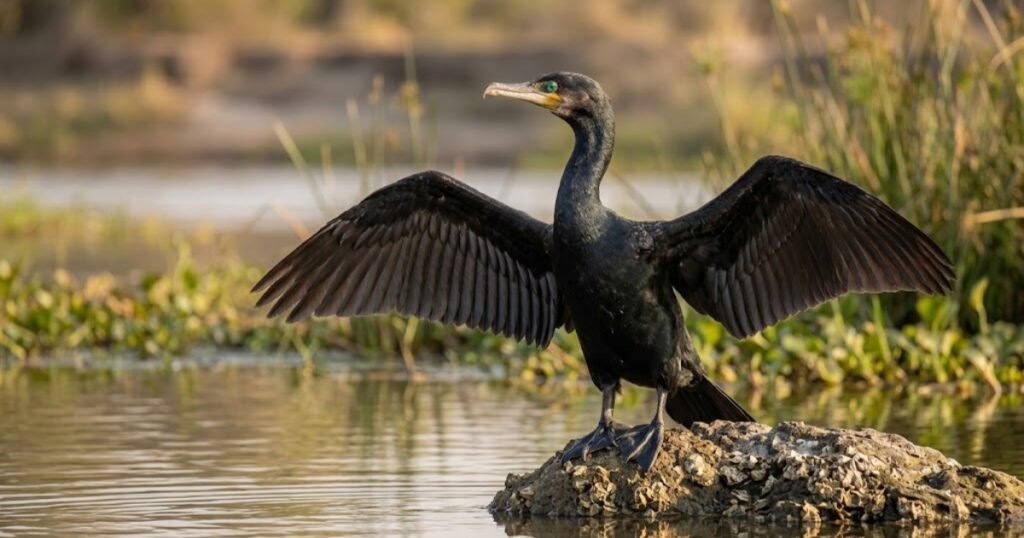
Cormorants can frequently be seen drying their wings post-dive, a behavior that highlights their unique physiology and energy management. Their habitat ranges from coastal regions to freshwater lakes, making them a versatile presence in many ecosystems, and their predatory prowess plays a crucial role in maintaining the balance of aquatic life.
Greater Flamingo
| Feature | Details |
|---|---|
| Scientific Name | Phoenicopterus roseus |
| Wingspan | 60 in |
| Length | 36–50 in |
| Weight | 8.75 lbs |
The Greater Flamingo stands out with its elegant pink coloration and extremely long neck, which allows it to master the art of filter-feeding. Its curved bill gracefully grazes the water’s surface, sifting through mud for algae and crustaceans, underscoring the importance of its neck in both feeding and social interactions within flocks.
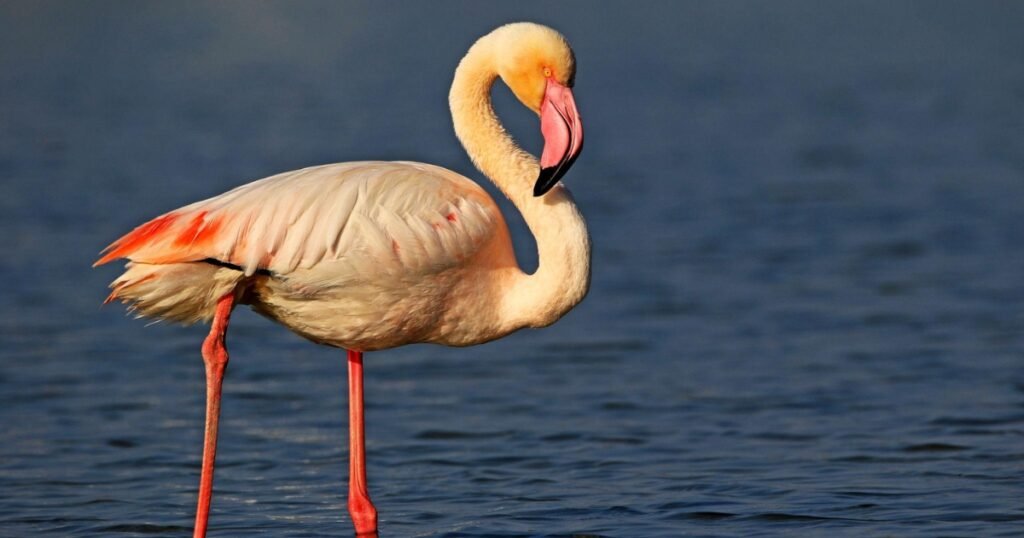
These birds thrive in brackish ponds and lagoons, where their unique feeding techniques can flourish. Remarkably, the length of their neck not only aids in foraging but also enhances their striking courtship displays, playing a pivotal role in their reproductive success.
Southern Cassowary
| Feature | Details |
|---|---|
| Scientific Name | Casuarius casuarius |
| Wingspan | 60–80 in |
| Length | 5.8 ft |
| Weight | 120–167 lbs |
The Southern Cassowary, a large flightless bird, is a living testament to nature’s creativity, distinguished by its striking blue neck and head. Equipped with a long neck crowned with a helmet-like casque, this unique bird exhibits an impressive stature combined with surprising agility in its rainforest habitat.
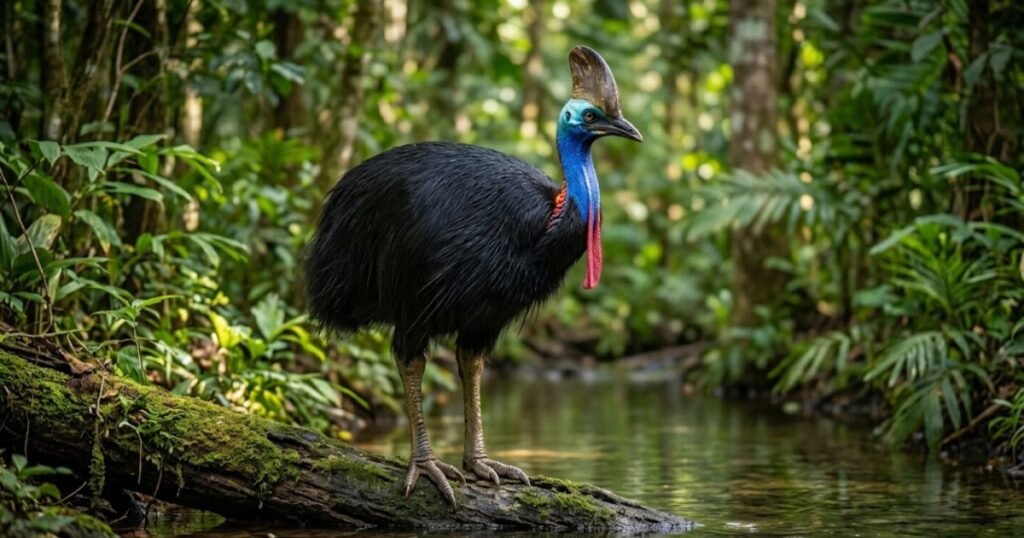
Its diet primarily consists of fruit, making it an important seed disperser, while both its physical presence and vocalizations contribute to the rich tapestry of forest life. When threatened, the cassowary showcases strong defense behavior, boasting powerful legs capable of delivering formidable kicks, a reminder of its wild and untamed spirit.
Sandhill Cranes
| Feature | Details |
|---|---|
| Scientific Name | Antigone canadensis |
| Wingspan | 80 in |
| Length | 37 in |
| Weight | 7–11 lbs |
Sandhill cranes, with their elegant silhouettes and striking long necks, embody a graceful presence in the avian world. These remarkable birds are known for their intricate courtship dances, which often reveal the intricate social structures they maintain.
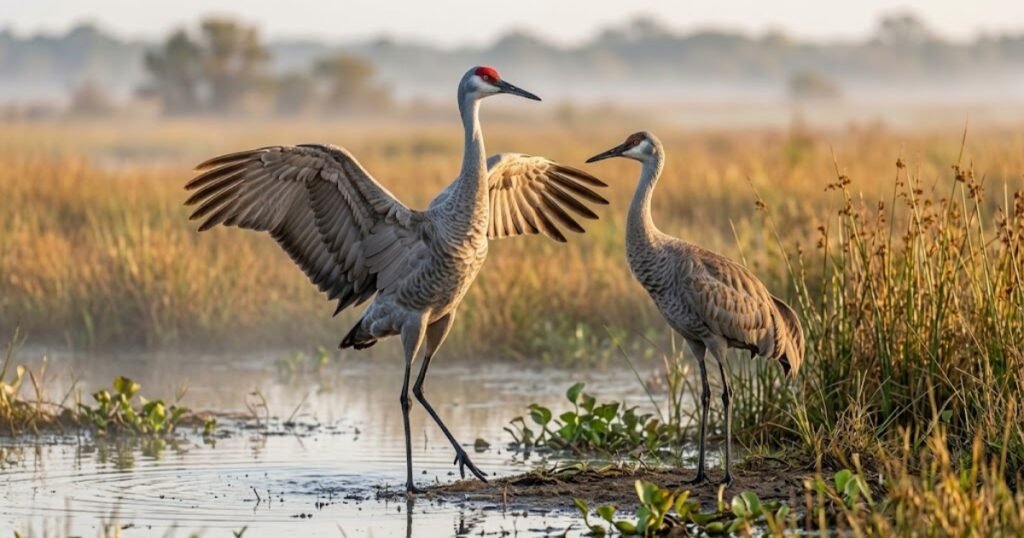
The long necks of sandhill cranes play a crucial role in this display; they not only enhance their impressive stature but also facilitate a range of vocalizations. Their unique calls resonate across vast wetlands, establishing territory and strengthening pair bonds.
Moreover, these cranes are master foragers, adept at using their elongated necks to access both terrestrial and aquatic food sources. In cornfields and shallow waters alike, they can reach for seeds and small invertebrates, showcasing how their physical attributes have adapted to diverse environments.
Observing sandhill cranes in their natural habitats offers a glimpse into a world where mobility and social interaction are intricately woven into the fabric of their daily lives, making each sighting an enchanting experience for birdwatchers and nature lovers alike.
Canada Goose
| Feature | Details |
|---|---|
| Scientific Name | Branta canadensis |
| Wingspan | 50–67 in |
| Length | 30–43 in |
| Weight | 6.5–19 lbs |
The Canada goose, with its iconic long neck, isn’t just a striking figure in the skies; it plays a crucial role in its ecosystem. These waterfowl are often seen gliding gracefully over lakes, their outstretched necks giving them a distinctive silhouette against the horizon.
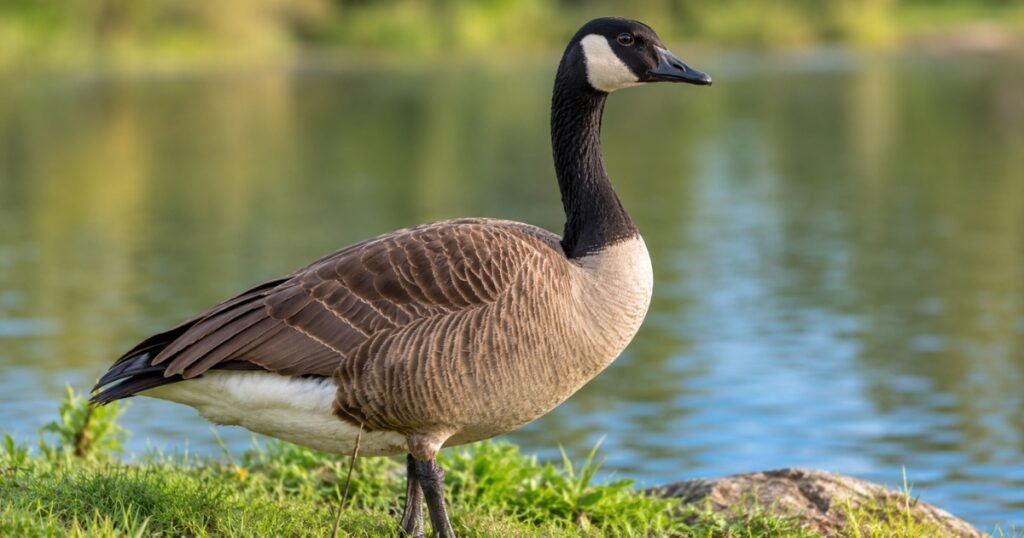
This elongated neck allows them not only to forage for aquatic vegetation but also to communicate effectively with their mates and flock. Their honking calls carry over great distances, badging territories and attracting partners.
Beyond their impressive anatomy, Canada geese display remarkable adaptability. Found across North America, they thrive in diverse environments, from bustling urban parks to tranquil wetlands.
This versatility is mirrored in their migratory patterns; some populations journey thousands of miles to escape harsh winters, showcasing their resilience. As they glide in V-formation, the energy savings of their elongated necks allow them to conserve strength for the long trip, making them not just beautiful beings but also masterful navigators of the sky.
Magpie Goose
| Feature | Details |
|---|---|
| Scientific Name | Anseranas semipalmata |
| Wingspan | 60 in |
| Length | 27–35 in |
| Weight | 4–6 lbs |
The Magpie Goose, an intriguing waterfowl native to Australia, boasts an exceptionally long neck that sets it apart from its avian counterparts. This distinctive feature serves more than an aesthetic purpose; it allows the goose to wade gracefully through shallow water, foraging for aquatic plants and seeds.
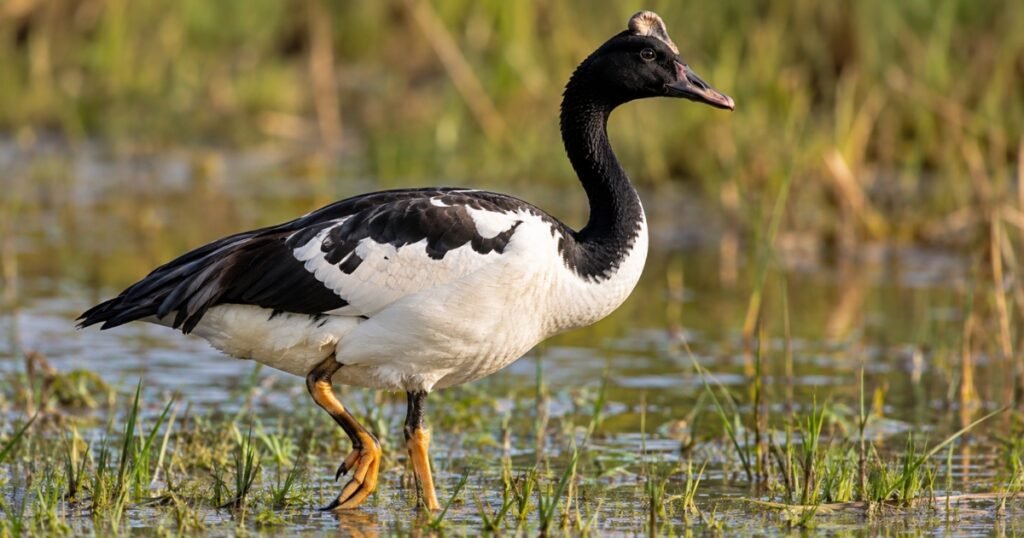
The neck acts like a flexible tool, enabling it to reach into dense vegetation where its shorter-necked peers cannot venture, showcasing nature’s remarkable adaptability. Not only is the Magpie Goose’s elongated neck functional, but it also plays a role in its social interactions.
During mating rituals, the prolonged neck allows for striking displays, where individuals extend and twist to attract partners. This behavior highlights an evolutionary dance, merging physical traits with the intricate tapestry of mate selection.
Black-Necked Stork
| Feature | Details |
|---|---|
| Scientific Name | Ephippiorhynchus asiaticus |
| Wingspan | 190–230 cm (75–91 in) |
| Length | 110–150 cm (43–59 in) |
| Weight | 4–4.1 kg (9 lbs) |
The black-necked stork, a striking black bird with long neck and beak, commands attention in its habitat, gliding gracefully over wetlands and shallow waters. With its distinctive black-and-white plumage, this elegant bird is often seen wading through marshes, where its long legs allow it to navigate with ease.
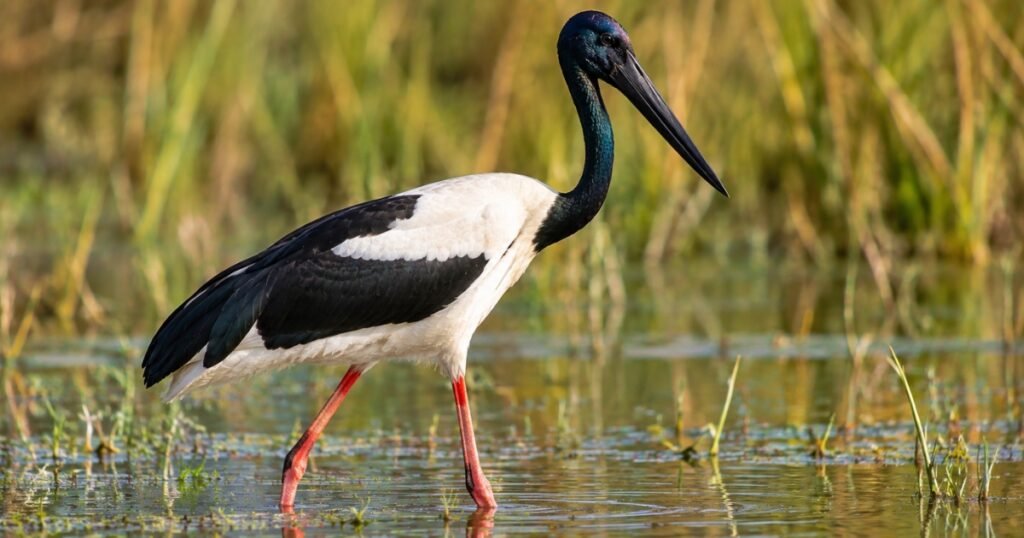
These storks exhibit a unique hunting technique, utilizing their elongated beak to probe for fish, amphibians, and small invertebrates a skill honed through centuries of evolution in diverse ecosystems.
Primarily found in the tropical and subtropical regions of Asia, primarily India, Southeast Asia, and parts of Australia, their geographic distribution aligns with areas rich in shallow water habitats.
Black-necked storks are known to be relatively solitary, often foraging alone or in pairs rather than in large flocks, which sets them apart from many other stork species. Their adaptability to various wetland environments showcases the resilience of nature, as they thrive in both pristine wilderness and slightly disturbed areas.
White Birds With Long Necks
White birds with long necks are among the most graceful and elegant creatures found in nature. From the towering Whooping Crane to the delicate Great Egret, these birds are instantly recognizable by their striking white plumage and long, slender necks.
Great Egret: The Great Egret is a stunning tall white bird with a long neck that embodies elegance in the wild. Standing up to four feet tall, this iconic heron features striking all-white plumage, making it a symbol of purity and grace.
Whooping Crane: The Whooping Crane is one of North America’s tallest birds and a magnificent big white bird with a long neck. With a height reaching nearly five feet, this endangered species boasts an impressive wingspan that can exceed seven feet, allowing it to soar gracefully above wetlands and prairies.
Swan: When it comes to waterbirds, few can rival the swan as a symbol of beauty and sophistication. This elegant white bird with a long neck is often associated with love and fidelity, thanks to its monogamous mating habits. Swans are known for their graceful movements on water and impressive size, gliding effortlessly while showing off their striking plumage.
Greater Flamingo: The Greater Flamingo, while not entirely white, showcases lovely pink hues against a backdrop of predominantly white plumage. With an impressive long neck and unique feeding habits, these big white birds filter-feed for algae and crustaceans in shallow waters.
White Geese: White geese are often overlooked but are a fascinating example of water birds with long neck. These community-oriented birds are not only social but have unique vocalizations that strengthen their bonds within flocks.
Black Birds With Long Necks
Black birds with long necks are some of the most striking and mysterious birds found near water and wetlands around the world. From the sleek and powerful Cormorant to the elegant Black Swan, these dark-plumaged birds stand out in any landscape with their impressive long necks and bold appearance.
Cormorant: The cormorant, a sleek inhabitant of coastal waters, captivates with its jet-black plumage and elongated neck, artfully designed for diving. These birds are expert fishers, often seen diving underwater in search of their next meal. Unique among others black bird with long neck, cormorants have a distinctive, hooked beak that aids in snagging slippery prey.
Black-necked Stork: True to its name, the black-necked stork boasts a striking combination of features. While it has a predominantly white body, its head, neck, and long legs are adorned with glossy black feathers.
Black Swan: The black swan is a mesmerizing creature that defies the traditional notion of swans being solely white. With its dark plumage and striking red beak, this bird is a symbol of elegance and mystery.
Other Dark-Plumaged Long-Neck Birds: Beyond the cormorant, black-necked stork, and black swan, the world offers a variety of long-necked birds with darker plumage. The great blue heron, though more gray than black, features a long neck and an unmistakable silhouette that adds elegance to wetland areas. The anhinga, often mistaken for a cormorant, possesses a long neck and a unique physicality, allowing it to convert its body into a vertical shape while hunting.
How Do Long Necks Help Birds Survive?
Long necks are one of nature’s most practical and effective adaptations, giving birds a significant advantage when it comes to hunting, feeding, and surviving in the wild.
Finding Food: Birds with long necks have a distinct advantage when foraging for food. Their extended necks allow them to reach deep into foliage or dig into tree bark, teasing out insects and larvae that shorter-necked species might overlook. This adaptation is particularly crucial for species living in densely vegetated areas, where competition for food can be fierce.
Hunting: Long necks also enhance the hunting prowess of birds like herons. These birds can methodically stalk their prey, using their elongated necks to strike with surgical precision. The flexibility offered by their necks permits them to navigate through reeds and rushes, making surprise attacks on fish or amphibians.
Reaching Vegetation: In ecosystems like savannahs and wetlands, accessing high or awkwardly positioned vegetation can be critical for survival. Long-necked birds, such as certain species of giraffe-necked pigeons, can stretch to reach fruits or flowers that many other birds simply cannot.
Detecting Predators: A long neck provides an elevated vantage point, making it easier for birds to spot approaching predators. By being able to look over tall grasses and other undergrowth, they gain crucial time to react or flee when danger is near.
Feeding in Water: For aquatic birds, like the elegant crane, a long neck is indispensable. It allows them to wade into deeper waters, reaching aquatic plants and fish that linger below the surface. This adaptation grants them access to a rich food source while keeping their bodies above water, minimizing predation risk.
Competition with Other Birds: In the race for resources, long-necked birds often have the upper hand in competitive environments. With their ability to reach unreachable food sources, they can thrive in areas where other birds cannot venture without conflict.
Mating Displays: Long necks are not just functional; they play a critical role in mating displays and courtship rituals. Birds such as the bowerbird use their elongated necks to highlight plumage and attract mates. This displays dominance and vitality, signaling fitness to potential partners.
Long-Necked Birds by Habitat
Long-necked birds are found in almost every habitat on earth, from shallow wetlands and calm lakes to vast open grasslands and coastal plains. Each habitat shapes how these birds use their long necks to hunt, feed, stay safe, and thrive in their unique natural environment.
Long-Necked Birds in Wetlands
Wetlands teem with life, and long-necked birds have made these vibrant habitats their homes. Egrets and herons stand poised at the water’s edge, their sharp beaks zipping down into the shallows to snatch fish and amphibians.
Their elegant poise, accentuated by long, delicate legs, allows these birds to wade gracefully through their surroundings, expertly navigating the intricacies of tangled reeds and grasses. Cranes and storks add a majestic flair to these landscapes; their towering frames often seen silhouetted against sunset skies, embodying the tranquil essence of wetlands.
Meanwhile, spoonbills, with their distinctive, spatula-shaped bills, sweep through brackish waters, filtering out invertebrates and highlighting the ingenuity of adaptation.
These long-necked denizens of the wetlands are not just fascinating to observe; they play critical roles in maintaining the ecological balance of their habitats. By preying on various creatures, they help regulate populations, while their nesting behaviors create important links in biodiversity. The cyclical nature of wetland ecosystems relies on these interactions, making the presence of long-necked birds a vital indicator of ecological health.
Long-Necked Birds Near Lakes and Rivers
Lakes and rivers offer a serene stage for long-necked birds, where the reflections of swans and geese dance across the tranquil waters. Swans glide effortlessly, their elongated necks and sweeping wings painting a picture of elegance and grace.
These birds are not just symbols of beauty; they are formidable defenders of their territory, fiercely advocating for their nests against any perceived threats. Geese, on the other hand, bring a sense of camaraderie and community, often seen in bustling formations, honking as they embark on migratory journeys.
Cormorants and anhingas define their own unique niches within this watery domain. Cormorants, with their coal-black feathers and expansive wings, are remarkable divers, plunging underwater to capture fish, their streamlined bodies expertly designed for the hunt.
Anhingas expertly manipulate their environments, often seen drying their wings after a swim, highlighting their need for balance and the delicate interplay of aquatic life. This rich tapestry of behaviors offers a glimpse into the adaptive artistry of long-necked birds, underscoring their essential role in fostering vibrant ecosystems.
Long-Necked Birds in Grasslands
In the vast expanse of grasslands, long-necked birds like the ostrich and emu redefine our understanding of avian movement and survival. The ostrich, the world’s largest bird, doesn’t just tower over the savannahs; it also epitomizes the essence of speed and agility, capable of sprinting across the landscape at remarkable velocities.
Their long necks provide an unrivaled vantage point, scanning the horizon for predators while grazing on grasses and seeds. Emus, the feathery giants of Australia, exhibit their own distinct charm, with stout bodies and long necks carrying them across the rugged terrain. Their communal nature often leads them to roam in family groups, emphasizing the social aspects of long-necked birds.
The Kori bustard of Africa, with its impressive wingspan and unique mating displays, adds yet another layer of intrigue, showcasing the diverse adaptations of long-necked birds in these open habitats. Together, they illustrate how such adaptations not only help them thrive but also enrich the grassland ecosystems they inhabit, serving as vital spokes in the ecological wheel.
Conclusion
The exploration of 17 birds with long necks reveals the marvels of nature’s design and the significance of adaptation in the animal kingdom. Each species, with its distinctive characteristics and behaviors, contributes to the intricate tapestry of our ecosystems.
Whether they are wading through wetlands or soaring in the skies, these birds serve as reminders of the importance of biodiversity. Understanding and appreciating these unique avian wonders encourages us to take action for their conservation.
FAQs
What Bird Has The Longest Neck?
The ostrich is the bird with the longest neck in the world, with a neck that can reach up to 3 feet in length. This remarkable adaptation helps the ostrich spot predators from a great distance across open African plains.
What Are The Birds With The Long Necks Called?
Birds with long necks are commonly called ratites, waders, or waterfowl, depending on their species. The most well known long necked birds include ostriches, flamingos, herons, cranes, swans, and egrets.
What Kind Of Bird Has A Long Neck?
Many bird species have long necks, including ostriches, flamingos, herons, cranes, swans, egrets, pelicans, and spoonbills. These birds typically have long necks to help them hunt for food, reach deep into water, or spot predators from a distance.
What Is A Big Bird With A Long Neck?
The ostrich is the biggest bird with a long neck in the world, standing up to 9 feet tall with a neck reaching nearly 3 feet in length. Other large long necked birds include the emu, cassowary, flamingo, great blue heron, and whooping crane.